Avène's parent, Pierre Fabre, is 86 percent owned by a non profit foundation its late founder created. There are no public shareholders, no earnings calls and no outside investor pressing for a bigger dividend. The other 14 percent belongs to employees. We read Pierre Fabre USA's ten DailyMed drug records and confirmed every Avène OTC product on US shelves is filed by the parent itself.
Pierre Fabre doesn't have shareholders. Avène is his inheritance.
Every time a shopper photographs an Avène bottle and asks who's behind it, the answer runs through a town in the south of France and ends at a foundation. Not a billionaire, not a private equity fund, not L'Oréal. The French pharmacist who built the brand donated the majority of his shares to his own foundation in 2008 and made it his sole legatee when he died in July 2013. The foundation now holds 86 percent of the group that owns Avène. Employees hold the rest through a profit sharing trust. That's unusual for a beauty brand of this size. Pierre Fabre reported about 2.8 billion euros of turnover in 2023 and employs roughly 10,000 people.
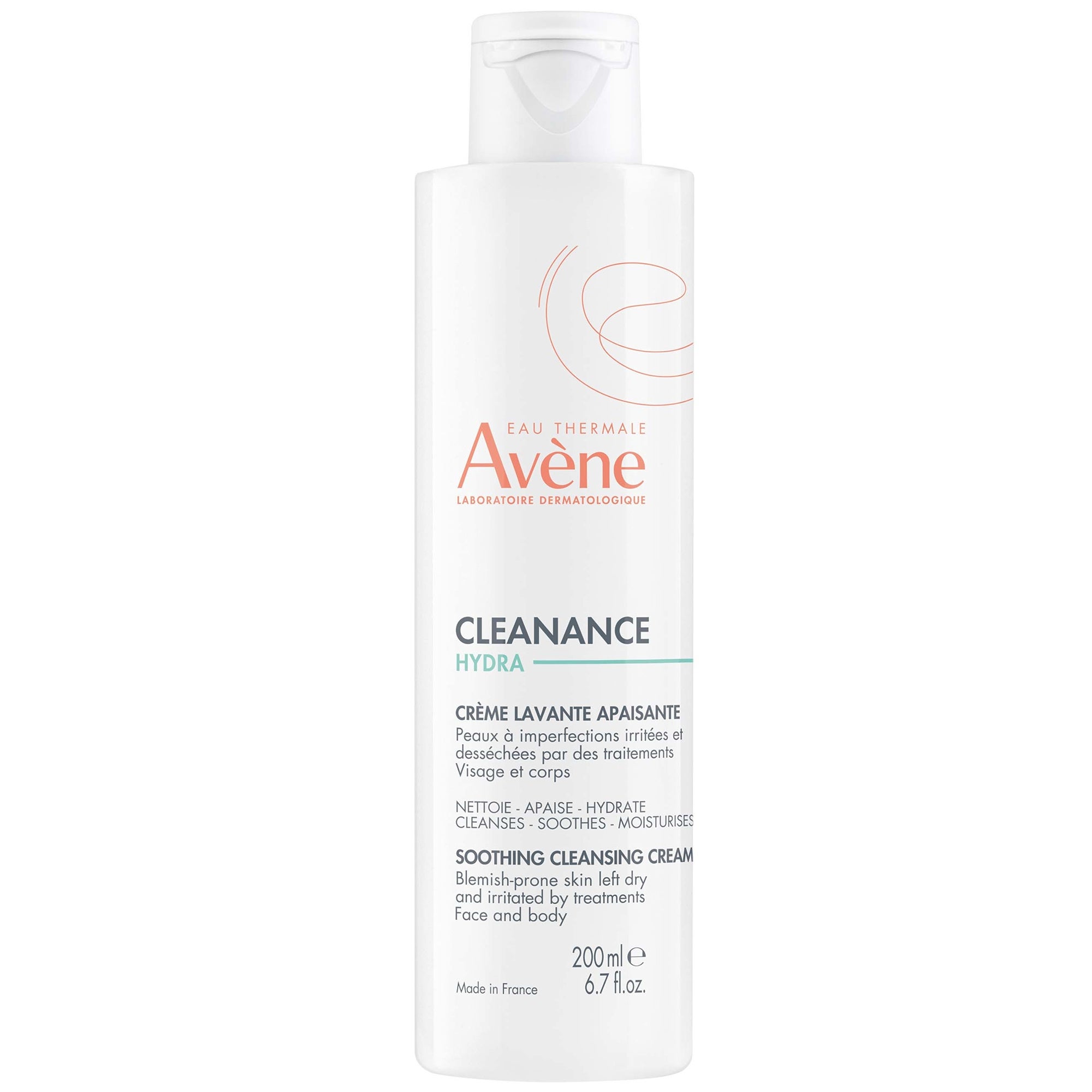
So when a bottle of the Cleanance Hydra Soothing Cleansing Cream showed up in the app's search trends last week, the one shoppers reach for after a round of accutane or benzoyl peroxide burns them out, the question wasn't whether to recommend it. The question was what a shopper is actually buying into when the brand on the tube has no owner in the usual sense.
Who actually owns Avène?
Here's the whole chain, short version. Eau Thermale Avène is one of several brands inside a French group called Laboratoires Pierre Fabre. Pierre Fabre SA is the parent. Pierre Fabre USA Inc., filed out of New Jersey, is the US subsidiary that puts Avène on American shelves. Above Pierre Fabre SA sits the Fondation Pierre Fabre, which the Foundation's own page states holds 86 percent of the capital of Pierre Fabre SA. The remaining share belongs to employees through an employee shareholding plan.
There is no third owner.
The French state doesn't hold a piece, the way it does in Renault. No bank, no insurer, no family office. The Foundation itself isn't a holding company dressed up to look charitable. It was granted public interest status by French authorities on 6 April 1999, a legal designation that comes with tax exemptions and with an obligation to spend its earnings on the public cause it was set up to serve. In Avène's case that cause is access to quality medicines in low income countries, which the Foundation funds in Africa, Asia and the Middle East. Dividends from Pierre Fabre don't flow up to a Monaco holding or a Delaware LLC. They flow into pharmaceutical access work, and the paper trail is published on the Foundation's site each year.
Two consequences fall out of that structure right away. Pierre Fabre doesn't file quarterly earnings, because it's not listed on any stock exchange. And no single human being, including the chief executive, holds a controlling equity stake in the company. The November 2026 Deloitte Best Managed Company report describes the group as employee owned alongside the Foundation and names 10,000 staff across the business. The company says this patient capital model is the whole point of the structure, and it has repeated that line in its own communications since.
How did a dermatologist's brand get this big without going public?
Pierre Fabre, the man, was a pharmacist in Castres, a market town in the Tarn department of southwest France. He bought a small pharmacy there in 1961, built an herbal remedy business, then bet the company on a thermal spring the next department over. The Avène spring, in the Hérault valley, had a local reputation for calming eczema going back to the 18th century. He licensed it, built a hydrotherapy center at the source and in 1990 launched a cosmetic line called Eau Thermale Avène. Thermal spring water sits at the top of every ingredient list the brand prints. On the Cleanance Hydra Soothing Cleansing Cream we read this week, position one is Avène Thermal Spring Water. Position two is tap water.
The ownership question becomes interesting around the mid 2000s. By then Pierre Fabre was already a billion euro group, with three cosmetic brands most Americans would know from a drugstore shelf (Avène, Ducray, Klorane), a pharmaceutical arm with oncology drugs on the market and a hair care brand called René Furterer. Pierre Fabre had no children. He could have taken the company public, the way most of his French competitors did. He could have sold to L'Oréal. He did neither. In 2008 he set up the Foundation and started giving it his shares.
Founder Pierre Fabre's own words, as the Foundation publishes them: "Fondation Pierre Fabre was created to actively help resolve these imbalances." The imbalances he meant are access to essential medicines in the Global South. He named the Foundation his sole legatee, and in July 2013 the rest of his equity transferred when he died. The French government's public interest designation locks the Foundation's purpose in writing. It can't quietly pivot from pharmaceutical access to private wealth management without losing its tax status.
If the structure sounds familiar, there's a reason. Rolex works roughly the same way through the Hans Wilsdorf Foundation. Bosch works that way through the Robert Bosch Stiftung, which owns 94 percent of Robert Bosch GmbH. Lego, until recently, was close. In beauty the model is almost unheard of. The closest cousin is Deciem, which Estée Lauder bought outright in May 2024. The usual beauty ownership story runs through an LVMH, an L'Oréal or a private equity fund, as it did when Fenty Beauty's half stake went up for sale in October 2026 and when Henkel paid 1.4 billion dollars for Olaplex earlier this year. Avène sits outside that whole ecosystem.
What the US subsidiary actually sells
Avène's American footprint moves through one legal entity. Every Avène sunscreen, every Avène acne product, every Avène eczema balm that qualifies as an over the counter drug in the United States is filed with the FDA by the same labeler: Pierre Fabre USA Inc. We pulled the National Drug Code directory and the DailyMed drug label system on November 16 and counted the hits. The NDC directory lists 13 active products under Pierre Fabre USA Inc., and DailyMed returns 10 current Avène SPL labels. Not a contract filer, not a third party distributor, not a different company name quietly hiding the parent. The French group signs its own name on its US drug paperwork.
That matters because American consumers often can't tell the difference between an Avène and a Vichy or a La Roche Posay at Target. All three read as French pharmacy brands with a thermal water on the label. Two of them are owned by L'Oréal, a company listed on Euronext Paris with 420,000 shareholders and a chief executive paid over 7 million euros in 2024. One of them is owned by a charity. The reader can't see that difference from the bottle. They can see it from the paperwork.
The desk audit for this post was the paperwork. We ran four queries against public US enforcement databases for Pierre Fabre and for the Avène brand on November 16, 2026, and saved the responses. The openFDA Enforcement Report returned zero recalls for recalling firm Pierre Fabre and zero recalls with Avène in the product description. The openFDA food event endpoint, which covers cosmetics adverse event reports as well as food, returned zero reports for brand Avène and zero for brand Pierre Fabre. A search of the FDA's warning letter archive for either name returned no results. The California Safe Cosmetics Program public search returned no listed chemicals reported under Avène. The National Advertising Division database returned no decisions.
The record is clean, as of this week, across every US public enforcement source a Skinventry teardown checks.
Clean doesn't mean nothing ever happened. It means the records the FDA, the state of California and the industry's self regulatory body publish don't currently show an enforcement event against this brand. That's a finding worth knowing before you spend 28 dollars on a cleanser.
So what is a shopper actually buying when they buy Avène?
Back to the Cleanance Hydra Soothing Cleansing Cream, the product the app flagged. We pulled the current US ingredient list from Dermstore's listing on November 16, 2026. It runs 16 items long. Position one is Avène Thermal Spring Water, position two is tap water, position three is a mild surfactant called disodium cocoyl glutamate, and glycerin is in the top five. The preservative is sodium benzoate. The only fragrance related entry is a milk thistle seed oil that sits in the back half for lipid support. There is no parfum on the US label, and there is no salicylic acid. The product is marketed to people whose skin has been dried out by acne treatments, which is why it keeps the surfactant load gentle and the ingredient count short.
Here's where the paperwork pays off a second time. The same product sold in Canada and most of Europe carries a longer list, 28 ingredients, verified on November 16 against BeautySense's Canadian listing. The Canadian and European version contains fragrance, listed on the label as parfum. It contains salicylic acid as a low level preservative. It contains PEG 40 hydrogenated castor oil and PEG 30 dipolyhydroxystearate as emulsifiers. The US version strips all of that out. Same brand, same product name, same pump bottle, different formula.
Our best read is that Pierre Fabre USA reformulated for the US acne consumer, who's more likely to be using the product alongside tretinoin or isotretinoin and more likely to react to fragrance. The brand hasn't published a reformulation note we could find, so this is an inference from two retail listings read side by side, not a company statement. If you're buying this product because the box says fragrance free, confirm the ingredient panel on your tube. A 2024 Canadian box in your bathroom cabinet is a different product than a 2026 US pump next to it.
What does the foundation structure change, and what doesn't it change?
Being owned by a non profit doesn't make a cleanser better or worse. It means the people who run the company don't answer to an outside shareholder who wants a bigger dividend next quarter. It means the chief executive can't make themself rich by taking the company public. It means a hostile takeover is harder, because 86 percent of the voting shares sit in a charity whose governance is overseen by the French state.
It doesn't mean your bottle of Cleanance Hydra is chemically different from a privately held competitor, or safer, or more effective. The Record Law here is the same one we apply to any brand: we report the record, we attribute what we read and we leave the verdict to the reader. Pierre Fabre is a French pharmaceutical company that makes real oncology medicines. Avène is one line inside it. Being a public interest foundation's biggest asset doesn't purify an ingredient or validate a claim. It changes who collects the dividend.
What it does change, practically, is the kind of pressure the brand feels. A publicly traded beauty company has to post sales growth every 90 days or explain why not. A foundation owned company does not. That's why Pierre Fabre's chief executive could tell The National News on October 15 that he was in no rush to develop new brands in the Gulf and was still evaluating local manufacturing, when most of his listed peers would be announcing both. The company's internal clock runs on years, not quarters. The company's own public line, repeated in that same October interview, is that this patient horizon is the point of its structure; the Deloitte designation it accepted this November echoes the same framing.
What to check on the label before you buy
A thirty second checklist for the next time an Avène bottle lands in your basket.
One, the labeler on an Avène sunscreen or acne product should read Pierre Fabre USA Inc. If it reads a distributor or a different firm, it's been repackaged for a secondary market. Two, if your skin is reactive to fragrance, read your tube's ingredient panel, not the brand's old marketing copy. The US formulas for Avène cleansers run short and skip parfum. Imported European tubes don't. Three, if you're in an active acne treatment, the Cleanance line is designed as a companion, not a treatment on its own.
The acne medicated products carry an active ingredient on the Drug Facts panel (salicylic acid in the clearing gel cleanser, benzoyl peroxide in the clearing treatment), and those are the ones with real dose dependent effects. The soothing cleansing cream is a pH mild washing step. It won't clear a breakout and doesn't claim to.
A last note on the record.
Nothing's on it as of this writing. That is also a finding, especially in a year when a La Roche Posay sunscreen sits on the FDA's benzene recall list, when Alastin's label order undercut its peptide marketing, and when the La Mer cream that is mostly mineral oil and petrolatum keeps selling at 100 dollars per half ounce. Not every French pharmacy brand is clean. Avène, on this day, is.
If I were starting over today with the Cleanance Hydra bottle in my hand, I'd still buy it. I'd skip reading the old European reviews, because they describe a different formula than the US one I'd actually be using. And I'd take ten seconds, before paying, to flip the pump and confirm the labeler.
Photograph the bottle and the Skinventry 4.0 app pulls what's in it, who files it with FDA, who owns the brand all the way up to the Foundation, and what the enforcement record shows. Every line comes with a source you can tap through, each one labeled Official, Government or Independent, and the lookup checks the ingredients and allergens you've flagged. When a product you scan has no record on file, the app says so. That's the report an unlisted, foundation owned company doesn't have to publish for itself, done at the shelf.
