We read the full ingredient list on Crème de la Mer The Moisturizing Cream on 13 November 2026. Algae extract comes first. Mineral oil and petrolatum, the two things in a jar of Vaseline, come next. Water sits at position 25 of 43. The 2 ounce size costs $390.
On La Mer's current Crème de la Mer label, water sits at position 25 of 43 ingredients. Mineral oil sits at 2. Petrolatum sits at 3. The 2 ounce jar costs $390 at US retailers this month.
That's an unusual ingredient order for a face cream.
That's the shape we want to show you, because what's in a $390 face cream and what the ad says about it are two different reads. The ad talks about a signature ferment made over months to the sound of the ocean. The label talks about mineral oil and petroleum jelly, in that order, right behind the seaweed.
What did we count?
On 13 November 2026 we pulled the current INCI for Crème de la Mer The Moisturizing Cream from Bluemercury's product page, an authorized La Mer retailer. We counted every ingredient. We checked openFDA's Enforcement Report API for every La Mer recall on record, pulled DailyMed's full list of La Mer OTC drug labels, and read The Estée Lauder Companies' SEC filings. We didn't test anything. We counted, we matched labelers, and we read the primary record.
Here's the read, in the order the label itself prints. Nothing on this label is secret. It's been there in plain sight. It just reads differently when you count.
What does the label say, line by line?
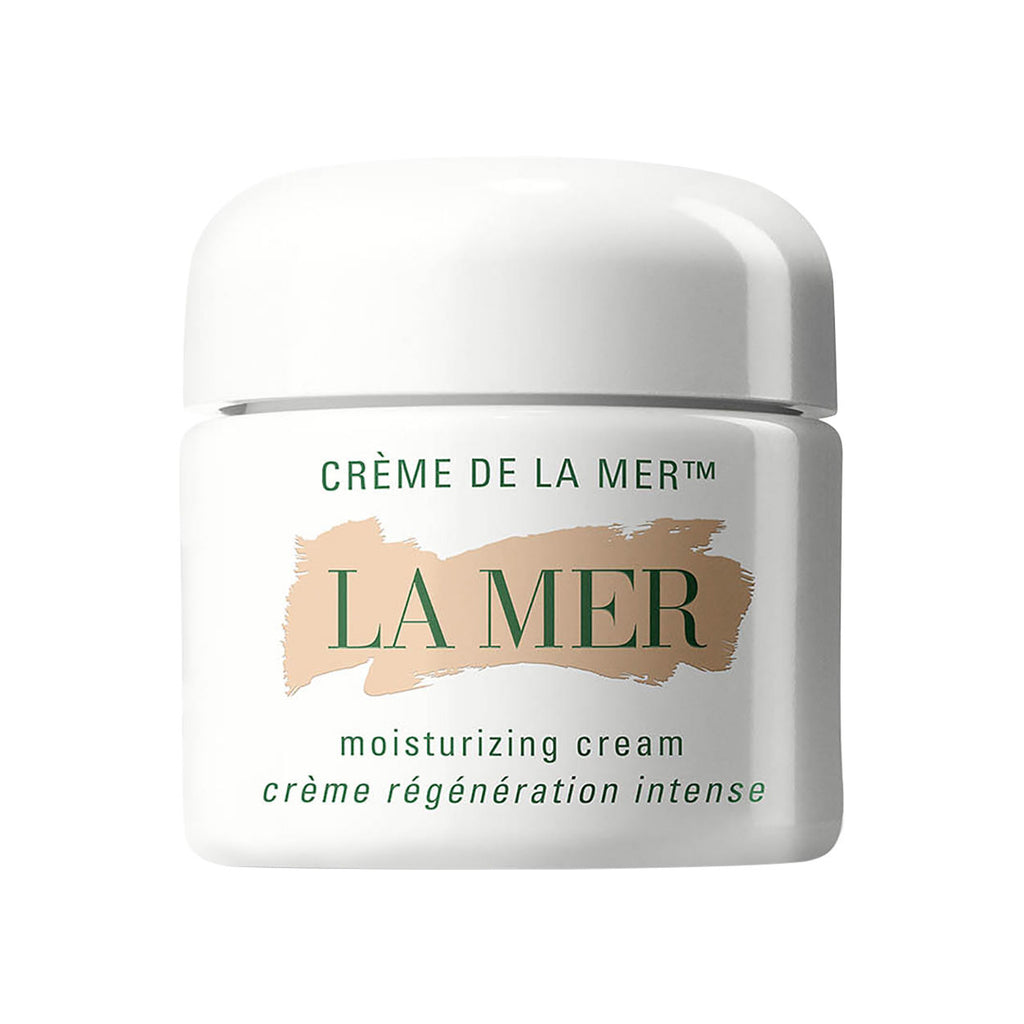
Under US and EU rules, cosmetic ingredients are listed in order of concentration above 1 percent, then in any order below that. Position 1 is the most of something. Position 25 of 43 is deep in the trace zone. This is the current, bluemercury hosted label for the 2 ounce jar on 13 November 2026:
| Position | Ingredient | What it is |
|---|---|---|
| 1 | Algae (Seaweed) Extract | Giant kelp ferment. La Mer sells this ingredient under its own signature name. |
| 2 | Mineral Oil (Paraffinum Liquidum) | Refined petroleum oil. The main ingredient in baby oil. |
| 3 | Petrolatum | Petroleum jelly. The one ingredient in a jar of Vaseline. |
| 4 | Glycerin | Humectant that draws water into skin. |
| 5 | Isohexadecane | Synthetic emollient. |
| 6 | Microcrystalline Wax | Petroleum wax. |
| 7 | Lanolin Alcohol | Derived from sheep's wool. |
| 8 through 14 | Lime extract, sesame oil, eucalyptus oil, sesame powder, alfalfa, sunflower seedcake, sweet almond meal | The plant portion of the formula. |
| 15 through 20 | Sodium, potassium, copper, calcium, magnesium and zinc gluconates | Mineral salts. |
| 21 | Magnesium Sulfate | Epsom salt. |
| 22 | Paraffin | Another petroleum wax. |
| 23 and 24 | Tocopheryl Succinate, Niacin | A vitamin E ester and niacin. |
| 25 | Water (Aqua/Eau) | Water, at position 25. |
| 26 through 43 | Beta carotene, decyl oleate, aluminum distearate, citric acid, panthenol, fragrance allergens and parfum | Trace additives, preservatives, fragrance allergens, alcohol denat., parfum. |
Most moisturizers start with water, because water is both the solvent and, usually, the single largest ingredient by volume. This one doesn't. The emulsion sits on mineral oil and petrolatum first, and lets the water phase fall in after the gluconates. That's a design choice, not a defect; it just doesn't match the story the ad tells.
What's in the ferment at position 1?
The algae at position 1 is La Mer's trade for its signature ferment, a giant kelp (Macrocystis pyrifera) broth that the brand says is made over three to four months. On the brand's own Our Craft page, La Mer describes the process as a fermentation of hand harvested sea kelp infused with vitamins and minerals, carried out to the sound of ocean waves. On the label, the output of all of that is one ingredient: algae extract, at the top of the list.
Giant kelp ferments are old news in cosmetics. The EU CosIng database lists algae extract as a skin conditioning agent, with no safety restriction and no specific efficacy claim attached. The ferment itself isn't controversial; it's seaweed broth with trace minerals. What it does in this formula is give the jar a story. What the formula actually sits on, structurally, is the next two ingredients.
Mineral oil and petrolatum are among the most reliable occlusives there are. A 1992 Journal of the American Academy of Dermatology study found petrolatum reduces transepidermal water loss by more than 98 percent, more than any other single ingredient tested. They're safe. They're also very cheap. The question in this label isn't whether they work. It's whether paying $390 for two ounces of them, with seaweed extract on top, is what a shopper reading the ad thinks they're buying.
Who owns La Mer, and who makes it?
La Mer is a prestige skin care brand of The Estée Lauder Companies, Inc. (NYSE:EL). In the fiscal 2026 full year press release, Estée Lauder named La Mer among the brands supporting prestige skin care growth. Estée Lauder doesn't publish La Mer's net sales as a line item, but it's one of a handful of brands the company calls out by name when it talks about where the growth is coming from.
The company that actually files La Mer's OTC drug labels with the FDA is Max Huber Research Labs, Inc., an Estée Lauder subsidiary. The name dates from Dr. Max Huber, the aerospace physicist the brand says created the first version of this cream in his lab after a facial burn. Max Huber Research Labs is listed as the labeler on every La Mer sunscreen and tinted SPF product currently filed with DailyMed, from the Luminous Lifting Cushion Foundation at SPF 20 to the Broad Spectrum SPF 50 UV Protecting Fluid. If you buy a La Mer sunscreen in the US, the entity on the back label is Max Huber Research Labs, not La Mer itself.
On 2 September 2026, Estée Lauder announced that Sandra Main, La Mer's global brand president of 30 years, would retire on 31 December 2026, per Premium Beauty News. Justin Boxford takes the newly created global president for luxury beauty brands role, with La Mer added to his portfolio. Magalie Parksuwan stays on as SVP and GM of La Mer, reporting to Boxford. The brand is in a quiet leadership handover during one of Estée Lauder's biggest internal restructurings in two decades.
Has Crème de la Mer ever been recalled?
Every La Mer recall the FDA has ever published is a sunscreen recall. The openFDA Enforcement Report API returns three Class III recalls for Max Huber Research Labs, all dated 27 June 2013 and all Terminated: the SPF 18 Fluid Tint in shades Light 02, Medium 03 and Dark 04, 1.7 fl oz, made in Belgium. FDA's recorded reason is that avobenzone 3 percent, one of the active sunscreen ingredients, may be subpotent, and that sunscreen effectiveness may be less than labeled. The firm initiated the recall voluntarily. Distribution was nationwide. The recall is closed.
There have been no La Mer recalls on record since.
Crème de la Mer The Moisturizing Cream is not on any FDA recall list we can find on 13 November 2026. FDA's Adverse Event Reporting System (CAERS) returns 4 lifetime reports for the La Mer brand on the same date. FDA states that a CAERS report doesn't show a product caused the reaction, and that the count can't be used to estimate risk; we report the number because the record is public. We found no FDA warning letters to La Mer or Max Huber Research Labs, no import alerts, and no EU Safety Gate cosmetics alerts for La Mer. Estée Lauder's three lifetime recalls on the openFDA record, two sunscreens and a toothpaste from 2012 through 2019, don't touch Crème de la Mer.
That's the public record, in full. It's quieter than the record of many prestige skin care lines, and it's quieter than the record of several mass brands we've written about here.
What does this mean at the counter?
It doesn't mean La Mer doesn't work on dry skin. Mineral oil and petrolatum work on dry skin, reliably. It means the $390 you pay buys an occlusive emulsion whose first three ingredients are algae extract, mineral oil and petrolatum, with water 22 lines further down.
The 16.5 oz size, if you want to see the same math at scale, sells for $3,030 on Bluemercury. A 16 oz jar of plain petroleum jelly from any drugstore is about $5. We're not telling you to buy one or the other. We're telling you what's in each.
If the label in front of you is unfamiliar, two Skinventry reads line up with this one: Elemis's Pro Collagen Cleansing Balm, where the namesake seaweed sits at position 38 of 38, and Alastin's Restorative Skin Complex, where the hero peptide sits four positions below a drugstore vitamin. For a sunscreen read, see our FDA expiration rules post.
How we got these numbers
Ingredient positions come from the current product page on bluemercury.com for La Mer Crème de la Mer The Moisturizing Cream, 2 oz, read 13 November 2026. We counted 43 ingredients in the printed order and recorded the position of each. Prices for the 0.5, 1, 2, 3.4 and 16.5 oz sizes come from the Bluemercury product page on the same date and match the brand's published US retail prices. Recall data comes from openFDA's Drug Enforcement Report API, queried for product_description containing la mer and for recalling_firm Estée Lauder on 13 November 2026. Adverse event counts come from openFDA's CAERS API for brand name La Mer, same date. OTC drug labels come from DailyMed SPL for La Mer, same date. Owner chain comes from Estée Lauder SEC 10 K filings, most recently 19 August 2026. We did not contact La Mer or Estée Lauder for this piece; the record is what's in the filings and on the label, and that's what we counted.
Photograph a product and Skinventry pulls its ingredients, its labeler and its owner from these same sources. Every fact gets a source and a date; no scores. If your jar of Crème de la Mer is what you've been reaching for, nothing on the label will change. What changes is what you know is in it.
