The best dandruff shampoo is really a choice between four FDA drug actives: pyrithione zinc, ketoconazole, selenium sulfide and salicylic acid. The active in Head and Shoulders was banned from cosmetics in Europe in 2022. In the US the same strength still sits on the Drug Facts panel.
TikTok will tell you the best dandruff shampoo is whichever one a creator plugged last week. The American Academy of Dermatology is blunter. There are six active ingredients the US allows on an anti dandruff label, and four of them do nearly all the work on a drugstore shelf. The brand's almost incidental.
Here's the short version. Pyrithione zinc and ketoconazole kill the yeast that feeds dandruff. Selenium sulfide slows the scalp's own skin cell turnover. Salicylic acid dissolves the scale you already have. Coal tar is an older option most people walk past. Sulfur is nearly a museum piece.
Pick the right one and the brand barely matters.
Why are there really only four shelf choices?
A US dandruff shampoo is a drug, not a cosmetic. It makes a disease claim ("controls flaking"), which puts it under FDA's 21 CFR 358 Subpart H, the over the counter anti dandruff monograph. Only six actives are allowed on a Drug Facts panel for this use: pyrithione zinc at 0.3 to 2 percent, salicylic acid at 1.8 to 3 percent, selenium sulfide at 1 percent, sulfur at 2 to 5 percent, coal tar at 0.5 to 5 percent, and ketoconazole at 1 percent. The AAD lists the same six in plain English on its consumer page.
Three of those are rare in a grocery aisle. Sulfur shampoos are a niche of a niche, used mostly by prescription. Coal tar still exists in Neutrogena T/Gel and a few generics, but the odor and staining send most shoppers to a bottle of something else. That leaves four: pyrithione zinc, ketoconazole, selenium sulfide, and salicylic acid. If you have ever bought a dandruff shampoo in the US, you have almost certainly picked one of these.
The four split neatly into two jobs. Pyrithione zinc and ketoconazole are antifungals that kill the yeast called Malassezia, which is the dominant driver of common dandruff and seborrheic dermatitis. The yeast has a name.
"Dandruff can be due to an overgrowth of a yeast that lives on our skin called malassezia," Dr. Mona Gohara, a Yale associate clinical professor of dermatology, told Bustle. Selenium sulfide is a cytostatic that slows how fast scalp cells reproduce, and it's got mild antifungal activity too. Salicylic acid is a keratolytic, which is a fancy word for an ingredient that breaks the bonds in dead skin so you can rinse it away.
So the shelf isn't six brands fighting over the same problem. It's four drugs doing two different jobs.
Four shampoos, four Drug Facts panels, read on DailyMed
We pulled the published Drug Facts panel for one shampoo per active on DailyMed, the National Library of Medicine's drug label registry, on Nov 7 2026. These aren't reviews, picks or affiliate links. They're what each bottle is legally required to tell you it contains. The strengths are quoted exactly as the label states.
| Shampoo | Active ingredient (as labeled) | Purpose | What the active does |
|---|---|---|---|
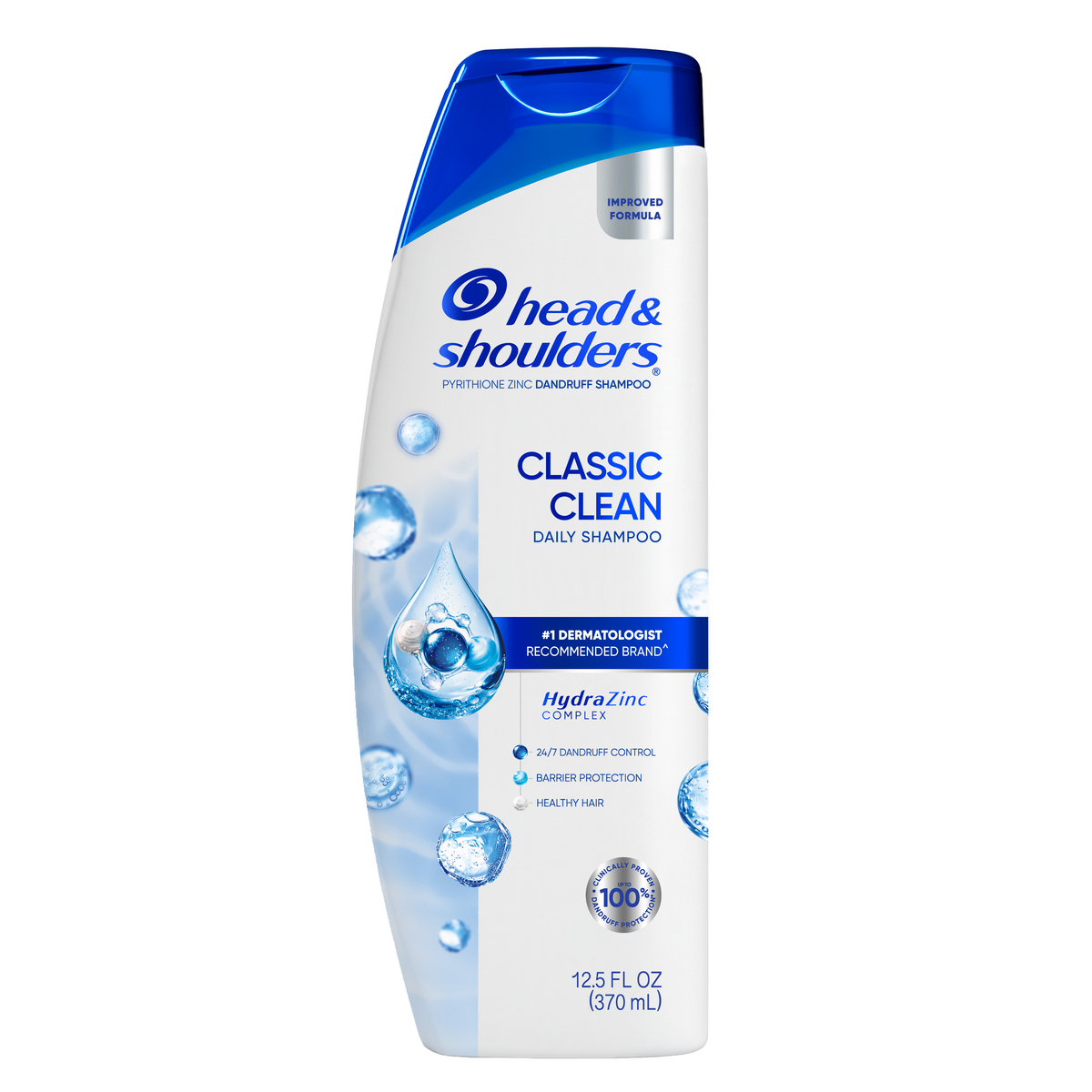
| Head and Shoulders 2in1 Classic Clean | Pyrithione zinc 1% | Anti dandruff | Antifungal; kills the Malassezia yeast behind most flaking |
| Nizoral Anti Dandruff | Ketoconazole 1% w/w | Anti dandruff shampoo | Antifungal; the strongest OTC Malassezia killer |
| Selsun Blue Medicated | Selenium sulfide 1% | Antidandruff | Slows scalp cell turnover; mild antifungal |
| Neutrogena T/Sal Therapeutic | Salicylic acid 3% | Anti dandruff, anti seborrheic dermatitis, anti psoriasis | Keratolytic; dissolves the scale that is already stuck to the scalp |
This is the desk audit. Four bottles, four different drugs, read from the manufacturer's own filing with FDA. None of the four is a daily lotion. Each one is a short contact treatment that you lather, leave on the scalp for a few minutes, and rinse out. The Nizoral label prints the same timing notes as Head and Shoulders. Use every three or four days for Nizoral, at least weekly for pyrithione zinc or selenium sulfide, until the flaking stops. Then drop the frequency.
That's the shelf.
One drug per bottle.
Is Head and Shoulders banned in Europe?
Pyrithione zinc, the active in the US Classic Clean bottle, is the receipt. On March 1 2022, Commission Regulation 2021/1902 moved pyrithione zinc out of Annex III and Annex V of the EU Cosmetics Regulation and into Annex II, the list of substances prohibited in cosmetic products. The trigger was a 15th ATP to CLP reclassification as a category 1B CMR, meaning presumed carcinogenic, mutagenic or toxic to reproduction. The EU's own Scientific Committee on Consumer Safety had earlier found pyrithione zinc safe at up to 1 percent in rinse off hair products. Article 15.2 of the Cosmetics Regulation still allows a CMR exception where no alternatives exist, and the Commission decided alternatives existed.
So EU shelves now carry Head and Shoulders bottles reformulated with piroctone olamine or climbazole, neither of which FDA's anti dandruff monograph allows in the US. US bottles still carry pyrithione zinc 1 percent, exactly the level the EU prohibited. The active hasn't been shown to harm users at the strength US bottles use. It has been reclassified as a presumed hazard by EU regulators. Both sentences are true. The shopper who wants to know the record is entitled to both.
The US story has its own wrinkle. FDA runs its own tests on dandruff and acne actives, and we track those benzene questions in the PanOxyl post. There's no comparable FDA finding against pyrithione zinc in shampoos. The EU reclassification is a regulatory judgment, not a recall.
Which active should you buy for which flaking?
The active decides the job, so the question isn't what brand you like. It's what the flaking is doing. Start with the pattern you see in the mirror. Fine white flakes, itchy scalp, and a shampoo that has stopped working after a few months is the classic Malassezia picture. Reach for an antifungal: pyrithione zinc if it has worked for you before, or step up to ketoconazole 1 percent if it hasn't. The AAD's practical rule is to rotate between two shampoos with different actives if one alone stops working. Yeast adapts. Shoppers mostly don't.
Yellow, greasy scale that clings to the hairline and sometimes the eyebrows is the picture of seborrheic dermatitis, a cousin of dandruff on the same family tree. Selenium sulfide 1 percent works here because it does two jobs at once. It slows the fast turnover that makes the scale thick, and it dulls the yeast. For the same label literacy pattern on the face, our seborrheic dermatitis face wash post reads the Drug Facts on two more actives.
Salicylic acid shampoos are the right pick when the visible problem is thick scale, not itch. Think "the flake is stuck to my scalp," not "my scalp is burning." Three percent salicylic acid is a keratolytic. It dissolves the glue that holds dead cells together.
What are the downsides of a medicated dandruff shampoo?
Here's the caveat worth saying plainly. None of the four is a scalp conditioner. They're drug actives, and some people's scalps don't love any of them. Ketoconazole can dry hair that's already dry, especially curly or color treated hair. That's why most dermatologists tell people to shampoo with Nizoral two or three times a week, not daily, and to alternate with a gentle non medicated wash. Salicylic acid can sting on broken skin. Selenium sulfide can discolor blond, grey or chemically lightened hair, which the Drug Facts panel warns about in print. Coal tar stains fabric and smells like a dock. If one active irritates your scalp, the next one on this list is the next thing to try, not a stronger version of the same thing. If flakes don't improve after about a month of correct use, a board certified dermatologist can prescribe stronger ketoconazole 2 percent or a steroid lotion that pharmacies don't sell over the counter.
How often should you use a dandruff shampoo?
Dandruff shampoos work on the scalp, not the hair. That is the part most people get wrong. The active needs time on the scalp to kill yeast or loosen scale, and rinsing it out in the first minute defeats it. The AAD advises leaving the lather on the scalp for at least five minutes before rinsing, and that advice holds across all four actives. The number on the box is almost irrelevant if the shampoo is in contact with the scalp for thirty seconds.
Hair type changes how often, not which active. Fine, straight hair with an oily scalp usually needs a medicated wash a few times a week. Coarse, curly or color treated hair handles the actives better once a week, with a milder cleansing shampoo on the other days to protect the hair shaft. The scalp is where the drug works. The hair just has to tolerate it. If the goal is a soft curl and a controlled flake at the same time, the honest answer is two bottles in the shower, not one bottle that does both well.
One last note on claims you'll see. The words "clinically tested" and "dermatologist recommended" on a dandruff shampoo mean very little once the Drug Facts panel is on the bottle, because the Drug Facts panel is the actual regulatory claim. We walked through what each buzzword actually means in seven skincare buzzwords the FDA has never defined, and the same logic applies to shampoo. The active, the strength and the directions are the claim. Everything on the front of the bottle is branding.
How we checked the four labels
We read the Drug Facts panel for one US dandruff shampoo per allowed FDA active on DailyMed, the National Library of Medicine's structured product labeling registry, on Nov 7 2026, and recorded the active ingredient and strength verbatim. We cross checked the AAD's consumer page on treating dandruff for the full ingredient list, including sulfur and coal tar, which rarely reach a drugstore shelf. We opened Commission Regulation 2021/1902 on EUR Lex to confirm the EU reclassification date and the Annex it moved pyrithione zinc into. We don't claim hands on testing, user search records or synthesized numbers. None of those exist in this run, and Skinventry doesn't build posts from them.
Three sources we recommend if you want to go further. The AAD's treat dandruff page for the authoritative US ingredient list. DailyMed for the Drug Facts panel of any US medicated shampoo. Commission Regulation 2021/1902 for the EU's reasoning on the pyrithione zinc ban.
Skinventry's photo lookup pulls the same records for you. Point the camera at a shampoo bottle and Skinventry returns its Drug Facts active and strength, the company that makes it, the parent company and anything on the public record, each with its source. The record for pyrithione zinc in Europe is what it shows for Classic Clean today.
Frequently Asked Questions
What ingredients in shampoo actually treat dandruff?
Four of the six FDA approved actives do nearly all the work: pyrithione zinc and ketoconazole kill the Malassezia yeast behind most dandruff, selenium sulfide slows how fast the scalp sheds cells, and salicylic acid dissolves the scale already stuck to it. The active on the Drug Facts panel decides what the shampoo does, not the brand name around it.
Does Head and Shoulders have salicylic acid in it?
No. Head and Shoulders 2in1 Classic Clean's Drug Facts panel lists pyrithione zinc 1 percent as its active ingredient, an antifungal, not salicylic acid. Neutrogena T/Sal Therapeutic is the salicylic acid option among the four shampoos read in this post, at 3 percent, and it works on scale, not yeast.
Is selenium sulfide or pyrithione zinc better for dandruff?
Neither is simply better; they do different jobs. Pyrithione zinc is the more common antifungal pick for everyday flaking. Selenium sulfide does double duty, slowing scalp cell turnover while also dulling the yeast, which helps more with thick, greasy scale. The AAD advises switching actives if one stops working rather than using a stronger dose of the same one.
