Only two Drug Facts actives treat seborrheic dermatitis on the face: pyrithione zinc and 1 percent ketoconazole. The AAD lists both. The one US bar labeled anti seborrheic dermatitis under its Drug Facts, Vanicream Z Bar, is being discontinued, so most people are left using an anti dandruff shampoo as a short contact face wash.
Search for a seborrheic dermatitis face wash and page one fills with fragrance free gentle cleansers. The American Academy of Dermatology self care page names just two cleansing actives that actually treat the condition on the face: pyrithione zinc, and 1 percent ketoconazole. Neither sits in most of what the shelf shows you. The one US cleansing bar labeled anti seborrheic dermatitis under its Drug Facts, Vanicream Z Bar, is being discontinued. The brand's own product page says so.
That is the whole shape of the problem.
Seborrheic dermatitis is driven in part by the yeast Malassezia, so a face wash has to carry an active that touches the yeast or an active that calms the inflammation that follows. Water, surfactants and a soothing emollient don't. On Oct 22, 2026 I read the Drug Facts panels of four US products a shopper would actually reach for and tabulated the active, the percentage, and whether the purpose line even names seborrheic dermatitis. One did. Three didn't. A 2002 trial of 350 adults compared 2 percent ketoconazole shampoo with 1 percent pyrithione zinc shampoo and reported a 73% improvement in dandruff severity score for ketoconazole against 67% for pyrithione zinc at week 4, which is where most of the head to head evidence still sits.
Why should you trust this read?
Nothing on this page is a hands on test. I didn't try the bars. I didn't run my own trial. What I did was open each product's current label, read it line by line, and set it against what the AAD and the American Family Physician treatment review say is actually first line care for a face in flare. For strength to strength comparisons I pulled the EU Cosmetics Regulation text itself, not the summary pages, and the DailyMed Drug Facts for each OTC drug product.
Every link in this post was opened on Oct 22, 2026 before it went in.
Where a label doesn't say what the marketing says, the label wins.
Who is this for?
You see soft, pink, flaky patches at the sides of your nose, around the eyebrows, or in a hairline near the forehead. The skin itches when the flakes come up. A plain fragrance free cleanser helps the look for a day. By the end of the week the patches are back. You want to know, in plain words, what to buy that actually treats the thing. You're 21 or older, you're not pregnant without checking with a clinician first, and if the flare is wide, severe, oozing, or near your eyes, you're going to a dermatologist and not reading a face wash post.
What actually treats seborrheic dermatitis on the face?
The AAD page is the shortest answer anyone will give you. For the face, it names two cleansing options: a cleanser with pyrithione zinc, or a 1 percent ketoconazole shampoo used on the beard area. For everything else it tells you to use a fragrance free cleanser your dermatologist recommends and to rinse thoroughly, because leftover cleanser can set off a flare. That's the whole active list.
Behind that shortness there's a reason. Seborrheic dermatitis is linked to Malassezia yeasts and to the oils they feed on. The American Family Physician 2000 review lists the same first line options the AAD still lists in 2026: selenium sulfide, pyrithione zinc, and ketoconazole shampoos, plus a ketoconazole or terbinafine topical, and short courses of a topical corticosteroid when the inflammation is severe. The actives you want are the ones that touch the yeast. A gentle cleanser gets your skin clean. A gentle cleanser doesn't treat Malassezia. That's the entire gap on page one.
How did we pick the four to read?
I took the four products a US shopper is most likely to end up with when they Google a seborrheic dermatitis face wash. Three are OTC drug products with a Drug Facts panel. One is a cosmetic cleanser, included because it keeps turning up as the top recommendation on retailer and health content pages. The four, with their actives:
How did we compare the labels?
Every US OTC drug product carries a Drug Facts panel: active ingredient, purpose, uses, warnings, directions, inactive ingredients. The purpose line is what you want. It's the FDA sanctioned claim the labeler can print. If the purpose line names seborrheic dermatitis, the label's cleared to say the active treats it. If the purpose line names only dandruff, that's the only cleared claim, even when the active would do the yeast work in either place. Cosmetics don't get a Drug Facts panel at all, and under FDA rules they can't claim to treat a condition.
Here is what the four labels print:
| Product | Active and strength | Purpose line, verbatim | Form |
|---|---|---|---|
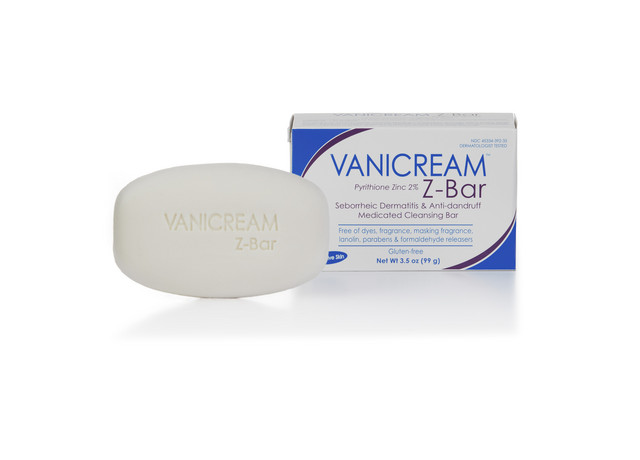
| Vanicream Z Bar Medicated Cleansing Bar | Pyrithione zinc 2 percent | Anti dandruff and anti seborrheic dermatitis | Cleansing bar for face and body |
| Nizoral A D Anti Dandruff Shampoo | Ketoconazole 1 percent | Anti dandruff shampoo | Shampoo (used short contact on face per AAD) |
| Selsun Blue Medicated | Selenium sulfide 1 percent | Antidandruff | Shampoo |
| CeraVe Hydrating Facial Cleanser | No OTC drug active | Cosmetic cleanser (no Drug Facts panel) | Facial wash |
Three of the four say nothing on the label about seborrheic dermatitis.
One does.
That one is being discontinued.
Our pick: Vanicream Z Bar, while it lasts
Vanicream is a sensitive skin brand from Pharmaceutical Specialties, a small company in Rochester, Minnesota, that's sold the Z Bar for years as the quiet pick for people with chronic flares. The bar is pyrithione zinc 2 percent, and the Drug Facts purpose line prints exactly what the AAD recommends: anti dandruff and anti seborrheic dermatitis. It's fragrance free, dye free, gluten free, and formaldehyde releaser free. The directions tell you to use it in place of regular soap at least twice a week, lather with warm water, massage into the affected areas, and rinse well. There are two to three dollar bars on the shelf. This isn't one of them.
The brand's own product page carries a short notice right now: "We've made the hard decision to discontinue the Vanicream Z Bar." The page doesn't give a date. Online retailers still have stock as of this read. Once that's gone, the only US cleanser whose Drug Facts panel actually prints seborrheic dermatitis is gone with it. A Dermaharmony face and body bar labels pyrithione zinc 2 percent the same way, and it's one of the only remaining options a reader can check on DailyMed, but it's less widely stocked.
A short note on who makes Vanicream and why the void matters. Pharmaceutical Specialties also makes the plain Vanicream moisturizing creams your dermatologist probably recommended if you ever walked out of an eczema visit. The Z Bar isn't a product the company stocks because it's a cash machine. It's a product it stocks because its sensitive skin audience is the one with the flares. Losing it narrows what the aisle offers. The 2025 PMC review on selenium disulfide notes the field has shifted toward selenium disulfide in some scalp products as a backup, but the review is scalp focused and doesn't resolve face use.
Runner up: Nizoral A D, used short contact on the face
Nizoral A D is a ketoconazole 1 percent shampoo made by McNeil Consumer Healthcare, part of Kenvue, which is what Johnson and Johnson's consumer health business turned into after it spun out. The OTC ketoconazole 1 percent label on DailyMed prints the purpose as anti dandruff shampoo, not seborrheic dermatitis, and the directions describe scalp use.
The AAD page is the thing that puts this product in a face wash post. It specifically recommends 1 percent ketoconazole shampoo for washing under a mustache or beard, where seborrheic dermatitis loves to settle. That's the only face use the AAD endorses by name, and it's the entire reason this shampoo keeps turning up in a face wash answer. Dermatologists also use a short contact wash on the cheeks and the sides of the nose when they want the ketoconazole without a prescription cream. You wet the skin, apply enough shampoo to lather, massage into the affected area, leave it on for the time the label says to leave it on the scalp (a few minutes), and rinse well. The 2015 Cochrane review of topical antifungals for seborrheic dermatitis pooled face and scalp data and found ketoconazole reduced the share of adults who hadn't fully responded at 4 weeks compared with placebo. A separate 2002 trial of 350 adults compared 2 percent ketoconazole shampoo with 1 percent pyrithione zinc shampoo and reported a 73% improvement in a dandruff severity score for ketoconazole against 67% for pyrithione zinc at week 4. That gap is small. It's also not a face trial. The honest read is that ketoconazole is at least as good as pyrithione zinc on the yeast, and that most of the literature is scalp.
Also great: salicylic acid and sulfur, for the days ketoconazole is too much
Some people flare in response to ketoconazole on the face even when it works on the scalp. The American Family Physician review names salicylic acid and precipitated sulfur as the second line additions, used in a wash or a cream, for the scale and the inflammation. A plain 2 percent salicylic acid cleanser isn't treating the yeast, so the itch may come back, but it clears the scale that makes the flare look worse. Pair it with a short course of pyrithione zinc or ketoconazole once a week and the maintenance gets easier. This is the pairing a dermatologist is likely to suggest if ketoconazole alone is irritating.
Budget pick: Selsun Blue Medicated, with a caveat
Selsun Blue Medicated is selenium sulfide 1 percent, made by Haleon, the spinout of GSK consumer health. The DailyMed label for the Selsun Blue family prints the purpose as antidandruff. It doesn't name seborrheic dermatitis in the purpose line. The directions describe scalp use. There's no AAD endorsement for face use.
So why mention it? The 2025 selenium disulfide review reports comparable efficacy to pyrithione zinc and ketoconazole for seborrheic dermatitis, and the American Family Physician review lists selenium sulfide alongside the other two. Clinicians sometimes recommend a short contact application on the face if ketoconazole isn't tolerated. The caveats are real. The AAD doesn't endorse that use. Selsun Blue has fragrance in it. The label warns it can discolor light, bleached or tinted hair, and some people see a temporary skin tint on deeper complexions. For a budget pick where ketoconazole isn't available, it's on the table. For a daily face wash, it isn't the pick.
I'm naming this one honestly.
It's the cheapest active on the shelf. It's also the one with the most reasons to be careful.
Can you really use a dandruff shampoo on your face?
Yes, when a dermatologist tells you to. The AAD page writes it out for a 1 percent ketoconazole shampoo under a beard. Beyond that, the use is off label. The shampoo bottles don't print face directions. That doesn't mean the active will hurt your skin. It means the labeler hasn't put the time and the data in to add a face use claim to a scalp product, and FDA hasn't cleared one. A short contact wash is just scalp use with a face as the scalp: lather, hold for the label's stated contact time, rinse. If your skin burns or stings, stop and ask a clinician.
Two things are worth knowing before you try it. First, the OTC ketoconazole 1 percent label warns on children under 12, pregnancy, and on use if a rash appears or the condition doesn't improve in two to four weeks. The 2 percent cream and the 2 percent shampoo are prescription in the US. Second, the EU banned zinc pyrithione in cosmetic products effective 1 March 2022 under Commission Regulation 2021/1902. Pyrithione zinc is still allowed in US OTC drug products, where it falls under the FDA's anti dandruff monograph. If you've ever wondered why your European friends don't seem to carry pyrithione zinc anything on the plane, that's why.
What to look forward to
The question nobody is answering yet is what fills the Vanicream shaped hole on the aisle. A few small brands sell 2 percent pyrithione zinc bars, and most aren't stocked at the big chains. The Dermaharmony face and body bar is one of the few whose Drug Facts panel is published on DailyMed and carries the same anti dandruff and anti seborrheic dermatitis purpose line. For most US shoppers that'll mean ordering online. For big chain shoppers, the practical answer is a 1 percent ketoconazole shampoo used short contact on the face, with a plain fragrance free cleanser for the mornings when the skin is calm.
The competition
Here is where the top four results on page one go wrong. They almost all recommend a plain fragrance free cleanser, usually CeraVe Hydrating Facial Cleanser, as the face wash for seborrheic dermatitis. CeraVe Hydrating is a nice cosmetic. It's non comedogenic. It has ceramides, glycerin, hyaluronic acid, and a short, calm ingredient list. It also doesn't treat seborrheic dermatitis, because it has no OTC drug active for the condition. The brand doesn't claim it does. Under FDA rules it can't. The retailer rankings are repackaging the AAD's "fragrance free cleanser between flares" line as the whole answer, and that's where the Google shopper ends up buying something that was never meant to carry the treatment.
If a cosmetic cleanser is where you want to spend the money for the gentle days, CeraVe Hydrating is fine, as are the Vanicream Gentle Facial Cleanser and the La Roche Posay Toleriane Hydrating Gentle Cleanser. The treatment is the pyrithione zinc or the ketoconazole, used two or three times a week. The cosmetic is what you reach for in between.
One more label trap. Several products marketed to seborrheic dermatitis flares carry "anti itch" or "dermatologist recommended" on the carton without any FDA cleared active behind the condition claim. Those words aren't treatment. The breakdown of the seven skincare words the FDA never defined and the plain language read on the hypoallergenic label go deeper on why the carton loses to the Drug Facts panel every time.
Care and maintenance
Three habits beat the active for most people.
Rinse everything twice. The AAD page states it plainly: leftover cleanser can set off a flare. If you rush the rinse your bars and shampoos get credit for a problem the water would have fixed.
Wait on the moisturizer. Give the skin 30 to 60 seconds to be skin again before you add anything. If a damp face still stings, wait longer. If the cleanser was medicated and left on short contact, pat and then wait.
Pick a moisturizer that respects the yeast. Seborrheic dermatitis and fungal acne (pityrosporum folliculitis) are both tied to Malassezia, which eats medium chain oils and some fatty esters. A moisturizer that lists lauric or myristic triglycerides at the top will feed the yeast. We read four moisturizers against the label in our earlier fungal acne safe moisturizer read and only two held up. The barrier basics are the same for both. If your routine has been undoing itself, the barrier cream read is where to look at what's failing.
One more thing.
Any cleanser that smells of parfum, including the ones labeled "unscented," can set off the itch, because the fragrance free label and the unscented label aren't the same thing. The unscented label breakdown walks through where the gap is.
Who makes each one, in one line
Vanicream is Pharmaceutical Specialties, Inc., Rochester, Minnesota, a small private company that's sold sensitive skin products to dermatologists for decades. Nizoral A D is McNeil Consumer Healthcare, which is now part of Kenvue, the public company Johnson and Johnson spun its consumer health arm into in 2023. Selsun Blue is Haleon, which is what GSK's consumer health business became in 2022. CeraVe is L'Oreal, which bought it from Valeant in 2017 for 1.3 billion dollars. Knowing who owns the brand won't change how your skin behaves, but it's one of the first things the Skinventry app will tell you about any product in your bathroom, with a source for every line.
What I still don't know
Why Vanicream decided to discontinue the Z Bar, and whether another labeler steps in with a face and body pyrithione zinc 2 percent bar that stocks at the big chains. The product page doesn't say, and the company hasn't posted a reason. If you're a dermatologist seeing patients lose their shelf pick, write back. If you have a labeler and want to run the numbers on filling that gap, write back about that too. I'll update this post when the market does.
Snap a photo of any face wash on your shelf and Skinventry 4.0 pulls the Drug Facts active and percentage, the maker, the parent company, where it's made, and whether anything is on the public record for it, with a source for every line.
Sources
- American Academy of Dermatology, Seborrheic dermatitis: Self care.
- Vanicream, Z Bar Medicated Cleansing Bar product page (discontinuation notice).
- DailyMed, 1 percent Ketoconazole Anti Dandruff shampoo label.
- DailyMed, Selsun Blue selenium sulfide 1 percent shampoo label.
- American Family Physician, Treatment of Seborrheic Dermatitis (2000).
- PMC, Efficacy and safety of selenium disulfide in seborrheic dermatitis: what RCTs tell us (2025).
- PMC, Review of the Treatment of Seborrheic Dermatitis.
- Karger, A Multicenter Randomized Trial of Ketoconazole 2 percent and Zinc Pyrithione 1 percent Shampoos (2002).
- EUR Lex, Commission Regulation (EU) 2021/1902 (zinc pyrithione cosmetic ban).
- CeraVe, Hydrating Facial Cleanser product page.
