The National Rosacea Society's 2026 survey of 1,066 patients ranks six topical ingredients that set off a flare: alcohol (66%), fragrance and witch hazel (30% each), menthol (21%), peppermint (14%), eucalyptus oil (13%). We read five labels Google ranks for 'best cream for rosacea.' Four avoid every one. One lists eucalyptus oil.
The ingredient list on First Aid Beauty's Ultra Repair Cream is 22 lines long. The last line is eucalyptus globulus leaf oil. You can read it yourself on the brand's own product page. Most of the shoppers who buy that jar for rosacea never look at line 22, because 'ultra repair' and 'allergy tested' are what the front of the tub promises.
If you have rosacea, this is the problem. The front of the jar talks about calm. The back of the jar is where the triggers live. So we read five of the creams Google serves on page one for 'best cream for rosacea' this week, lined their ingredient lists up against the Rosacea Society's own 1,066 person survey, and wrote the result as four rules you can carry to any store. The one that breaks all four is at the bottom.
Rule 1. Six ingredients the Rosacea Society's own patients say burn.
The National Rosacea Society's 2026 survey of 1,066 patients asked which skincare ingredients they'd learned to avoid. The results, published on the Society's skincare page, are plain: alcohol 66%, witch hazel 30%, fragrance 30%, menthol 21%, peppermint 14%, eucalyptus oil 13%. That's it. Six names. If you memorize nothing else about rosacea, memorize those six and read for them on the back of every tube.
Two notes before you start reading labels. The 'alcohol' on the trigger list is the drying kind: alcohol denat, SD alcohol, isopropyl alcohol, ethanol. It is not cetearyl alcohol, stearyl alcohol, or cetyl alcohol, which are fatty alcohols used as emulsifiers in almost every cream. They don't burn and they aren't on any Rosacea Society list we could find. The two things look alike on a label and they are not the same ingredient. We've written before about how label words like hypoallergenic get read in ways brands never promised; alcohol is another word that trips the same wire.
The second note is on fragrance. The Society quotes the American Academy of Dermatology on the next line: 'fragrances cause more allergic contact dermatitis than any other ingredient.' And a cream can smell like nothing and still carry fragrance under 'parfum,' 'perfume,' or a masking blend. We walked through that trap in our 'unscented' moisturizer piece if you want the longer tour.
Rule 2. Shorter is safer.
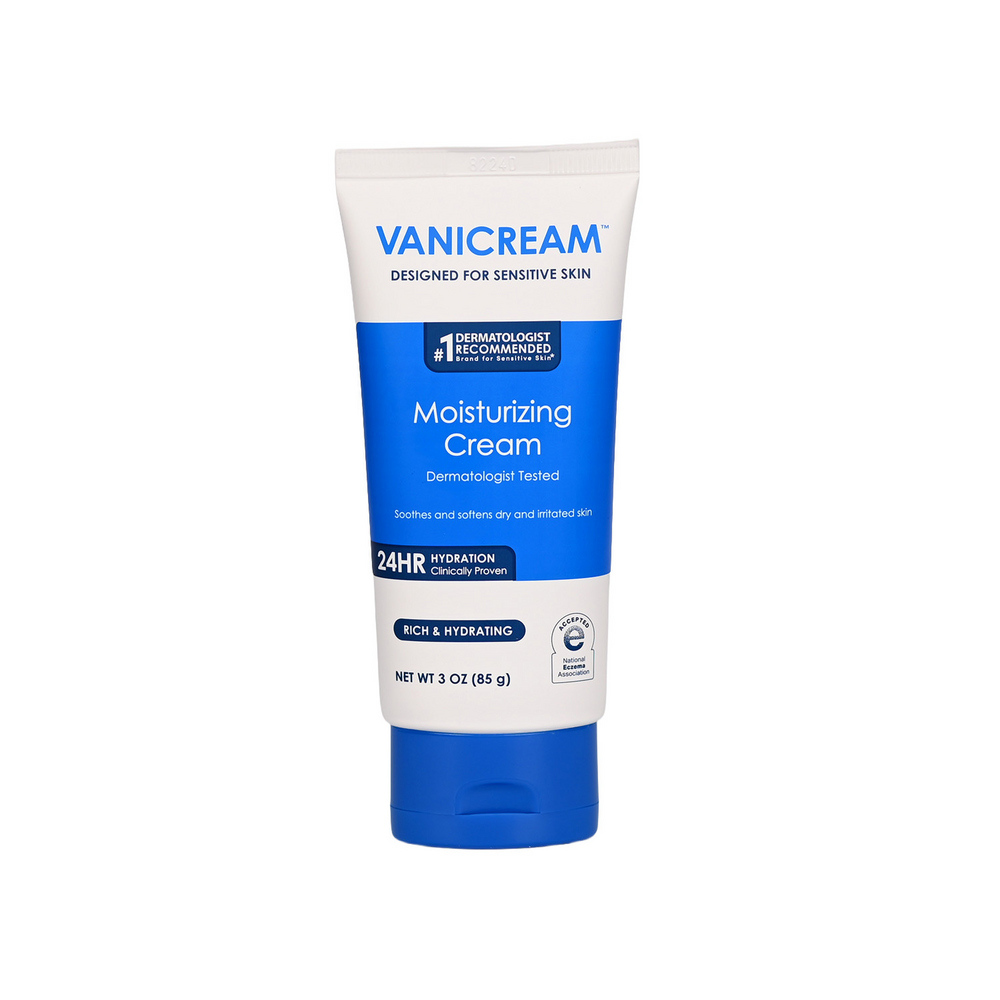
The Rosacea Society's own advice on skincare ends with one line most brands won't repeat: 'use as few products as possible.' It explains why in plain language. Every ingredient you add to the surface of rosacea skin is a chance to irritate it, and layering more products increases the risk, not the result. Vanicream's flagship cream is 10 ingredients long. First Aid Beauty's Ultra Repair Cream is 22. One of those is a jar you can trust to be boring. The other is a jar you have to read all the way to the bottom of. Pick which kind of label you want in your bathroom.
Rule 3. Fatty alcohols and essential oils are the two label tricks that confuse rosacea shoppers most.
Half the questions people ask about rosacea creams boil down to two words: 'alcohol' and 'natural.' Both come from the back of the jar lying honestly. Cetearyl alcohol in a cream is a thick, waxy emulsifier that softens texture; it isn't the alcohol that stings your face. Eucalyptus oil in a cream is natural, cold pressed from leaves, and marketed as calming; it is also one of the six ingredients the Rosacea Society's patients call out by name. The front of the pack and the chemistry of the back of the pack are not telling the same story. Rosacea shoppers get caught in the gap. The Society's skincare page, which it says is reviewed by Dr. Zoe Draelos, consulting professor of dermatology at Duke, is explicit on this: "hypoallergenic," it reminds readers, is not clearly defined by the cosmetics industry and is not the same as allergy tested. Read for ingredients, not label words. 'Hypoallergenic' and 'allergy tested' aren't the same as 'allergy free,' and the FDA has never defined most of these buzzwords anyway.
Rule 4. Look for the five ingredients the Rosacea Society does name.
The Society's moisturizer page is one of the few places where the field actually agrees. It lists five ingredients worth looking for: hyaluronic acid, ceramides, vitamin C, aloe, and niacinamide. A 2021 expert consensus in the Journal of Drugs in Dermatology landed on three of the same five, calling ceramides, hyaluronic acid, and niacinamide the trio that most reliably rebuilds the moisture barrier rosacea skin tends to lose. If you flip the label on your current cream and don't see at least one of those five in the first half of the list, your cream is doing less for rosacea than its front panel suggests. The barrier cream post we wrote this summer goes deeper on which of these ingredients are at reading distance in which creams, if that's the rabbit hole you want.
The rule that breaks all the others.
A cream can be fragrance free, alcohol free, witch hazel free and menthol free and still carry eucalyptus oil. First Aid Beauty's Ultra Repair Cream is the proof. The front of the tub says 'allergy tested, free from fragrance, free from parabens.' The ingredient list on the brand's own page carries chrysanthemum (feverfew) extract, licorice root, and ceramide NP near the end. Then, the final line, is eucalyptus globulus leaf oil. The jar is marketed for 'red, dry, chapped' skin and is widely recommended for rosacea in large publications. We aren't saying it will flare you. We're saying the Rosacea Society's own 1,066 patient survey ranks eucalyptus oil as a reported irritant for 13% of them, and if you're the one in eight for whom it does, the label is where you'd find out, if you knew to look.
What five labels say, read on the brands' own pages.
We checked each of the five on their US product pages on October 25, 2026 (every page returned a 200). The sixth column is the only one that matters at the shelf.
| Cream | Length of label | Rosacea Society named 'good' ingredients present | Fragrance, witch hazel, menthol, peppermint | Essential oils | NRS trigger on label? |
|---|---|---|---|---|---|
| Vanicream Moisturizing Cream | 10 ingredients | none named directly; petrolatum second as a barrier occlusive | none | none | No |
| Vanicream Daily Facial Moisturizer | 19 ingredients | hyaluronic acid, five ceramides (EOP, NG, NP, AS, AP) | none | none | No |
| Beauty of Joseon Dynasty Cream | 37 ingredients | niacinamide (5th), hyaluronic acid and two HA forms, ceramide NP | none | none (botanical extracts, no essential oils) | No |
| Krave Beauty Great Barrier Relief | 41 ingredients | niacinamide (5th), sodium hyaluronate, ceramide NP | none | none (tamanu, safflower, rosehip oils; not on the NRS list) | No |
| First Aid Beauty Ultra Repair Cream Intense Hydration | 22 ingredients | ceramide NP (near the end) | none | eucalyptus globulus leaf oil (last line) | Yes |
The four creams that pass aren't the same cream. If you have oily, breakout prone rosacea skin, the Beauty of Joseon or Krave formulas lead with glycerin and niacinamide and feel lighter under sunscreen. If your rosacea sits with dry, flaky, winter weather skin, Vanicream's Moisturizing Cream is the thicker occlusive, and the Daily Facial Moisturizer is the one that carries hyaluronic acid and five ceramides without the thickness. If you prefer K beauty textures over US ones, Dynasty Cream is the only one on this list designed to layer under makeup. And if you already own the First Aid Beauty tub and your face has never reacted to it, you are probably in the 87% for whom eucalyptus oil is not a trigger. The point of this piece is that you can know which group you're in from the label, before you buy.
So which cream should you actually buy?
If we had to pick one, we'd pick Vanicream Moisturizing Cream, because it is the shortest label the Rosacea Society's own survey can't argue with. If you want ceramides at reading distance for a barrier that already feels thin, Vanicream Daily Facial Moisturizer is the same brand's answer at 19 ingredients, five of them ceramides. If you want niacinamide too, Dynasty Cream and Great Barrier Relief are both worth reading. All four work for 'best cream for rosacea' searches the way the question is usually asked. The one caveat worth stating is honest: nobody's label will match every single rosacea patient. Rosacea triggers vary, the Rosacea Society says so plainly, and a patch test on the jawline before you commit a jar is still the only test that counts. For a makeup layer on top, our BB cream for rosacea piece walks through the color correcting side of the same shelf.
Four creams out of five. Shorter is safer. Read the last line.
Photograph any of these jars with the Skinventry app and it reads the ingredient list for you, flags the ones you've chosen to watch (fragrance, witch hazel, menthol, peppermint, eucalyptus oil, alcohol denat), and shows who makes the brand and who owns it, with a source for every line.
