'Fungal acne safe' is a label no agency defines and no outside lab checks. The widely cited rule, that Malassezia yeast eats fatty acids with chain lengths C11 to C24, traces to a Wikipedia summary. We've read four moisturizers people most often call safe on their brands' own pages, and three still list a fatty acid the primary research says the yeast can use.
Three of the four moisturizers people most often call 'fungal acne safe' list a fatty acid Malassezia can eat in their first ten ingredients. One doesn't. That one is the oldest formula in the group, and nobody markets it as a fungal acne pick.
Here's the shape of the receipt. The foundational 1999 study in the Journal of Clinical Microbiology established that Malassezia species, except M. pachydermatis, need C12 to C24 fatty acids to grow in culture. The widely repeated 'C11 to C24' range you'll read on every fungal acne forum is one carbon longer than what the 1999 study tested, and 100 percent of the 'safe' lists we read repeated the Wikipedia version rather than the paper. We'll come back to where that one carbon came from. First, the label.
That's this whole post, up front. Below is where the 'safe' rule came from, what the primary research actually tested, why the lists online disagree, and what to read on any moisturizer tube.
What does 'fungal acne safe' actually mean on a label?
Nothing, in the regulator's sense. The term is a community label. The FDA does not define it. The EU does not define it. No independent lab publishes a 'fungal acne safe' certification. It is a shorthand on Reddit and in K beauty forums for a product that avoids ingredients a yeast on your skin is said to feed on.
The yeast is real. Malassezia lives on nearly every adult's skin and is normal flora, dermatologist Dr. Hadley King told Into The Gloss in a 2020 interview. When it overgrows inside hair follicles, the bumps that follow look like acne but respond to antifungal washes with zinc pyrithione or selenium sulfide, not to the antibiotics or benzoyl peroxide a dermatologist would reach for first in bacterial acne. The condition is Malassezia folliculitis, and a 2025 Journal of Fungi review says topical and oral antifungals are highly effective but relapses are common.
So the label hunters aren't wrong about the yeast. They're chasing a different question: which moisturizer, worn on top of a treatment, keeps feeding it. That question has no referee.
The 'safe' lists people trade come from community moderators, not from a trial. A product that's 'safe' on one list is 'risky' on another. The brand that printed the words on the box didn't run the test, because there is no test to run.
Where did the chain length rule come from?
Every list you have ever read starts from the same claim: Malassezia feeds on fatty acids with carbon chain lengths of C11 to C24, so a moisturizer that avoids those is safe. The chain is the number of carbon atoms in the fatty acid. C12 is lauric acid, C16 is palmitic, C18 is stearic or oleic, and so on. The idea is that above and below those numbers, the yeast cannot metabolize the molecule.
The C11 to C24 figure comes from the Wikipedia article on Malassezia folliculitis. The page cites a biochemistry textbook and the number has traveled from there to blogs, Reddit threads and brand marketing without ever being questioned.
The primary research reads a little differently. The foundational 1999 paper in the Journal of Clinical Microbiology, by Guého and colleagues, is the one everyone else cites. It says Malassezia species, with one exception (M. pachydermatis), require supplementation with long chain fatty acids of C12 to C24 for growth in culture. C11 is not in that paper. The yeast's own enzymes don't appear to touch anything below C12 in the published assays.
In 2019 a team at the Tokyo Institute of Technology went further. Tenagy and colleagues cloned the long chain acyl CoA synthetase gene from three Malassezia species and tested six fatty acids: C10 capric, C12 lauric, C14 myristic, C16 palmitic, C18:0 stearic and C18:1 oleic. The paper, in the Journal of Fungi, found the yeast's own enzyme used C12 only weakly, and the authors attributed what growth they saw to overexpression. Real growth kicked in at C14 and ran through C18.
So the honest rule is this: C14 to about C24 is where the growth evidence is firmest, C12 is weak, and C11 is a Wikipedia line nobody has tested. The 'safe' community has rounded the research into a tidier number than the research itself supports.
That's the receipt in one sentence.
What the Malassezia yeast actually eats, and what we did not know a decade ago
Here is the picture a labelled moisturizer draws of itself. On the outside: 'formulated without oils your acne hates'. On the inside: the ingredients that end in 'ate' or 'ic acid' and sit in the first third of the list. We read four of them on their brand pages the week of October 20, 2026, and tabled every ingredient against the C12 to C24 range the primary research actually tested.
The pass or fail here is not a safety verdict. It is whether the label, read against the primary research, matches what the 'fungal acne safe' community claims it should look like.
| Product | Fatty acid in first 10 ingredients | Chain length | Matches the 'safe' rule? |
|---|---|---|---|
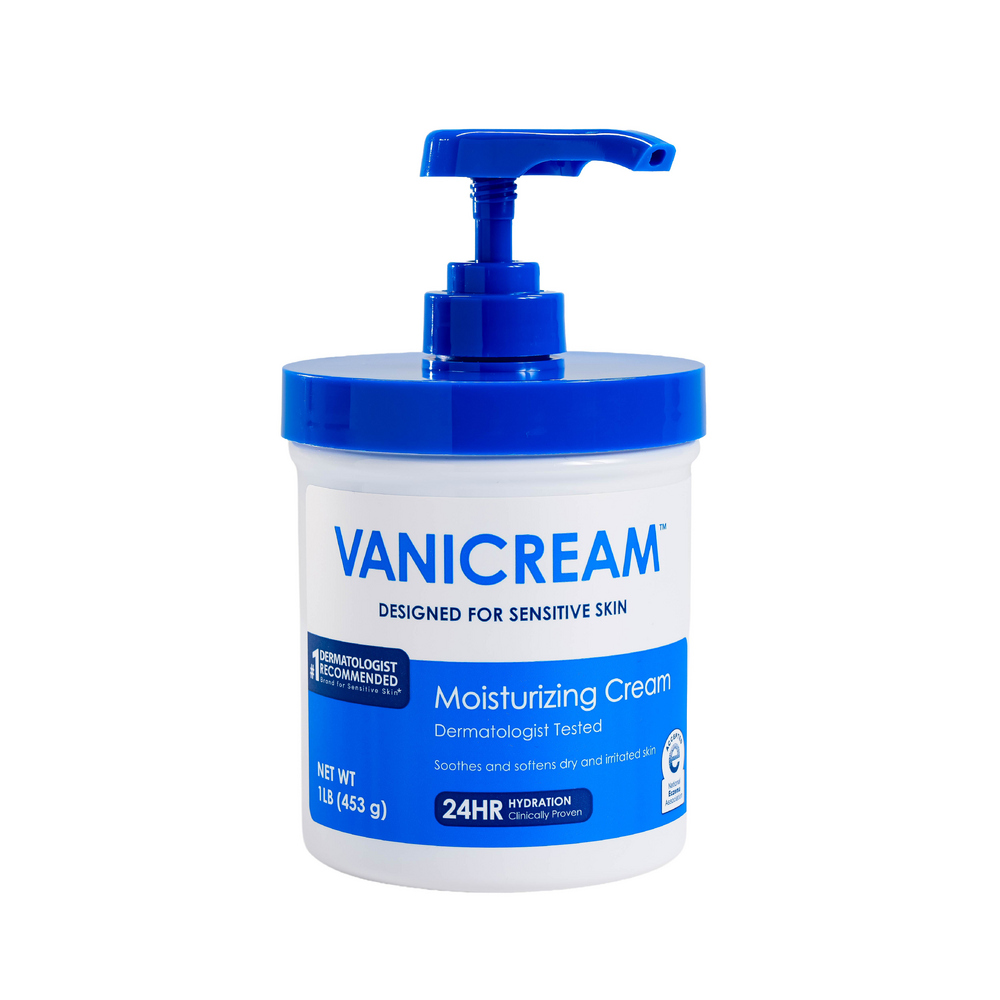
| Vanicream Moisturizing Cream (brand page) | None. Glyceryl stearate is a non ionic emulsifier and sits at position 8; the fatty acid is bound as an ester. | n/a | Clean pass |
| Krave Beauty Oat So Simple Water Cream (brand page) | Caprylic / capric triglyceride at position 3; squalane at position 4. | C8 to C10 (below the tested range); squalane cannot be used by the yeast. | Passes with one footnote. |
| COSRX Oil Free Ultra Moisturizing Lotion with Birch Sap (brand page) | Cetearyl olivate at position 8 and sorbitan olivate at position 9. Both are olive oil derived esters. | Olive oil's fatty acid profile centers on C18:1 oleic. | Fails its own rule. |
| First Aid Beauty Ultra Repair Cream Intense Hydration (brand page) | Stearic acid at position 2; glyceryl stearate SE at position 7; hydrogenated shea butter at position 11. | C18 stearic acid, free and esterified. Shea butter is a C16 and C18 blend. | Fails its own rule. |
The pattern tells on itself. The Vanicream formula sits closest to a petrolatum base, with sorbitol and propylene glycol as humectants and simethicone as the slip, and it carries no free fatty acid in the first ten. The product was not designed for fungal acne. It was designed for atopic dermatitis and the National Eczema Association seal, decades ago, which is why its ingredient list is this short.
The Krave formula is nine ingredients and uses caprylic / capric triglyceride, which is a fractionated coconut oil cut to C8 and C10. These sit below the yeast's known feeding range, and the squalane in position 4 is a saturated hydrocarbon the Malassezia enzyme cannot touch. We flag it as a footnote because some clinicians argue the medium chain triglyceride can be hydrolyzed into free fatty acids on skin; the primary research does not support growth on C10 either, so this is cautious labeling, not a failure.
The COSRX lotion is the honest surprise. It is widely recommended as fungal acne safe in Korean skincare communities and the brand markets it as oil free. But cetearyl olivate and sorbitan olivate are both olive oil derived surfactant esters, and olive oil's fatty acid profile is mostly oleic acid, a C18:1. If the ester is hydrolyzed on the skin, the fatty acid released sits squarely in the growth range the Tenagy paper demonstrated.
The First Aid Beauty cream is the easier call. Stearic acid at position 2 is a C18 fatty acid, free and unesterified. Hydrogenated shea butter at position 11 breaks down into C16 and C18 chains. The brand carries the National Eczema Association's seal and is a staple for sensitive skin, but it was not formulated to avoid the yeast's food.
None of this means the three that fail will cause anyone's folliculitis. People use the Cosrx lotion over active malassezial treatment and clear.
The point is that the label alone, read against the primary research, doesn't back up the words. The Record Law we hold ourselves to on brand posts applies here too: a claim isn't the thing it names.
What the 2025 feeding study added, and what it did not
If you want the current frontier, read the 2025 Journal of Fungi review, which synthesizes the trial record and says plainly that topical and oral antifungals work well and relapses are the usual story. Earlier, a 2014 review in the Journal of Clinical and Aesthetic Dermatology reported 12 percent cure with topical ketoconazole alone and 75 percent with oral ketoconazole alone or combined with topical use, with recurrence inside three to four months. The 2019 Tenagy study we lean on for the chain length rule tested only 6 fatty acids and reported real growth on 4 of them, which is the whole evidence base the 'C11 to C24' internet rule rests on.
The honest reading: this is a chronic condition most people manage, not one most people cure by moisturizer choice.
The 2023 EADV position statement on Malassezia folliculitis is the consensus the field keeps returning to, and it says treatment lives in antifungals, not in cosmetic avoidance. A 'safe' moisturizer is a tool for maintenance, not the therapy. If you've been trying 'safe' lists for months and nothing is changing, that's the moment to see a dermatologist.
Which ingredients are still in dispute?
Three categories sit in a real gray zone even in the primary literature.
First, medium chain triglycerides. Caprylic / capric triglyceride is C8 and C10, below the tested range for Malassezia growth. The Tokyo team's 2019 paper did test C10 and found no activity. Still, some clinicians avoid it, arguing hydrolysis on skin frees shorter fatty acids than the enzyme assay saw. A reasonable call either way, and no 'safe' list agrees with another.
Second, polysorbates and the olivates. These are fatty acid esters emulsified in a non ionic surfactant. The 'safe' community treats polysorbate 20 and 80 as feeders because the fatty acid they are esterified with is a C12 or C18. Whether skin lipases free that fatty acid in meaningful amounts is not something a growth assay in a dish answers. Our 'fails its own rule' call on COSRX turns on this; a cautious reading agrees with the community, and a strict reading of the Tenagy enzyme data could argue the yeast cannot touch the ester intact.
Third, fermented ingredients. Galactomyces and lactobacillus ferments are on nearly every 'avoid' list because the ferment process can leave behind fatty acid metabolites. The published evidence that these in a product trigger folliculitis is thin. If a reader has flared on a ferment, that is their data; it is not in a trial we can cite.
What is settled, across every list we read against the research: petrolatum, glycerin, propylene glycol, butylene glycol, hyaluronic acid, urea, panthenol, allantoin, dimethicone and squalane do not feed the yeast. If a moisturizer's first ten ingredients are drawn mostly from that set, you are reading a label the research actually backs. If you have time to go deeper on label words, we have a longer post on the seven marketing words the FDA has never defined and one on why 'hypoallergenic' is not a medical term.
The adjacent story on skincare oils for acne prone skin reads the same way, from the oil side: our piece on linoleic acid rich oils covered which plant oils tilt toward C18:2 linoleic rather than C18:1 oleic, and why that matters for people whose sebum is already oleic heavy. If you have been looking at squalane as the one 'safe' oil, our explainer on squalene versus squalane walks through why the yeast's enzymes cannot use it.
What to look for on any moisturizer label
Here's the version of the rule you can carry to a counter. Read the first ten ingredients. If a free fatty acid in the C14 to C24 range appears there (stearic, palmitic, oleic, myristic, behenic, lignoceric), you're looking at a line the primary research says the yeast can use. If a fatty acid ester sits in the first ten (anything ending in 'ate' and preceded by a chain name like 'glyceryl', 'cetearyl', 'sorbitan', 'isopropyl'), it's a maybe: the yeast's enzyme didn't touch the ester in the test tube, but skin lipases free the fatty acid behind it. If the first ten are petrolatum, glycerin, propylene glycol, butylene glycol, hyaluronic acid, urea, panthenol, allantoin, dimethicone or squalane in some mix, the formula sits inside what the research clears. That isn't a 'safe' seal; it's a label that lines up with what the yeast's enzymes can actually use.
The open question nobody has answered
None of the published Malassezia growth studies were run on finished skincare formulas. They were run on fatty acids in a dish, often with a detergent added to get the fat into solution. A moisturizer is an emulsion with preservatives, humectants and emulsifiers all competing for how the fat behaves at the skin's surface. Whether a C18 stearic acid in position 2 of a cream behaves the same as a C18 stearic acid in a test tube is an answer nobody has published, as far as any of the reviews we read say.
So the honest version of the rule is: avoid the first ten ingredients being free fatty acids in the C12 to C18 range, or esters that obviously hydrolyze to them, and understand you are using a plausibility heuristic, not a tested one. If a moisturizer makes a flare better, keep it. If it does not, pick again. Nobody at a lab bench is going to disagree with your mirror.
'Malassezia is yeast that lives on normal skin, so if the right conditions are present (sweat, humidity, oils) it can overgrow and cause folliculitis,' Dr. King told Into The Gloss. 'Treatment is typically with an antifungal wash, applied like a mask for 10 minutes, used weekly in place of a regular cleanser.'
In other words: the moisturizer is the quiet half of the picture. The loud half is the wash on the shelf next to it.
Photograph any moisturizer on your counter and Skinventry shows the published ingredient list, the maker, who owns the brand and the public record, each with its source.
