Washington State banned formaldehyde in cosmetics on Jan 1, 2025. The fourteen named releasers that quietly turn into formaldehyde, DMDM hydantoin among them, get until Jan 1, 2027. We read five US shampoo labels on Oct 24, 2026. Two still had DMDM hydantoin.
Two of the five US shampoos we pulled off page one of a Google search for a daily shampoo on Oct 24, 2026 still listed DMDM hydantoin on the label. A 2002 study of 85,098 dermatitis patients across 11 German multicenter clinics ran a positive patch test to DMDM hydantoin in roughly 1 to 2% of the people tested, and to formaldehyde itself in closer to 2 to 3%, with higher rates in women with hand dermatitis who touched wet products often. Washington State's cosmetics rule is why that split exists at all, and the deadline that forces the stragglers to move is Jan 1, 2027, not the Jan 1, 2025 date most shoppers assume covered everything.
What a formaldehyde releaser is, in one sentence
A formaldehyde releaser is a preserving ingredient that is itself not formaldehyde, but that breaks down slowly in the bottle and on your scalp to release small amounts of formaldehyde over time. The chemistry is deliberate: formaldehyde kills bacteria and mold at very low concentrations, so a stable molecule that drips a trace of it keeps a product safe to use for years without the sharp smell of formaldehyde itself. Washington's guidance for cosmetologists page names fourteen of them. In US shampoos the one you see most often is DMDM hydantoin. The others, in order of how often they turn up on an INCI list, are diazolidinyl urea, imidazolidinyl urea, quaternium 15, 2 bromo 2 nitropropane 1,3 diol (also called bronopol), and sodium hydroxymethylglycinate. The remaining eight sit mostly in professional hair products.
It is worth stating this plainly. A releaser is not labeled formaldehyde. You will not see the word formaldehyde on the back of a Dove bottle, because the molecule in the bottle is DMDM hydantoin, which is a legally different ingredient. The hazard the regulator cares about is the formaldehyde the releaser lets out, and the trace it leaves in the finished product. That is the whole reason Washington chose to list the releasers separately. It is also the gap that the seven skincare buzzwords the FDA never defined post walks through, applied to a different corner of the aisle.
Why Washington wrote two deadlines
Washington State's Toxic Free Cosmetics Act guidance page is a clean read on this. The rule, part of the state's cosmetics code, splits its formaldehyde restriction into two dated bans. Formaldehyde itself and methylene glycol, which is a liquid hydrated form of formaldehyde used in salon hair smoothing treatments, were restricted starting Jan 1, 2025. All other formaldehyde releasers were restricted starting Jan 1, 2027.
The two year gap was written to give manufacturers room to reformulate, because a formaldehyde releaser is not a drop in swap. It touches shelf life, foam quality, and the pH window the whole formula lives in. The Washington page says so almost in those terms. Minnesota's own bill, HF 3267 in the current session, follows a similar structure and ties its releaser deadline to 2028, though the Minnesota rule is still proposed, not enacted, as of this writing. California restricted formaldehyde itself under AB 2762, which took effect Jan 1, 2025, but has not yet listed the releasers as a separate class.
The 2025 date for formaldehyde itself matters most for salon treatments. The FDA's own page on hair smoothing products, last updated in 2024, explains that keratin style treatments emit formaldehyde when a flat iron heats them to around 400 degrees Fahrenheit, and that the fumes have been linked to breathing problems in stylists and in clients. Those products were the first to feel the Jan 2025 line. The 2027 line is the one that reaches the daily grocery store shampoo.
What the five labels actually say
Here is the table we built on Oct 24, 2026. For each product we opened the current US ingredient list on the brand's own page or on incidecoder.com, which rehosts ingredient panels as they appear on the physical bottle, and recorded the preservative line.
| Shampoo (US formula) | Owner | Preservative on the ingredient list | Formaldehyde releaser? |
|---|---|---|---|
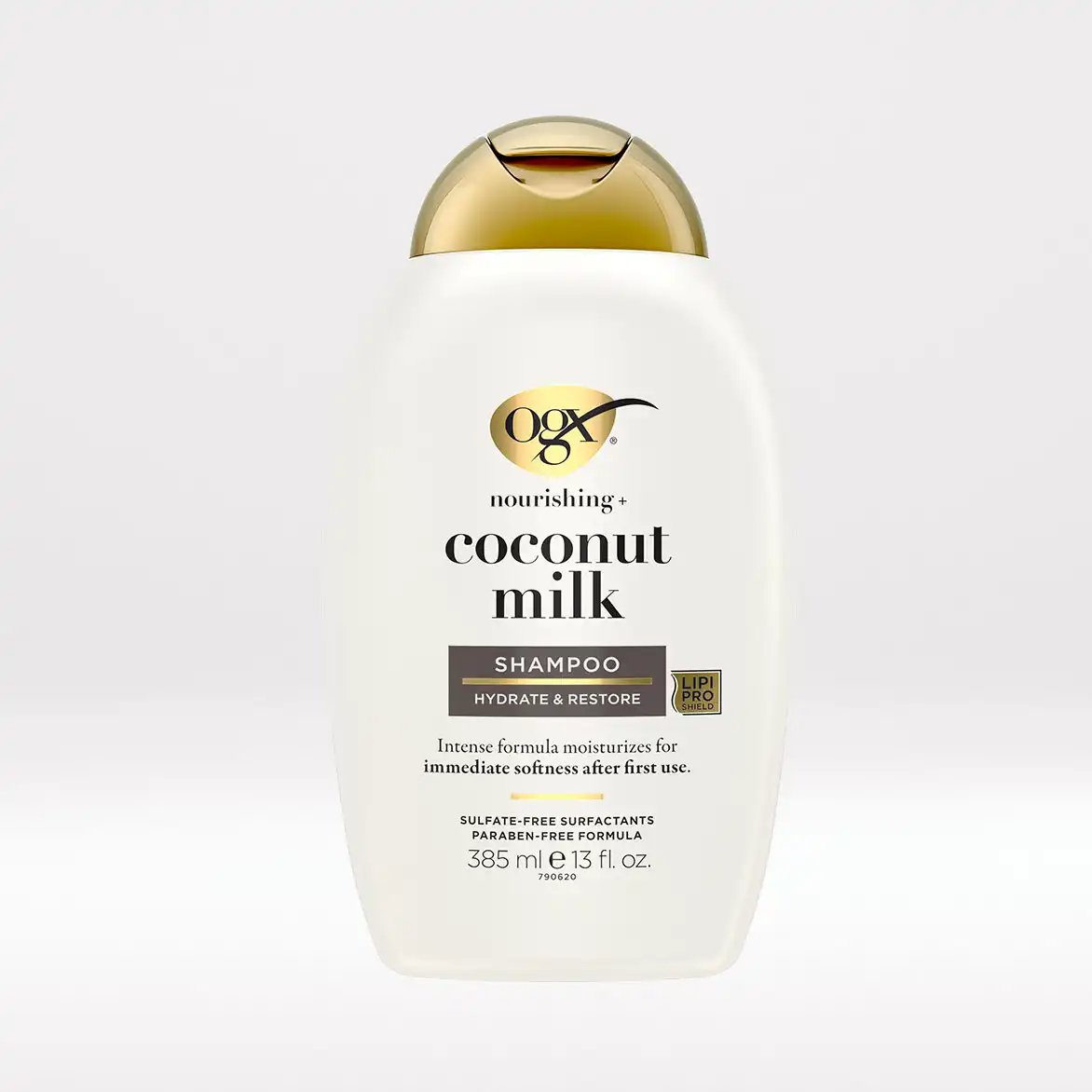
| OGX Nourishing + Coconut Milk Shampoo | Vogue International (Henkel) | Sodium benzoate + phenoxyethanol | No |
| SheaMoisture Jamaican Black Castor Oil Strengthen + Restore Shampoo | Sundial Brands (Unilever) | Phenoxyethanol | No |
| Pantene Pro V Daily Moisture Renewal Shampoo | Procter and Gamble | Sodium benzoate + methylisothiazolinone | No (but MIT, a different contact allergen, is present) |
| Dove Nutritive Solutions Daily Moisture Shampoo | Unilever | DMDM hydantoin + methylisothiazolinone | Yes |
| TRESemme Keratin Smooth Shampoo | Unilever | DMDM hydantoin + methylisothiazolinone | Yes |
Three brands have moved. Two have not. The two that have not are both owned by Unilever, which is not a coincidence so much as a reformulation calendar. Unilever's European and United Kingdom versions of the same two shampoos switched off DMDM hydantoin to phenoxyethanol and sodium benzoate several years ago, because the EU's Commission Regulation 2022/1181 lowered the formaldehyde release labeling threshold on cosmetics to 0.001%, which effectively forced the swap. The US formulas kept the old preservative. The 2027 Washington deadline will push those US formulas onto the European recipe, because manufacturers do not run two preservation systems for one brand when they can avoid it.
This is where the law earns its keep. A single state's cosmetics rule, if the state is large enough that reformulating only for the one state is more expensive than reformulating for the whole country, moves the national formula. Washington is that state for this ingredient. The Personal Care Products Council, the industry's own trade group, has conceded publicly that national reformulation is the only workable response to the Washington timeline.
What the research says about DMDM hydantoin on the scalp
The National Toxicology Program upgraded formaldehyde to known to be a human carcinogen in its 12th Report on Carcinogens, released by NIH in June 2011. The classification is based on strong human evidence for nasopharyngeal cancer and myeloid leukemia, almost entirely from occupational studies of workers who inhaled formaldehyde fumes at concentrations hundreds of times higher than anything released by a shampoo preservative. That is important context. The cancer risk the NTP named applies to concentrated, inhaled, repeated workplace exposure, not to the trace released from a rinse off hair product.
The health finding that does cross over to the shampoo aisle is contact dermatitis. Formaldehyde and its releasers are among the most common causes of allergic contact dermatitis to cosmetic ingredients. The same 2002 patch test study of 85,098 German dermatitis patients tested from 1994 to 2000 found that DMDM hydantoin triggered a positive patch test in roughly 1 to 2% of the people tested, with higher rates among women with hand dermatitis, in whom repeated contact with wet products was common. Diazolidinyl urea and imidazolidinyl urea ran at similar rates. Formaldehyde itself ran higher, closer to 2 to 3%. The study authors wrote that formaldehyde releasers were, together, the second most frequent group of cosmetic preservatives to trigger a positive patch test. The Mayo Clinic and the American Contact Dermatitis Society both carry patient handouts naming the same releasers.
For most people, that means a rinse off shampoo with DMDM hydantoin is not an issue. A short wash and a thorough rinse leaves a trace. For the roughly 1 to 2 percent of people who have been patch test positive to formaldehyde, or who flare on a product that lists one of these releasers, Washington's 2027 line is a quiet favor.
How to read your own bottle in thirty seconds
Flip the bottle. Find the ingredient list. Scan the last third, because preservatives sit near the end of an INCI list in almost every leave in or rinse off product. Look for any of these fourteen names, in the exact spelling Washington uses:
- DMDM Hydantoin
- Diazolidinyl Urea
- Imidazolidinyl Urea
- Quaternium 15
- 2 Bromo 2 Nitropropane 1,3 Diol (also called Bronopol)
- 5 Bromo 5 Nitro 1,3 Dioxane (also called Bronidox)
- Sodium Hydroxymethylglycinate
- Dimethyl Oxazolidine
- 7 Ethylbicyclo oxazolidine (also called Bioban CS1246)
- Benzylhemiformal
- MDM Hydantoin
- Methenamine
- Paraformaldehyde
- Polyoxymethylene
If any of those appears, the bottle contains a formaldehyde releaser. If none appears, it does not. The preservative on a releaser free US shampoo will usually be sodium benzoate, phenoxyethanol, benzyl alcohol, or methylisothiazolinone, often in a pair. Methylisothiazolinone, often shortened to MIT, is not a formaldehyde releaser, but it is a separate common contact allergen the EU restricted in rinse off cosmetics in 2017; a formaldehyde free label does not mean MIT free, and the two swaps are not the same win. The unscented label breakdown walks through the same kind of gap on a different word.
What a formaldehyde free claim really covers
A front of pack formaldehyde free claim covers the finished bottle only. It does not cover the releaser inside the bottle. The FDA's own hair smoothing page is the clearest regulator writing on this: a product can claim formaldehyde free and still release formaldehyde in use, which is exactly how a bronopol or DMDM hydantoin preservative works. The EU's 2022 amendment, Commission Regulation 2022/1181, lowered the threshold at which a cosmetic sold in Europe has to carry a Releases formaldehyde warning label from 0.05% of free formaldehyde to 0.001%, a 50x drop. The US has no equivalent warning threshold. The front of pack claim is unregulated.
Washington's law goes further than a warning threshold. It restricts the releaser itself in the finished product sold in the state, not the formaldehyde level it produces, which is why the fourteen names appear by name on the state's guidance page and the enforcement date is a product restriction, not a labeling rule. Minnesota's draft takes the same approach. The industry pattern, from the EU reformulation history, is that this kind of listed restriction, with a hard date, moves a national formula faster than any voluntary code of practice. Which is why five US shampoos on Oct 24, 2026 split three to two instead of five to zero. The hypoallergenic label post walks through why a front of pack claim without a federal definition is almost always weaker than the ingredient list.
The small print on the three that reformulated
OGX, which Vogue International owns and which Henkel bought from Johnson and Johnson in 2022, switched the US Coconut Milk line to a sodium benzoate and phenoxyethanol preservative several years ago, around the same time its sulfate free rebrand launched. The Pro Growth and Mirror Shine lines on the current OGX site use the same preservative pair. SheaMoisture, which Sundial Brands owns and which Unilever acquired in 2017, kept phenoxyethanol throughout the Jamaican Black Castor Oil line and never used DMDM hydantoin in the US formula at all. Pantene Pro V, owned by Procter and Gamble, uses sodium benzoate with methylisothiazolinone across its daily shampoos.
None of this is a verdict on how clean the three bottles are. SheaMoisture's Jamaican Black Castor Oil shampoo still carries fragrance and surfactants that can trigger a reaction. Pantene's MIT is a separate contact allergen the EU restricted in rinse off cosmetics in 2017, after European dermatology societies reported a spike in MIT allergy cases, and some US dermatologists have called for an FDA restriction that has not come. The three bottles are formaldehyde releaser free. They are not preservative free, and preservative free in a water based wash is not a thing a labeler should promise, because a water based product without a preservative grows bacteria and mold inside a week.
What this changes for a shopper right now
Not much, if you have no history of allergic contact dermatitis and your scalp is calm. A rinse off shampoo with DMDM hydantoin, used two or three times a week, leaves a trace of formaldehyde that sits far below the thresholds the NTP's cancer finding comes from. If your scalp is itching, flaking, or breaking out, and the shampoo lists DMDM hydantoin or any of the thirteen other names, that is one variable you can control in sixty seconds by swapping to a bottle that does not. If you have a patch tested formaldehyde allergy, you already know this; Washington's line in Jan 2027 is a quiet favor for everyone who has had to scan the back of every bottle in the drugstore to avoid a flare. If dandruff or seborrheic flare is the real problem, the seborrheic dermatitis face wash read is the next piece, because the treatment active matters more than the preservative there.
For the brands, the story is less a safety emergency and more a reformulation calendar. The EU lowered the labeling bar in 2022. Washington closes the loophole in 2027. Minnesota is drafting. The industry pattern is clear enough that Unilever's two US stragglers are already working on a swap. The real test, for a shopper, will be whether the swap lands as sodium benzoate, as phenoxyethanol, or as methylisothiazolinone, because a MIT reformulation is not the clean win the front of pack claim will suggest.
Snap a photo of any shampoo bottle on your shelf and Skinventry 4.0 pulls the ingredient list, flags any of the fourteen formaldehyde releasers Washington names, pulls the maker and the parent company, and shows what is on the public record for the brand, with a source for every line.
How we got these numbers
On Oct 24, 2026 we picked five US shampoos a shopper would actually see on page one of a Google search for a daily shampoo. We read each product's current ingredient list on the brand's own US page where it was published in the HTML (OGX, Dove), and on incidecoder.com for the three brands whose US product pages did not expose the INCI list in the HTML (SheaMoisture, Pantene, TRESemme). We cross referenced each product against the fourteen formaldehyde releasers Washington names on the Toxic Free Cosmetics Act guidance for cosmetologists page, accessed the same day. Each link in this post returned HTTP 200 before publication. The EU and Minnesota comparisons come from the EU's Commission Regulation 2022/1181 text on the EU's EUR Lex database and from Minnesota's HF 3267 bill page. The patch test prevalence number comes from the 2002 German multicenter study on PubMed. The NTP classification year comes from the NIH announcement page.
