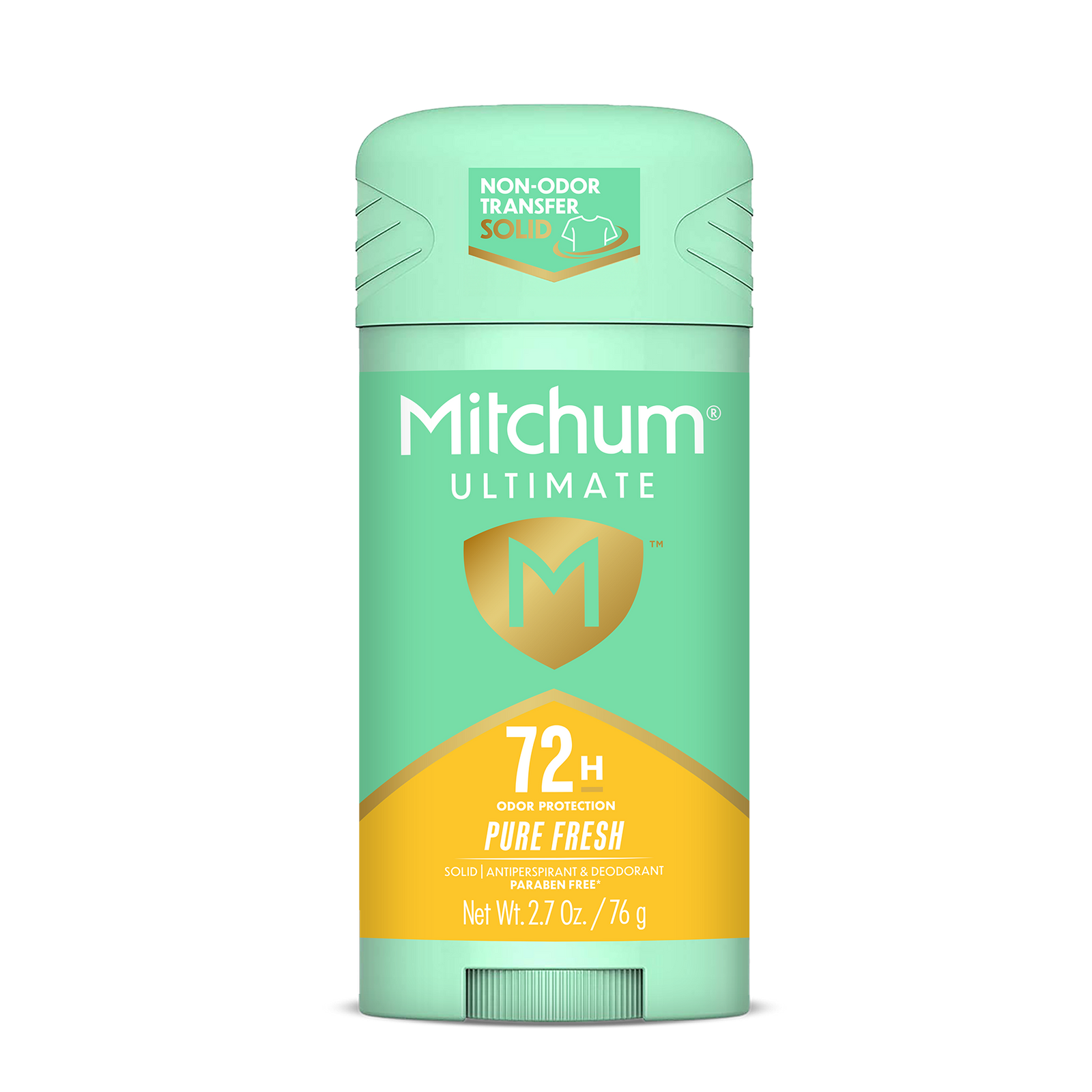
FDA sent Revlon's Oxford, North Carolina drug factory a warning letter on June 2 2026. The agency said the plant did not adequately test incoming talc for asbestos and released over the counter drug lots within weeks of expiry. Revlon is the labeler on every Mitchum antiperspirant on DailyMed, and talc sits at ingredient 9 of 16 inactives in Mitchum Ultimate 72H Pure Fresh.
The 2026 warning letter was sent to Revlon's drug factory in Oxford, North Carolina on June 2 and signed by Francis Godwin, director of FDA's Office of Manufacturing Quality. It is about how the plant tests the talc it puts in its over the counter drug products. The letter sits on the agency's own warning letter database, where we read it on November 20 2026, and six months later it has not been closed out.
The letter does not say any Revlon product contained asbestos. The product names in it are redacted. What it says is that FDA investigators found three problems at the Oxford plant, and that those problems matter because the plant is registered as a manufacturer of OTC drugs. Which is to say, this is not about a lipstick. It is about the drug products Revlon makes, which include every Mitchum on the shelf. Mitchum Ultimate 72H Pure Fresh Solid, the mint green stick on the Walgreens shelf, lists Aluminum Zirconium Tetrachlorohydrex Gly at 20% as its active, and talc as inactive 9 of 16.
Here is what the agency found, what the labels show, who owns the company, and what has actually changed since June.
What did FDA say Revlon was not doing?
FDA investigators looked at how Revlon handles talc, the soft mineral that gives sticks and powders their slip. Talc is the ingredient at the center of the warning letter, cited by name on page one. The agency said Revlon's quality unit was not catching problems the law says it is supposed to catch. The letter is numbered 320 26 89 and runs about ten pages.
First, incoming talc was not being tested the way the drug rules require. Under 21 CFR 211.84(d), a drug maker has to test each lot of a raw ingredient for identity, strength, purity and quality. Revlon, FDA wrote in the June 2 letter, relied on its supplier's asbestos test results without checking them, and its own identity testing skipped two of the three tests in the current USP talc monograph. The agency's phrase was that the firm did not establish the reliability of the supplier's analyses.
Second, the quality specifications the plant was approving on talc lots were, in the letter's words, inadequate. The agency said they lacked an assay, lacked impurity testing, and set a microbial limit above what the USP allows. The quality unit, FDA wrote, had approved all of this.
Third, the plant kept releasing OTC drug lots just before they aged out. The letter notes multiple lots released within months of expiry. One lot went out with a single month of shelf life left. Nothing in the drug rules forbids a short shelf life, but FDA cited it as a sign the quality system was not working as intended.
The agency asked Revlon to perform risk assessments on products made with the talc at issue and to conduct recalls if any contamination was found. As of this writing, no such recall has shown up in FDA's weekly Drug Enforcement Report, which we queried on November 20 2026 and got zero results for the recalling firm Revlon.
Who owns Revlon now?
Revlon is no longer the company Ronald Perelman built. On May 2 2023, after a 2023 restructure that wiped out the old equity, the company emerged under the control of a group of its former lenders. That group, Yahoo Finance reported on the day, included Glendon Capital, King Street Capital, Oak Hill Advisors and Angelo Gordon. Perelman's holding vehicle, MacAndrews and Forbes, which had held about 85 percent of the stock going in, was not among the new owners.
The reorganized parent is Revlon Group Holdings LLC. It is private, so it does not file quarterly results with the SEC the way most beauty companies do. Debra Perelman stayed on as chief executive at the time of the restructure. Bloomberg Law, reporting on the June 2 FDA letter, named Michelle Peluso as Revlon's current chief executive, a former co president of CVS Pharmacy. The operating subsidiary that sits under the holding company, and that signs every Revlon OTC drug label on DailyMed, is Revlon Consumer Products Corp. That is the entity at the top of the June 2 letter.
Which Revlon brands are made at the Oxford plant?
The Oxford, North Carolina facility is FDA registered as an OTC drug manufacturer. We pulled the list of drug products filed under Revlon Consumer Products Corp from FDA's National Drug Code directory on November 20 2026 and counted 43 live entries. Four brand families show up again and again.
The biggest by volume is Mitchum, the drugstore antiperspirant. Every Mitchum on DailyMed, from the Clear Gel to the Ultimate 72H solid to the Clinical Soft Solid, is labeled Revlon Consumer Products Corp.
Elizabeth Arden's Prevage Anti Aging Moisture Cream Broad Spectrum SPF 30 is labeled Revlon, and so is the Ceramide Lift and Firm Day Cream Broad Spectrum SPF 15. The Revlon color cosmetic SPF line is on the same labeler: ColorStay Preo and Protect Primer, Age Defying Firming Lifting Makeup SPF 15, PhotoReady BB Cream Skin Perfector. American Crew's All In One Face Balm SPF 15 and the Pyrithione Zinc dandruff shampoo are both on the Revlon label too.
The warning letter does not say which of these products, if any, are the ones the agency was looking at. The redactions in the public version cover the specific product names. But the universe of candidates is this list, because this is what the Oxford plant is registered to make.
Does Mitchum contain talc?
The warning letter is interesting partly because nobody reading it can tell which Revlon products were at issue. What we can do is read the labels of the Revlon drug products that use talc, which is the ingredient FDA named.
Mitchum Ultimate 72H Pure Fresh Solid, a 76 gram stick sold at CVS, Walgreens and Target, is a good example. Its Drug Facts label on DailyMed, which is the legal label for any OTC antiperspirant, lists one active, Aluminum Zirconium Tetrachlorohydrex Gly at 20 percent, and 16 inactives. Talc is the ninth of those sixteen, sitting between Parfum (fragrance) at 8 and BHT at 10. The order says talc is one of the mid weight ingredients in the stick, not a trace. We read the Advanced Control Solid label in the same session and found talc in the same middle of the list position there too.
For comparison, we also read La Mer's Crème de la Mer label line by line in a teardown last week. That is a cosmetic, not a drug, and the top of its list is not where the shopper might expect it either. Reading the actual label almost always reads differently from reading the ad.
What does the US rule on talc in cosmetics actually say?
There is no federal rule in the United States that requires cosmetic makers to test their talc for asbestos. There almost was: FDA proposed one in December 2024. The agency withdrew the proposal in November 2025, saying it would revisit the rule under the authority it got from the 2022 cosmetics law, Personal Care Insights reported in July. That withdrawal is why the June 2 letter matters: for a company making drug products, FDA can still enforce on talc through the drug rules, and that is what it did.
The drug rules it used, 21 CFR 211.84 and 211.22, are the current good manufacturing practice regulations, and they apply to any OTC drug, including the aluminum based antiperspirants Mitchum sells. The USP talc monograph, the industry standard that Revlon's testing was being measured against, was revised with an effective date of June 2026. The warning letter sits on the hinge of that update.
For a reader looking at the shelf, two things to know. First, restricted is not the same as banned: talc is permitted in US cosmetics and OTC drugs, and FDA does not say in this letter that any Revlon product contained asbestos. Second, the agency's own position, written on that same June 2 page, is that Revlon had not shown the asbestos testing on its talc supply was reliable. The regulator did not conclude the talc was bad. It concluded it did not know.
What Revlon has said, and what has changed since
Revlon, in a statement to Bloomberg Law when the letter went public, said it stands by the safety of its products and is working with FDA. Bloomberg reported that the company did not answer its questions about which specific product or contaminant was at issue.
Between June and this week, the record has not moved much. The warning letter is still posted on the FDA site as sent, with no closeout attached. No Revlon recall has posted to the Drug Enforcement Report. The company has not published a page on its investor or press site explaining what it changed at Oxford, and we did not find one in a site search on November 20 2026. The FDA enforcement reporter database shows 59 lifetime CAERS consumer adverse event reports under the brand name REVLON, which is useful to put in perspective: those filings are voluntary submissions, FDA says in its CAERS guidance that they do not show that the product caused the event, and the counts cannot be used to estimate risk.
What the June 2 letter has done is put Revlon in a small club: cosmetics parents whose names sit on an open FDA warning letter right now. Earlier this year we wrote about the benzene FDA tested in 95 benzoyl peroxide products, a different manufacturing issue at a different kind of company. The pattern is the same: the clearest signal about what is happening inside a factory lives in the agency's own paperwork, not in the brand's advertising.
If you are a Mitchum user, what to do with this
The honest answer is read the label, then decide. The whole body deodorant versus antiperspirant post from last week walks through how the two differ on the Drug Facts panel. If your Mitchum is one of the aerosol or gel variants, talc is not usually in the formula. If it is a solid, talc is there, and FDA has not shown it to be contaminated, and FDA has also said Revlon has not shown it is not. Those are two different sentences, and neither of them is a verdict on the product. Pick the sentence you want to live with.
You can also read the label of the specific stick in your drawer, instead of trusting a summary of it. Every Revlon OTC drug label is posted on DailyMed, free, by law. Search the product name. Look for Talc in the inactives. If it is there, you now know a little more about where it comes from than you did last week.
How we checked this
We read FDA warning letter 320 26 89 in full on the agency's warning letter database on November 20 2026. We read the Drug Facts labels for Mitchum Ultimate 72H Pure Fresh Solid (DailyMed SETID 37b340f3) and Mitchum Advanced Control Solid (SETID 83f53c28) in full on DailyMed on the same day. We queried the openFDA National Drug Code directory for labeler_name Revlon Consumer Products Corp and got 43 current OTC drug entries. We queried the openFDA Drug Enforcement Report for recalling_firm Revlon and got zero recalls. The FDA CAERS entry count comes from the openFDA food event API filtered to product brand REVLON. The company history and ownership facts are sourced inline. If any of this is out of date when you read it, those same pages are the ones to check first.
Photograph the label on your antiperspirant stick and Skinventry tells you who makes it, who owns the company, every ingredient on the back, and whether that company has anything on its FDA record, with a source for each line. On this one, it would have shown you the June 2 letter.
