A milium is a sealed keratin cyst under the top layer of skin, not a clogged pore. Of the 5 top drugstore milia removal products we read on Nov 19 2026, 4 are retinoids or BHA cleansers. The DermNet NZ milium reference says the fix is de roofing with a sterile needle in a dermatologist's office.
What is a milium, and why does every cream a shopper buys for milia removal leave the same white bump a month later?
The answer is in the chemistry, and it's older than the drugstore shelf. On Nov 19 2026, we read the Drug Facts panel and the ingredient list of 5 products Google served up for the query milia removal at home. Our audit found 4 of 5 are cell turnover drugs built for acne or texture. 1 is a cleanser with 0.5 percent salicylic acid. None names milia on the label. That's not because the brands are hiding anything. It's because none of them is for milia. We put each label next to what DermNet NZ, the 2019 JAAD Case Reports paper by Zhang and colleagues on milia en plaque, and the NCBI Bookshelf milia chapter say each active actually does for a closed keratin cyst. The answer every time came out the same.
What is a milium, and what is it not?
A milium (plural milia) is a small keratin filled cyst that forms just under the epidermis. DermNet NZ, the dermatology reference run by physicians out of New Zealand, calls it a pearly white bump sealed inside a thin wall of skin. The entry splits milia into primary milia (which appear on eyelids, cheeks and foreheads of adults and children), neonatal milia (which clear in weeks), traumatic milia (which follow burns or dermabrasion), milia en plaque (crops of milia inside a thickened patch), and drug associated milia (rare, following topical phenols, hydroquinone, fluorouracil or steroids). The common shape across every type is that wall. The bump isn't an opening. Nothing on your sink can un seal it. Primary milia around adult eyes often persist for months, and they don't resolve on an exfoliation schedule.
How a milium differs from a whitehead
A comedone is almost the opposite of a milium. A closed comedone (the whitehead on your chin) is a hair follicle plugged with sebum and dead cells. A 2 percent salicylic acid toner at pH 3 can slowly break that plug down, because salicylic acid is oil soluble and travels into the pore it comes from. A milium has no pore to travel into. The 2019 JAAD Case Reports paper by Zhang and colleagues, which describes a 46 year old man with milia en plaque on the retroauricular fold, confirms what every biopsy shows: a keratin filled dermal cyst, enclosed, with no outlet. Walk a BHA across the skin above a milium and you'll have cleaner oil chemistry, not fewer milia. That's the single sentence most of the affiliate roundups miss when they put a BHA cleanser at the top of a milia list.
Why doesn't a BHA or a retinoid remove a milium?
Two mechanisms, two mismatches. A beta hydroxy acid like salicylic acid is oil soluble and travels into the sebum of a follicle. It breaks the plug down from the inside. There's no follicle under a milium. The acid lands on the roof of a cyst and never crosses it.
A topical retinoid is different. Adapalene (the active in Differin and Neutrogena Evenly Clear) and retinaldehyde (the active in The Ordinary Retinal 0.2% Emulsion) are vitamin A derivatives that speed up how the skin's top layer renews. Over weeks, the layer above a small milium thins and the cyst can, for small primary or eruptive milia, work its way to the surface and resolve. Both DermNet NZ and the Zhang 2019 review list topical retinoids as an option for widespread or persistent milia and milia en plaque. Neither lists them as the fix for the one bump under your eye you noticed on Sunday.
Timing matters too. The widespread lesion studies move on a scale of weeks to months, not a week. If the goal is to clear a visible bump by the weekend, a cream is the wrong tool.
What the 5 top drugstore milia removal products actually are
Here's what the 5 most searched milia removal products on Google are, what their labels say, and what any of it has to do with a sealed cyst. We read every label on the brand's own page on Nov 19 2026, and our review captured the active, the FDA Drug Facts purpose where there was one, and the strength.
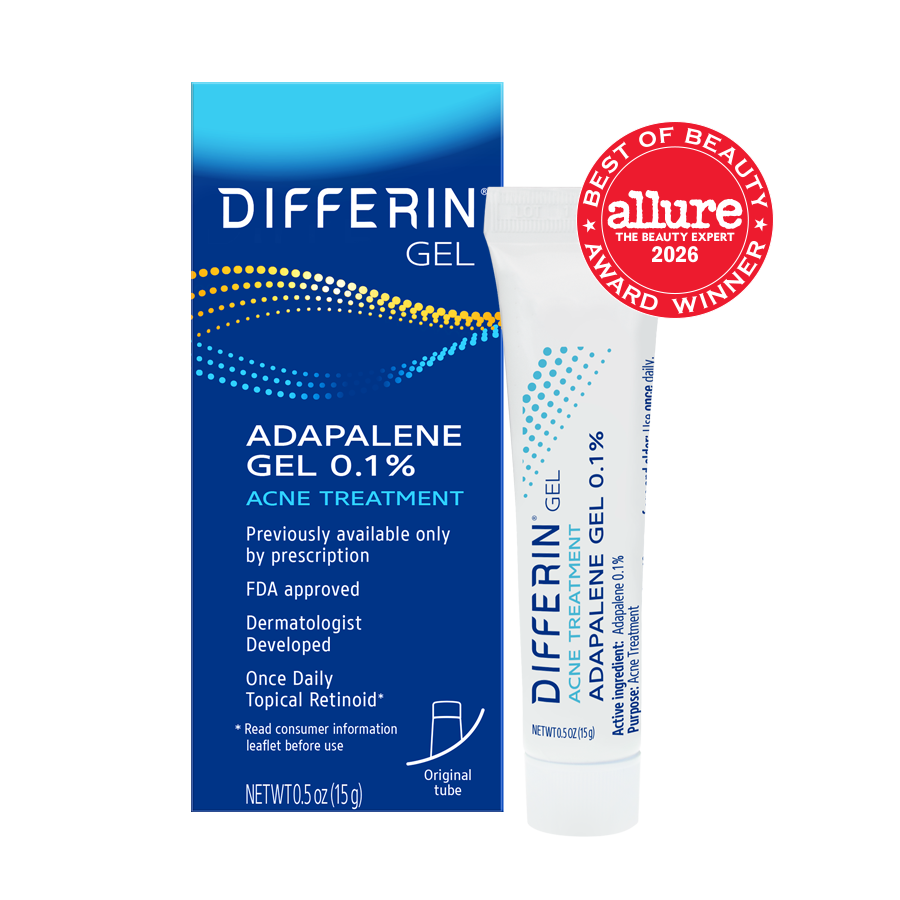
| Product | What the label says | Does the label name milia? | What dermatology says it does for a milium |
|---|---|---|---|
| Differin Adapalene Gel 0.1% | Adapalene 0.1 percent, a topical retinoid; Drug Facts purpose: acne treatment | No | Over weeks, a retinoid may thin the roof of small or widespread milia; the DermNet NZ reference lists retinoids under widespread lesions, not single bumps |
| Neutrogena Evenly Clear Adapalene Gel 0.1% | Adapalene 0.1 percent, same active as Differin; sold by Kenvue; Drug Facts purpose: acne treatment | No | Same as Differin, since the drug is the same |
| The Ordinary Retinal 0.2% Emulsion | Stabilized retinaldehyde (a cosmetic retinoid); the brand page positions it for signs of aging, uneven tone and texture | No | Weaker retinoid pathway than adapalene; similar slow effect on widespread milia, similar lack of effect on a single sealed cyst |
| Paula's Choice Skin Perfecting 2% BHA Liquid Exfoliant | Salicylic acid 2 percent in a leave on liquid; marketed for pores, texture and blackheads | No | A BHA works on the inside of a clogged pore. A milium has no pore, and salicylic acid doesn't cross a cyst wall |
| CeraVe Renewing SA Cleanser | Salicylic acid 0.5 percent in a rinse off cleanser with ceramides and niacinamide; marketed for rough and bumpy skin | No | Lower BHA than Paula's Choice, rinsed off in seconds, so almost no exposure to the skin, let alone to the cyst wall |
Our table read one way.
Every product is a cell turnover drug or a BHA, both built on the model of a blocked pore. The milium isn't a blocked pore. Nobody's lying to you on these pages. None of the 5 brands claims any of these products removes milia. The claim is downstream, in affiliate roundups that call BHAs and retinoids the milia fix because they're the two things dermatologists mention on camera when a reader asks. Mention isn't the same as fix.
So what actually works?
The DermNet NZ milium entry lists the real treatments in order of how often they're used. First, de roofing: a dermatologist nicks the skin above the cyst with a sterile needle or blade, then lifts the keratin out. Second, diathermy with curettage (a heated tip and a small scraping tool). Third, cryotherapy (liquid nitrogen) for selected lesions. Fourth, topical retinoids for widespread lesions. Fifth, chemical peels, dermabrasion or laser ablation for very extensive milia. Sixth, oral minocycline, specifically for milia en plaque.
The Zhang 2019 case report puts manual extraction as the most common treatment for milia en plaque, and lists tretinoin and minocycline as secondary options. Across both references, extraction comes first, by a professional, with a sterile tool.
Everything else is for the case where there are too many lesions to extract one by one.
Shoppers almost never have that case. The thing that drove the Google search is one bump under an eye, or 3 on a cheekbone, after a week of using a heavy eye cream. That's the case where the DermNet NZ reference says a doctor's visit clears them in minutes.
Can you remove milia at home with a needle?
This is the top question under the Google Suggest stem milia removal at home, and it's the one a shopper should hear a straight no on. The DermNet NZ entry describes de roofing as a procedure done with a sterile needle or blade, by a clinician. Done on a bathroom sink, the risks line up quickly: scarring, pigment change after the fact (post inflammatory hyperpigmentation is more common and more stubborn on darker skin), an infection in skin close to the eye, and no way to be sure the keratin came all the way out. If it didn't, the milium comes back.
The Zhang 2019 review frames extraction as the first line treatment for a reason: it works in minutes and there's almost no recurrence. The same procedure done at home carries none of those odds. A visit to a medical dermatologist for one or two milia is often a single short appointment. In the US, many practices treat this as a quick cosmetic procedure that doesn't go through insurance; the ballpark is a few hundred dollars for a short office visit. That's the honest cost of the clean fix.
Home does have one job here. A routine can stop causing the next bump. Heavy occlusive eye creams, mineral oil based balms around the eye, prolonged sun damage and skin injuries all show up in the traumatic and secondary milia pathways in the DermNet NZ entry. Swapping a greasy eye product for a lighter gel is a real, mechanism driven change. It won't get rid of the existing bump. It'll stop feeding the next one.
What about milia under the eyes specifically?
Eyes are the most searched location by far. When we ran Google Suggest for milia around eyes on Nov 19 2026, we got 10 completions, and the top 4 of our returns were variations on treatment and removal.
The eye area deserves its own caution. The skin under the eye is thinner than the cheek and reacts to the same strength of adapalene that a cheek shrugs off. The DermNet NZ reference advises care with topical retinoids near the eye. If a shopper is going to use one anyway, the pea sized dose (not a swipe) a few millimeters away from the lash line, 2 to 3 nights a week, is what dermatologists tell their patients on camera. Even then, the reference is careful: the retinoid is for prevention of new lesions, not removal of a current one.
And the mechanism of eye area milia matters. Thick, occlusive eye creams are a common trigger. The milia en plaque case series in the Zhang paper and the traumatic milia pathway in the DermNet NZ entry both point at trauma or occlusion. A heavier balm around the eye is occlusion. A lighter, non comedogenic eye gel is one of the few things in a shelf routine that actually cuts the next bump.
When should you see a dermatologist?
See one when the bumps bother you cosmetically, when they're around the eye, when they're inside a reddened patch (which could be milia en plaque), or when they're suddenly many and did not use to be there. The last pattern, multiple eruptive milia, sometimes points at an inherited syndrome or a drug reaction, and is the one case where self treatment loses the most time.
In the office, ask for de roofing with a sterile needle (the cheapest, lowest scar risk option for one or a few lesions), curettage with a tiny scraper, or hyfrecation (a very fine electric tip) if there are many. None of these is cosmetic in intent, so a medical dermatologist is usually the right address, not a med spa.
If you want a retinoid in the routine for long term prevention, the Skinventry guide to which retinoid matches which concern compares adapalene, retinal and retinol by strength and tolerance. For the BHA question, the lactic acid vs glycolic acid head to head covers which acid does what for texture. The best face wash for sebaceous filaments explains why a BHA cleanser clears a comedone but not a cyst. The layering order post covers the timing question that almost always comes up next.
The caveat
Topical retinoids aren't useless here.
In widespread or persistent milia, they do, slowly, reduce the count of new lesions and may thin the roof of some small ones. That's why both references list them. A person already on a retinoid for acne or aging who also has multiple eruptive milia is in the best position any shelf routine can give them. What they're not is a one bump remover for the eye area in a week. If a shopper picks one of my five labels thinking it'll clear the 5 bumps they see in the mirror by the weekend, they'll be back on the search bar in a month, having spent money for nothing. The honest answer to milia removal at home is that the extraction isn't at home. Our reading of the labels and the references all pointed to the same door, and it has a dermatologist behind it.
Reading list
Three things we read while writing this, and the one our desk kept coming back to.
The DermNet NZ milium entry is the clearest free source for what milia are and how they're treated, written by dermatologists and kept current. The 2019 JAAD Case Reports paper by Zhang and colleagues on milia en plaque is a short case with a long treatment review in its discussion. The NCBI Bookshelf milia chapter (the StatPearls monograph) covers pathology and surgical options.
Photograph any of these 5 bottles with Skinventry and the app shows the active ingredient, the brand owner, the FDA Drug Facts where the product is a drug, and anything on the public record, with a source on each line. You see what the label really is before you buy the wrong thing.
