No face wash removes sebaceous filaments, and no published study has tested one on them. The wash with the best reason to help is a 2% salicylic acid acne wash used after an oil cleanser. We read five labels: four print 2% on a Drug Facts panel. CeraVe's Renewing SA Cleanser lists salicylic acid but never says how much.
CeraVe says its Acne Control Cleanser, a 2% salicylic acid gel, is formulated to "clear acne, reduce blackheads and improve the appearance of pores." That line sits on the brand's own product page, and it's aimed squarely at your nose. The gray dots on most noses aren't blackheads, though. They're sebaceous filaments, and when we searched PubMed for that exact phrase on October 16, 2026, the database returned four papers: three reports on single patients and a German paper from 1976.
None of them tests a face wash.
So we read labels instead. On October 16, 2026, we read the labels of five salicylic acid face washes: four Drug Facts panels on DailyMed, the National Library of Medicine's database of the drug labels companies submit to the FDA, and one ingredient list on CeraVe's own site. Below is what those labels say, what the research on salicylic acid can and can't promise, and the wash we'd pair with an oil cleanser.
What are sebaceous filaments, and who is this for?
You have small gray or tan dots spread evenly across your nose, maybe your chin and forehead too. Squeeze one and a pale, waxy thread slides out. A few days later, it's back.
That's a sebaceous filament. A 2021 report in Dermatology Practical and Conceptual describes them as yellowish to off white collections of sebum and dead cells around hair follicles, found in normal, healthy people, mostly on the nose, and easy to mistake for blackheads.
"Sebaceous filaments are physiologic accumulations of sebum and corneocytes in the follicular infundibulum," wrote Abdulaziz Almufadhi and Mohammed Alosaimi in a 2026 case report in JAAD Case Reports.
In plain words, that's oil and shed skin cells filling the top of a normal pore. They aren't dirt, and they aren't an infection. If your bumps are red, sore or full of pus, you're looking at acne, and a dermatologist is a better first stop than a new cleanser.
Already own an oil cleanser? Keep it. The right base oil softens the plug so filaments look flatter for a day or two. This piece is about the wash that goes on second.
How we compared the labels
Salicylic acid is the usual pick for this job, and its chemistry is the reason. It dissolves in oil, and it loosens the dead cells packed in with the sebum. In the US, a face wash that claims to treat acne is a drug: the FDA lists "cleansers that are also intended to treat acne" among products regulated as drugs, and the federal acne rule allows salicylic acid at 0.5 to 2 percent. A wash sold as a cosmetic can still contain salicylic acid, but it can't claim to treat acne, and its label doesn't have to say how much is inside.
For each wash we noted whether it's sold as a drug or a cosmetic, the salicylic acid level printed on the label, what the directions say about time on skin, the other ingredients worth knowing about, and the company that files the label. Nobody here put these on skin. This is a reading of labels, dated October 16, 2026.
| Face wash | Sold as | Salicylic acid | How long to leave it on | Also in the bottle | Companies on the drug label |
|---|---|---|---|---|---|
| CeraVe Acne Control Cleanser | Acne drug | 2% | Not stated; "cover the entire affected area with a thin layer," then rinse | Niacinamide, gluconolactone, hectorite clay, three ceramides | L'Oréal USA; Dimensional Merchandising packs it |
| Neutrogena Oil Free Acne Wash, Sensitive Skin, Fragrance Free | Acne drug | 2% | Not stated; "massage face gently," then rinse | Panthenol, chamomile extract | Kenvue Brands |
| Cetaphil Gentle Clear Pore Clearing Acne Cleanser | Acne drug | 2% | Not stated; "gently massage," then rinse | Shea butter, soybean oil, lactic acid | Galderma; made by Fruit of The Earth, Inc |
| The INKEY List Salicylic Acid Cleanser | Acne drug | 2% | Not stated; "cover the entire affected area with a thin layer and rinse" | Zinc PCA, allantoin | Brand Evangelists for Beauty |
| CeraVe Renewing SA Cleanser | Cosmetic | Not printed; 16th of 27 ingredients | Not stated; massage, then rinse | Niacinamide, gluconolactone, corn oil, three ceramides | None; sold as a cosmetic |
The four drug panels are on DailyMed for CeraVe Acne Control, the Neutrogena sensitive skin wash, Cetaphil's pore clearing cleanser and the fourth cleanser in the table. The pattern jumped out fast. Every acne drug in the set prints 2%, the most the rule allows, and not one of the five labels, drug or cosmetic, says how long the wash should stay on your skin before you rinse it off.
Our pick: CeraVe Acne Control Cleanser
If we were buying one wash for filaments today, it would be this one. It prints the full 2% on a Drug Facts panel filed by L'Oréal USA Products. The base adds niacinamide and gluconolactone, plus hectorite, a clay CeraVe says helps absorb excess oil. There's no fragrance in its ingredient list. It cost 17.99 dollars on CeraVe's site on October 16.
The catch is dryness. Its own directions tell new users to try it on a small area once a day for three days, then to cut back to once a day or every other day if dryness or peeling shows up. On a nose that's already been through an oil cleanser and a towel, take that warning seriously.
Runner up for sensitive skin
Neutrogena Oil Free Acne Wash for sensitive skin also prints 2%, and it's the only bottle here with "fragrance free" in its name. Its Drug Facts, filed by Kenvue Brands, list panthenol and chamomile extract next to the cleansing agents. The directions run four short steps: cleanse twice a day, lather, massage gently, rinse. The warning is the useful line. Irritation and dryness are more likely, it says, if you use another topical acne medication at the same time.
Also worth a look
Cetaphil Gentle Clear Pore Clearing Acne Cleanser has the most oils and butters in its base. Galderma's label lists shea butter, soybean oil and lactic acid around its 2% salicylic acid, which may sit better on a nose that flakes. The same filing names Fruit of The Earth, Inc, not Galderma, as the company that manufactures it. The INKEY List Salicylic Acid Cleanser pairs its 2% with zinc PCA and allantoin, and its directions mirror CeraVe Acne Control's: start once a day, build up only if your skin allows.
The CeraVe wash that doesn't say how much
CeraVe sells a second salicylic acid face wash, and it's two dollars cheaper. Renewing SA Cleanser was 15.99 dollars on CeraVe's site on October 16. The front of the bottle says "with salicylic acid, ceramides." The ingredient list puts salicylic acid 16th of 27, right after sodium chloride, which is plain salt.
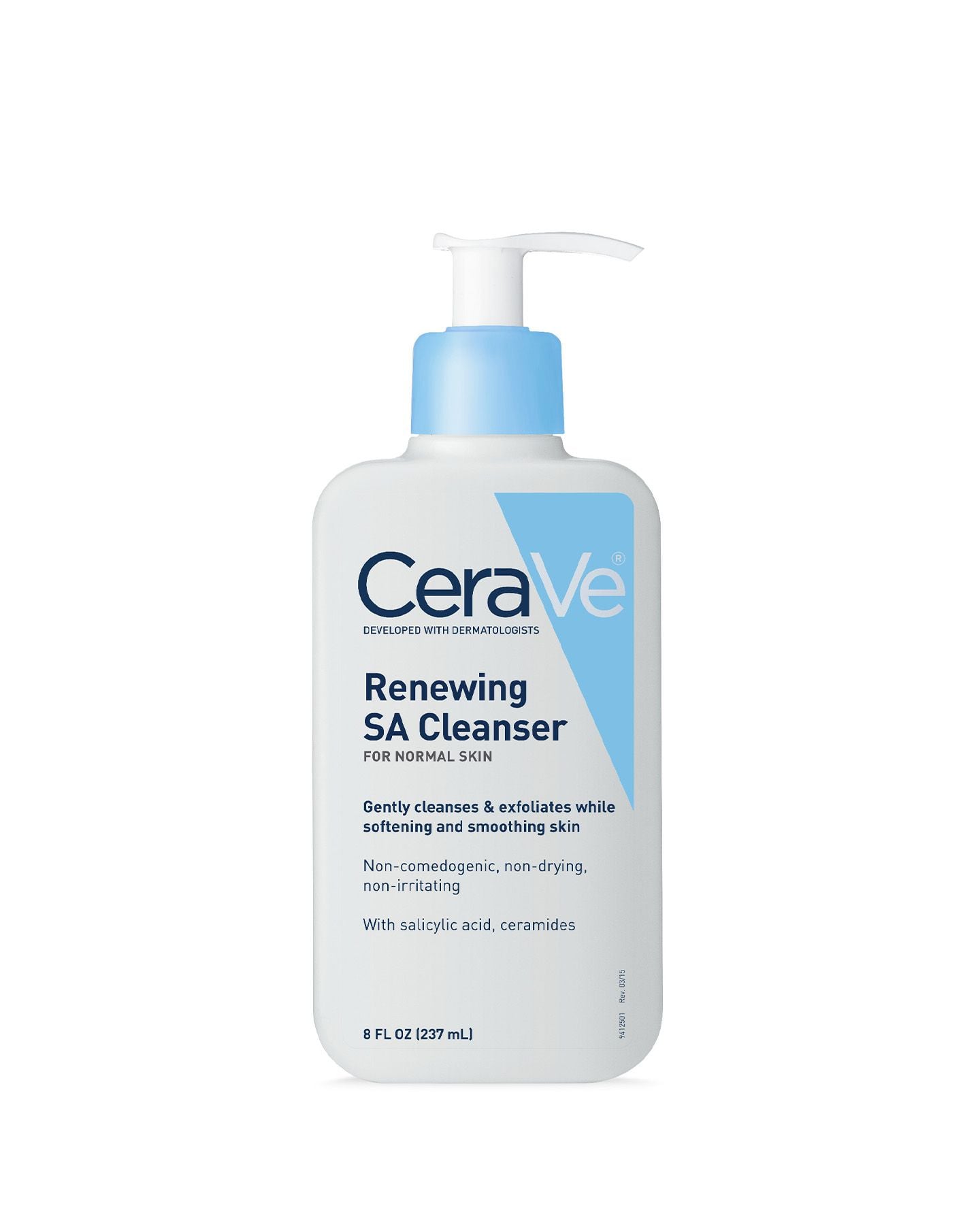
It's sold as a cosmetic for gentle exfoliation on normal skin, not as an acne drug, so there's no Drug Facts panel and no percentage anywhere. US cosmetic rules also let ingredients at 1 percent or less appear in any order after the larger ones, under 21 CFR 701.3, so even its place on the list can't tell you the dose.
That says nothing bad about the formula. CeraVe built it for a different job, and the rules only ask it to list what's inside.
Does salicylic acid actually help sebaceous filaments?
Here's the honest limit. A face wash is on your skin briefly, then it's down the drain, and the evidence behind salicylic acid is thinner than the marketing around it. The American Academy of Dermatology's 2024 acne guidelines give salicylic acid only a conditional recommendation, a step below benzoyl peroxide and topical retinoids, which both earned strong ones. A 2020 Cochrane review rated the salicylic acid trials it found as low or very low quality. In a 2010 split face trial of 13 people over eight weeks, spots fell on both sides of the face, and blackheads and whiteheads, the bumps closest to a filament, did no better with a cleanser containing salicylic acid, azelaic acid and triclosan than with the same cleanser without them. Filaments also refill, because they're part of a working pore.
What did the case reports use instead?
The few doctors who have written about filaments reached past the sink. A 2023 case report in Cureus says treatment aims to shrink the oil glands themselves, and its patient was treated successfully with topical tretinoin. The 2026 JAAD Case Reports authors note that earlier reports describe improvement with topical keratolytics, the family of skin loosening agents salicylic acid belongs to, and with retinoids, before they used a 1726 nm laser aimed at the oil glands. A lab study on hamster ears, published in 2004 in the Journal of Cosmetic Science, found salicylic acid reached oil filled follicles better from fatty bases than from watery ones. Most foaming washes are water based.
If the dots really bother you, a dermatologist can talk you through a retinoid, and choosing a retinoid by the concern you have covers the options sold without a prescription too. If you want salicylic acid to stay put, a leave on product beats a rinse off one, for the reasons in how leave on and rinse off acids really differ.
How should you use a face wash on filaments?
Oil first, wash second.
Massage the oil cleanser into your nose, add a little water to turn it milky, rinse, and then follow with the salicylic acid wash. None of the five labels says how long to leave the wash on, so don't invent a timer: the popular 60 second rule was built around foaming washes and normal skin, and we found no study showing that a longer stay helps filaments. Start once a day, as two of the drug labels advise, and add a second round only if your skin stays calm.
Skip the steam. Pores don't open or close, and heat only softens oil for a few minutes.
Don't squeeze, either.
If we were starting over with a nose full of gray dots, we'd keep the oil cleanser we already owned, add one 2% wash that prints its dose, and stop shopping there. The money for a third cleanser would go toward a dermatologist visit about a retinoid instead.
Photograph the back of any face wash and Skinventry pulls up its published ingredient list, who makes it and the company that owns the brand, with a source beside each line.
