Charcoal alone doesn't fix acne. In a 2023 clinical trial, a twice weekly kaolin and bentonite clay mask cut skin oiliness by roughly 69% at first use, and salicylic acid does the pore work. We compared five on their labels. Two are worth buying.
A charcoal mask sells you a color. The useful question is why the few that work actually work, and whether the charcoal in them is doing anything at all.
In the charcoal masks this post recommends, the charcoal is a small share of a much larger clay base. Origins, for one, says its mask is 1% bamboo charcoal and 18% clay. The actual acne benefit tracks the clay and the acid, not the charcoal.
A 2019 review in Clinics in Dermatology on the resurgent use of activated charcoal in cosmetics put it plainly: patients should be told that topical charcoal is generally safe but that evidence for its acne, exfoliation, and antiaging claims is insufficient. So the buying question changes. If you want a charcoal mask for acne prone skin, buy the one whose clay and active tier is doing the work.
Do charcoal masks actually help acne?
Sort of, but not for the reason the packaging suggests. Activated charcoal is porous carbon. On skin it absorbs a bit of surface oil and some water soluble impurities the way a sponge does. It doesn't dissolve into the follicle, it doesn't kill acne bacteria, and no controlled trial has shown it clears breakouts on its own.
What does clear breakouts, in the mask category, is the pair of ingredients that usually shares the tube. Clay pulls sebum. A published 2023 clinical trial of a kaolin and bentonite mask reported a 68.97% reduction in facial oiliness after the first application, with fewer open and closed comedones sustained across four weeks of twice weekly use. Salicylic acid, at 2%, exfoliates inside the pore lining because it's oil soluble. That's why the strongest mask here belongs in both categories: clay first, salicylic acid second, charcoal a distant third.
How we picked
This comparison is written for a common starting point: an oily T zone, a monthly flare along the jaw, and one to three whiteheads on the chin at any given time. It compares published information, meaning each mask's ingredient list, the brand's claims, and the price, against the clinical research cited here.
The screen was simple and based on the labels: how much clay the formula leads with, whether it carries a meaningful salicylic acid dose, whether essential oils or fragrance appear, and the price per gram.
Peel off masks sit at the bottom. Peel off charcoal masks physically yank at intact skin, and the aggressive peel can do more barrier harm than any benefit worth chasing. The one peel off in the table below is there as a skip.
The five we compared
| Mask | Actives | Best for | Size and price | Our note |
|---|---|---|---|---|
| The Ordinary Salicylic Acid 2% Masque | 2% salicylic acid, kaolin, charcoal powder | Congested chin and forehead with active whiteheads | 50 ml, $13.80 | Our pick. Only mask on the list with a meaningful BHA dose. |
| Origins Clear Improvement Active Charcoal | Kaolin, bentonite, 1% bamboo charcoal, 18% clay total | Oily T zone without inflamed lesions | 75 ml, $29 | Runner up. Strong clay load, no acid, no fragrance. |
| Aztec Secret Indian Healing Clay | 100% calcium bentonite clay, no charcoal, included as the clay baseline | Very oily skin, cost per use | 454 g, $12 | Budget pick. Zero fluff, mix with water. Don't use metal utensils. |
| Innisfree Super Volcanic Pore Clay Mask 2X | Volcanic ash, kaolin, bentonite, AHA in the newer 2X reformulation | Oily skin comfortable with light exfoliation | 100 ml, $19 | Solid, but the volcanic ash claim outruns the evidence. |
| Boscia Luminizing Black Mask, peel off | PVA, charcoal, herbal extracts | Not recommended | 2.8 oz, $38 | Skip. Peel off action tears the stratum corneum. See our pores post below. |
The pick: The Ordinary Salicylic Acid 2% Masque
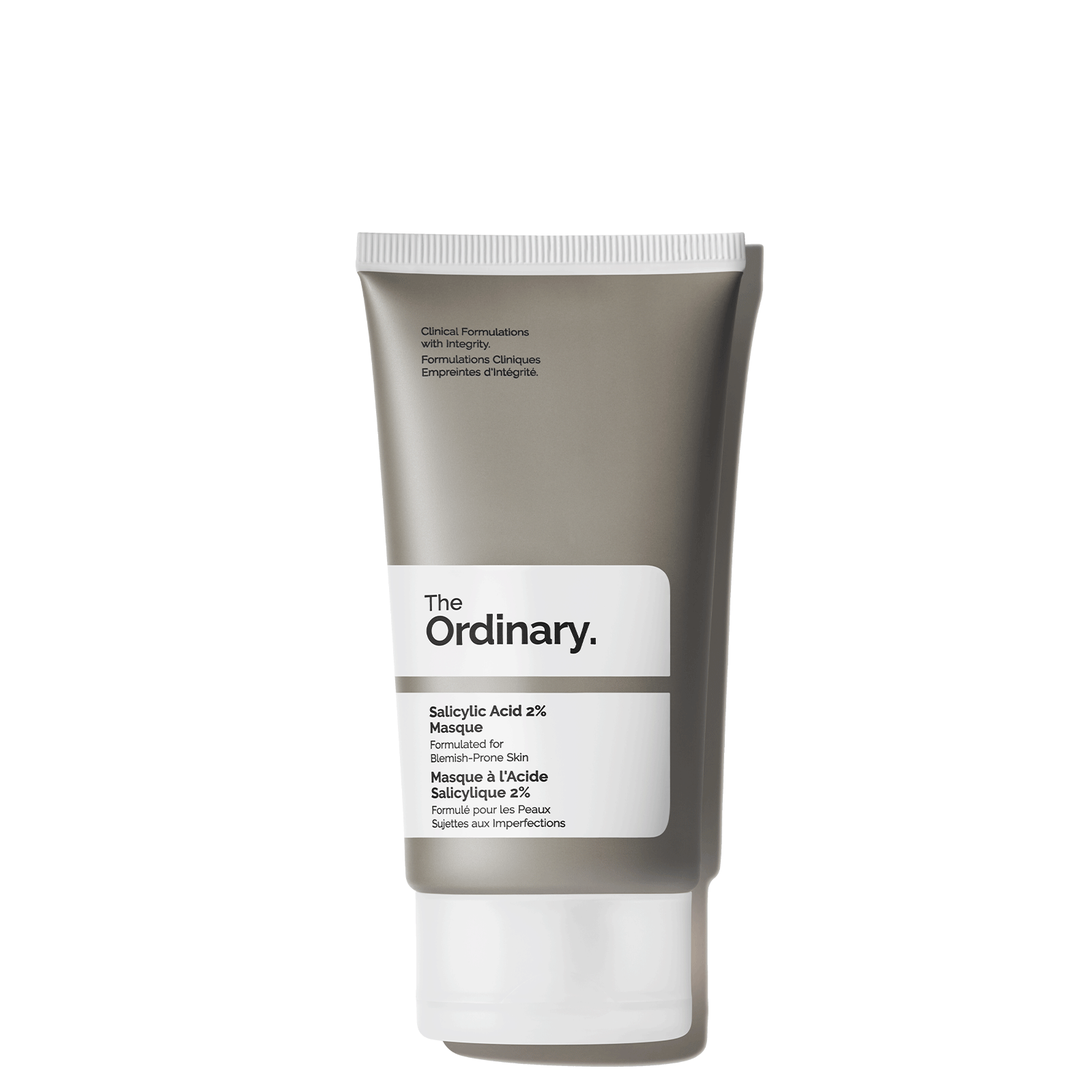
The Ordinary Salicylic Acid 2% Masque is the only one of the five with a meaningful active. The 2% salicylic acid is at the same dose as a leave on BHA serum, but here it sits in a kaolin and charcoal base that keeps it on the pore surface for the ten minutes you wear it.
It isn't painless. If your skin has an intact salicylic acid tolerance, expect a mild tingle for the first two or three minutes. If it doesn't, dose down: five minutes twice a week for the first two weeks, then work up. It lists at $13.80 for 50 ml on The Ordinary's own site.
The honest caveat. If you're on prescription oral isotretinoin, on a daily retinoid stronger than 0.05% tretinoin, or in a rosacea flare, this mask is too much. Salicylic acid stacked on those causes visible sting and rebound redness. Skip it, and read what to know before trying PanOxyl for cystic acne, which has a gentler at home protocol.
The runner up: Origins Clear Improvement
Origins Clear Improvement Active Charcoal Mask leads with clay. Origins says its clays add up to 18% of the formula, with 1% bamboo charcoal on top of that. Its job is the oily T zone.
What it doesn't have is an active. If your acne is inflammatory, clay alone will pull the oil that would have fed the next zit but it won't kill the p. acnes in the follicles you already have. So it's a maintenance mask, not a treatment mask. I'd rotate it in on the Saturday after a big week of eating out or wearing heavy sunscreen, not use it as the standalone answer to a jaw flare.
The price is real. At $29 for 75 ml, it costs more per milliliter than the Ordinary tube. It's worth it if your skin actually needs the clay volume. If your problem is one or two whiteheads a week, the Ordinary tube is cheaper and does more.
The budget pick: Aztec Secret Indian Healing Clay
Aztec Secret Indian Healing Clay is on this list because it's 100% calcium bentonite clay and because at $12 for a one pound tub, its cost per use is hard to beat. There's no charcoal. There's no salicylic acid. There's no perfume. You mix a spoonful with water or apple cider vinegar and slap the paste on your face.
It works exactly the way pure clay works. The downside is dryness. Because you're applying wet clay that dries hard on the face, the finish can be dehydrating. If you have oily skin with no barrier compromise, once a week is plenty. If your skin is combination or already reactive, this one can punish you.
Two practical notes. Don't use a metal spoon. Metal ions deactivate the clay's cation exchange, which is the entire reason bentonite pulls impurities off skin in the first place. And don't rinse the leftover paste down the sink. It hardens like plaster.
The two we'd skip
The Boscia black peel off mask is here to represent the peel off category. It shouldn't be on your shelf. The reason a black peel off satisfies is the horror movie reveal on the tissue afterward, and what you're seeing there is a mix of dead surface keratin, vellus hair, and a tiny bit of sebum. It's not the plug from your pore. Pores don't open and close on cue, which we explained at length in the piece on what actually changes pore size.
Skip the peel off entirely.
The other one worth naming, though it isn't one of the five, is any charcoal mask that leads on the label with the word detox. Skin has kidneys and a liver for detoxification, which aren't on your face. A mask can't pull toxins out because there are no toxins in the follicle to pull. It's a marketing word, not a mechanism. The history of the non comedogenic label is a useful primer on how these claims come to be.
How often should you use a charcoal mask on acne prone skin?
Twice a week is the ceiling. The 2023 clay mask trial that got the 68.97% sebum drop dosed at twice weekly for four weeks. Above that frequency, dryness starts to reset the sebum feedback loop, and skin often oils up more, not less. If you use the Ordinary tube specifically, cap it at two ten minute sessions and rinse with lukewarm, not hot, water.
Don't stack a charcoal mask on the same night as a strong retinoid, a benzoyl peroxide leave on, or an acid toner. Pick one active per evening. And if you shave your face, do the mask on a non shave night. The physical exfoliation of the razor plus the salicylic acid stripping the pore lining is a barrier disruption you'll feel by Wednesday.
If your acne is genuinely cystic, meaning painful nodules that last more than two weeks, a mask is the wrong altitude of care. See a dermatologist. The American Academy of Dermatology's own treatment overview is clear that oral therapy is the right tier for that skin, and no topical, however well formulated, replaces it.
What about combination or sensitive acne prone skin?
Both picks can work on combination skin if you shorten the wear time. Start at five minutes, not the label's ten. Focus the paste on the chin and forehead, leave the cheeks alone.
The cheeks are almost never the acne problem.
Sensitive skin that also breaks out is the hardest case. If yours is truly sensitive, the salicylic acid tube is probably one active too many, and pure bentonite alone is too dehydrating. In that case the honest answer is that a mask is not your best tool. A low dose azelaic acid gel used three nights a week is worth asking a dermatologist about before any charcoal or clay mask. Not what a charcoal mask roundup is supposed to conclude.
What the packaging gets away with
None of this is regulated tightly. The word charcoal on a face mask can mean 20% of the formula or 0.01%, and the FDA doesn't require a brand to declare which. Marketing writers know the second number sells the same jar as the first, because the customer is buying the color of the paste and the story that goes with it, not the parts per million.
That's why the INCI position matters more than the front of the tube.
If activated charcoal appears past the seventh line of the ingredient list, and preservatives are already on the fifth, you're looking at a mask that is functionally kaolin with a pinch of coloring. That is fine, if the kaolin dose is honest. It is not fine when the tube is priced at $38 on the strength of the word active.
If you start from scratch
If you're starting this shelf from scratch, buy exactly two things: The Ordinary Salicylic Acid 2% Masque for the whitehead nights, and a plain bentonite clay tub for the oily T zone Saturdays. Total spend under $30. Don't buy a mask marketed as detox, and don't buy a peel off. And keep jojoba oil at hand for the day after, because dry skin flushes back to oilier skin faster than most people expect.
Photograph a mask's label and Skinventry shows its published ingredient list, checks the front of pack claims against it, and names who makes it, each fact linked to its source.
Buy the honest ingredient. Skip the color story.
