Sagging skin is mostly bone loss and fat pad shrinkage, not surface dryness. A face oil will not lift your jawline. What it can do is restore the lipid barrier, plump the outer layer, and make skin catch light better. Vintner's Daughter is our top pick. Squalane is the smart budget option.
Facial sagging is 80% architecture and 20% surface. A face oil only ever fixes the second number.
Facial fat sits in discrete compartments that shrink and shift with age, first mapped in a 2007 Plastic and Reconstructive Surgery review by Rohrich and Pessa on the fat compartments of the face. A 2021 follow up CT study by Morgan and colleagues at the Medical College of Wisconsin measured the loss directly: the midface loses about 12% of its fat volume between roughly age 46 and 57, with the deep compartments dropping closer to 18%. That is a bone and connective tissue story. Not a moisture story. And yet the top four search results for best face oil for sagging skin all promise firming, tightening, or a lifted contour.
The five oils below are compared on what can be checked: their published ingredient lists, their prices and, where it exists, the published research on the oils they contain.
Who this post is for
You're 40 or older. Your foundation slides into your smile lines by lunch. Photos taken from below make you flinch. You already use a retinoid three nights a week and a real sunscreen every morning. You're asking whether a face oil is worth adding, and if so which one to buy first.
You're not asking a face oil to replace filler. Nothing you can spread on your skin will refill a deflated cheek pad. But an oil can do two things that matter for the way sagging skin reads on camera: patch the lipid deficit that comes with menopause, and change the angle of light bouncing off your face. Both effects are real. Neither is dramatic.
What actually causes facial sagging
Facial sagging has four sources, and only one of them lives on the surface. Bone recedes at the maxilla and orbital rim after 40, which drops the platform the soft tissue rests on. Fat pads shrink and slide downward under gravity. Superficial and deep facial muscles thin. And yes, the dermis loses collagen and elastin, and stratum corneum lipids dwindle after menopause.
A face oil touches the fourth line only. That is not nothing. When ceramide and squalane precursors come back up, transepidermal water loss drops. Skin swells slightly. Fine lines shorten. Light reflects more evenly. The face reads younger without changing shape. But collagen creams cannot reach the layer where wrinkles form, and no topical can plump a lost buccal fat pad. Set expectations before you spend $195.
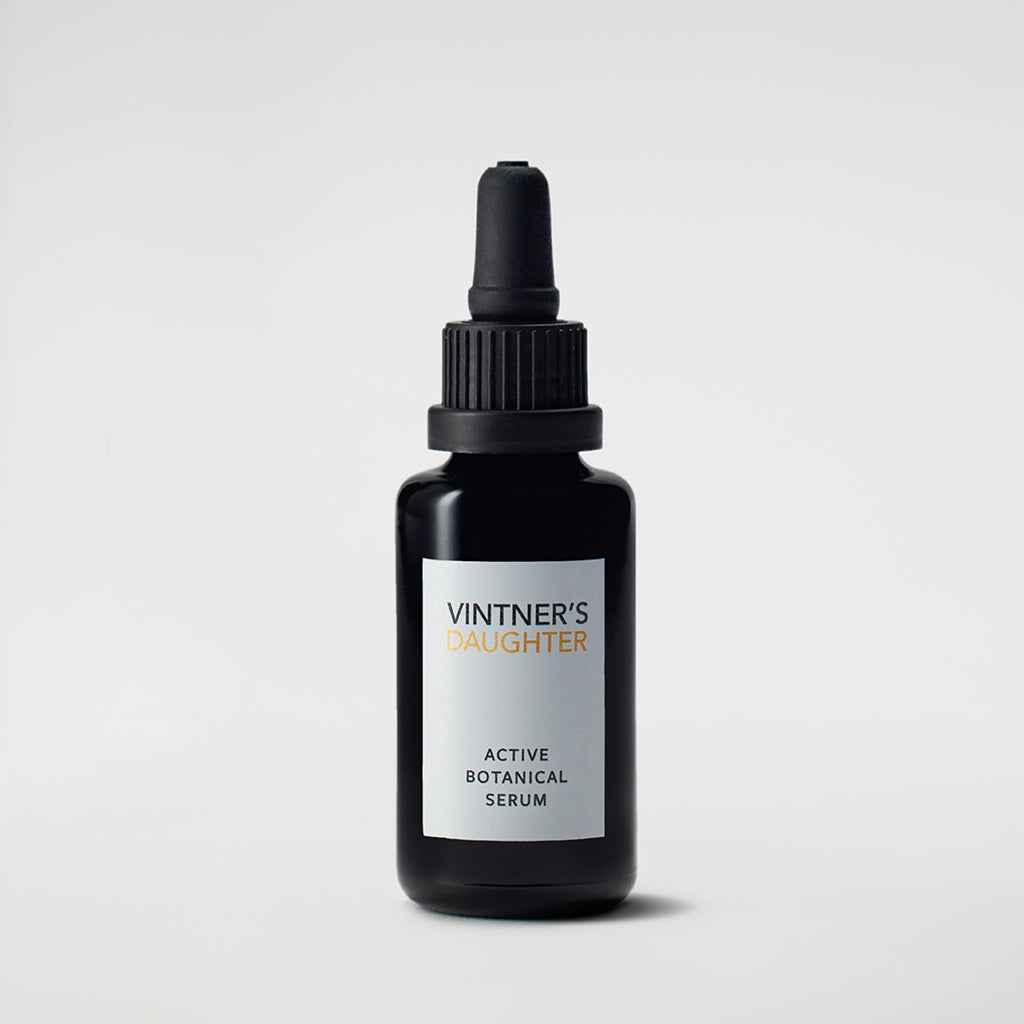
Our top pick: Vintner's Daughter Active Botanical Serum
At $195 for 30 milliliters, this is the priciest oil in the roundup, at nearly three times the price of the next most expensive bottle. The brand ingredient page lists 22 botanicals cold pressed and phyto fermented over three weeks.
Is it worth $195? Only if you treat it as a serum plus a facial oil at once, and only if you were already spending roughly $80 on each. If your current routine is CeraVe and a drugstore sunscreen, buy the barrier instead.
Runner up: Drunk Elephant Virgin Marula Luxury Facial Oil
Marula oil sits at roughly 70% oleic acid, which makes it a heavy occlusive that stays on the surface longer than a linoleic acid rich oil like rosehip, which matters if your barrier is compromised and you want the film to persist through the night. Drunk Elephant sells a single ingredient bottle for $72 at 30 milliliters.
Because that film stays on the surface longer, it can feel heavy under sunscreen on combination skin. If that describes your skin, move it to a night only role.
Budget pick: The Ordinary 100 Percent Organic Rose Hip Seed Oil
At $10.90 for 30 milliliters, this is the cheapest way to test whether a facial oil belongs in your routine at all. Rosehip is high in linoleic acid, which is what the aging stratum corneum starts to run out of after menopause. Read our fragrance free oil guide for gua sha for the longer read on why linoleic acid earns its shelf slot.
The catch with rosehip is that it oxidizes fast, so the fridge is not paranoia. Buy the smaller bottle. Finish it in 3 months. Watch for a cardboardy smell, which is your cue to throw it out. A rancid oil is a pro inflammatory oil on skin already dealing with age related inflammation, so shelf discipline matters more here than with the other four.
The barrier restore pick: Biossance 100 Percent Squalane
Squalane is inert. It doesn't smell. It doesn't sting. It disappears into skin the way water disappears into a sponge. At $34 for 30 milliliters, it has the second lowest sticker price in this roundup.
If you want to know the mechanism, we wrote up the difference between squalene and squalane already. Short version: it patches the lipid deficit without adding any ingredient your immune system can react to. If you have never tried a face oil, this is the one to buy first, ideally before you spend real money on anything else on this list.
The classic: Josie Maran 100 Percent Pure Argan Oil Light
Argan oil has the strongest published trial of any oil on this list. In a 2015 Clinical Interventions in Aging study, Boucetta and colleagues randomized 60 postmenopausal women to daily topical argan versus olive oil on the forearm for 60 days. The argan side showed a significant rise in gross elasticity, net elasticity, and biological elasticity.
It's a forearm study, not a face study. Take the direction, not the magnitude. Josie Maran's light formulation, at $50 for 50 milliliters, is the cleanest single ingredient bottle we found in the price band, and a workable choice for anyone who wants a real trial published on the active it contains.
The comparison at a glance
| Oil | Cost per ml | Best for | Watch out for | Our pick |
|---|---|---|---|---|
| Vintner's Daughter Active Botanical Serum | $6.50 | Combined serum and oil role, mature skin | Price, mainly | Top pick if you were already spending on both a serum and a face oil |
| Drunk Elephant Virgin Marula | $2.40 | Dry, flaky, cold weather | Too heavy for combo skin under sunscreen | Runner up. Night only for many faces |
| Biossance 100 Percent Squalane | $1.13 | Sensitive skin, rosacea flags, first time buyers | Boring on purpose | Barrier restore pick. The one to try first |
| The Ordinary Rose Hip Seed Oil | $0.36 | Testing whether an oil belongs in your routine at all | Oxidizes fast, refrigerate | Budget pick. Buy the small bottle |
| Josie Maran 100 Percent Pure Argan Oil Light | $1.00 | Postmenopausal elasticity | Forearm data does not fully translate to the face | The classic. Best published trial |
What a face oil will not do
Here is the honest caveat. None of these five oils will lift a jowl. None will restore buccal fat pad volume. None replaces what tretinoin and a real morning sunscreen do. If your primary complaint is a heavier lower face at 55 than at 45, a face oil is a supporting player, not the intervention. The intervention is a dermatologist consult about volume replacement.
The drawback of the whole category is easy to miss: oils oxidize in the bottle, in the tube, and on the pillowcase, and a rancid oil is a pro inflammatory oil on skin already dealing with age related inflammation. If yours smells cardboardy after 4 months, throw it out and shorten your buying cycle. Also, single ingredient bottles almost always outperform blended ones on ingredient integrity, since a blend has to keep 12 things stable at once. That's one reason The Ordinary and Biossance punch above their price tier.
One last note on stacking. Peptides have a small but real signaling role for firmness, and they pair cleanly with any of these five oils. Put the peptide serum on damp skin first, wait 30 seconds, then the oil on top so it seals the water in without blocking peptide absorption.
Where to start
Start with Biossance squalane and give it a full month before you spend another dollar on this list. If your skin tolerates it, add Josie Maran argan on nights when skin feels tight and stop there. Vintner's Daughter is a real product, but reach for it only after the cheaper oils have done the boring work. Photograph any of these bottles and Skinventry shows its published ingredient list, who makes it and who owns the brand, each with a link to the source.
