The sandwich method stacks moisturizer around your tretinoin to soften the burn. In the only controlled test to date, a 2025 skin explant study sponsored by Kenvue, one moisturizer layer (an open sandwich) kept tretinoin's gene activity on par with plain tretinoin. Two layers (a full sandwich) cut it about threefold at p<0.05.
Reddit will tell you two moisturizers around your tretinoin dilute the drug. The one controlled study on the question, an AAD 2025 human skin explant run sponsored by Kenvue, says the honest answer depends on whether you sandwich on one side or both. One moisturizer layer kept activity. Two layers dropped it roughly threefold (p<0.05), measured by HBEGF and HAS3, two genes a retinoid flips on quickly in skin.
We pulled the FDA's 2025 tretinoin cream 0.025% label, the 2018 Altreno 0.05% lotion label, and the ingredient panels on CeraVe's own pages for the two moisturizers people most often stack with tretinoin, on November 29, 2026. None of the FDA labels mention the sandwich. Both CeraVe panels are humectant led. That tells you something about why the method survives the physics.
What are people actually saying?
In the Reddit tretinoin threads and on TikTok, the sandwich is described as a hack: moisturizer first, wait, then tretinoin, then moisturizer again. The pitch is that the bottom layer blocks the sting while the top layer locks the drug in. Some posters push back. Won't the moisturizer under the tretinoin act like a wall? Doesn't the moisturizer over the tretinoin wash the drug off your face before it does anything? You can find both camps in the same thread.
Dermatologists split on it too. In Bustle, Dr. Brendan Camp of MDCS Dermatology defended the sandwich as a tolerance aid. In the same piece, Dr. Marisa Garshick of Weill Cornell cautioned that limiting penetration could also limit the benefit for people who already tolerate retinoids fine. Dr. Elaine Kung, writing for NewBeauty in January 2024, called it an acclimation tool, a way to raise your concentration without quitting. Until this year, nobody had actually tested the thing head to head.
What does tretinoin actually do on your skin?
Tretinoin is the acid form of vitamin A, the one your skin uses directly. It enters a keratinocyte, binds a retinoic acid receptor, and turns on the genes that speed up how fast your skin cells shed. That is why fine lines soften, sun damage fades, and active acne lesions shrink over time. It is also why the first weeks peel so hard: the top layer is being told to move faster than normal.
Measuring a retinoid's activity in skin usually comes down to two genes, a growth factor called HBEGF and an enzyme called HAS3. Both get flipped on within days of starting a retinoid. Pharma scientists use them as proof that a topical retinoid is actually reaching the receptor and firing the right cascade. If a sandwich is quietly killing the drug before it gets there, these are the markers that drop. A fuller map of which retinoid matches which concern is in our retinoid umbrella guide.
The only study that tested it
In early 2025, scientists at Kenvue, which owns Neutrogena, ran a human skin explant study and presented it at the American Academy of Dermatology's 2025 annual meeting. The design is narrow. Abdominal skin from one Caucasian woman donor, four biopsies per arm, gene expression read from each sample. A tissue bench test, not a trial in people.
Four conditions. Tretinoin 0.025% alone. Tretinoin under one moisturizer layer applied first. Tretinoin with the same moisturizer applied after. And tretinoin with the moisturizer applied before and after, the full sandwich.
Both open sandwiches kept HBEGF and HAS3 expression statistically comparable to tretinoin alone. The full sandwich dropped activity by roughly a factor of three at p<0.05. One donor and industry sponsored, so hold the exact number loosely. The shape of the finding does match the physics, though. You can block a topical off the skin two ways, before and after, and doing both at once does more than doing one. The explant also tested retinol beside tretinoin and saw the same pattern.
Why does the sandwich still help most people?
The reason the sandwich caught on is that it cuts the burn. A 2012 split face trial in the Journal of Drugs in Dermatology had patients apply tretinoin 0.05% to both sides of the face, then a ceramide moisturizer with SPF 30 to one side only after. Investigators were blinded to which side. The moisturized side had significantly fewer complaints of redness, scaling, and flaking over twelve weeks. Acne results came out the same on both sides.
Tolerability.
Not a stronger drug. A drug you can actually stick with. The FDA's tretinoin 0.025% label warns that applying it more often than once a day does not improve results and can cause marked redness, peeling, or discomfort, and tells you to temporarily discontinue the drug if your face can't take it. The sandwich is one of the few at home moves that lets you keep going. If you're also stepping up a strength, the ramp story sits inside our retinol 0.3 and 0.5 comparison.
What to do with this
Three plain rules follow. First, an open sandwich (one moisturizer layer, before or after) is almost certainly fine. The explant and the 2012 trial agree, and dermatologists have been saying this for years. Second, a full sandwich (a layer on both sides) probably cuts how much tretinoin reaches your receptor, so use it as a bridge, not a forever routine. Third, the FDA label still says once a day on clean dry skin. The sandwich is a tolerance tool, not an upgrade on the dosing.
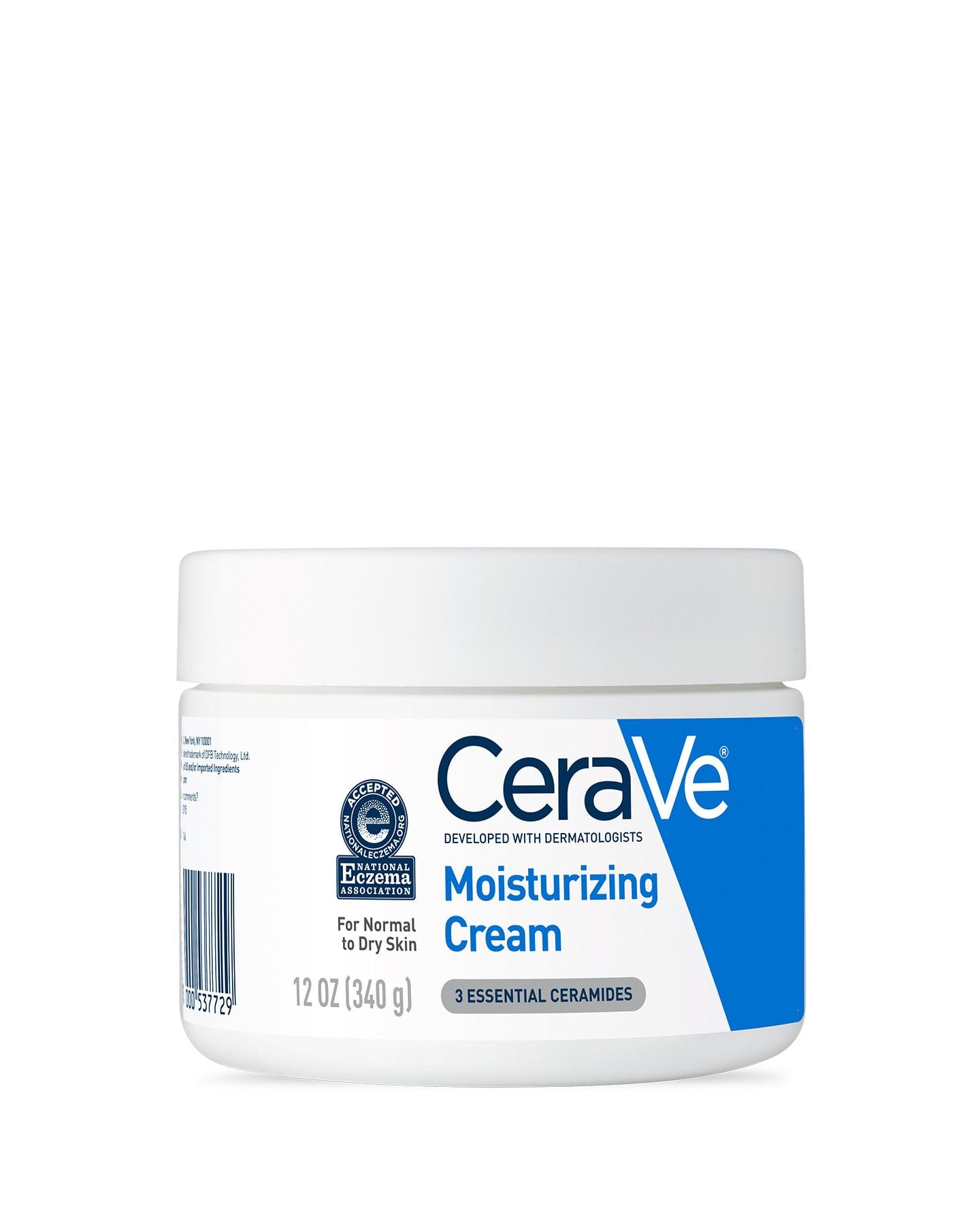
The moisturizers people actually sandwich with are mostly three. CeraVe Moisturizing Cream, the ceramide tub with glycerin high on the list and petrolatum low. CeraVe PM Facial Moisturizing Lotion, lighter, and already in a lot of retinoid routines because it uses niacinamide and ceramides without fragrance. And, from the drug side, Altreno, the tretinoin 0.05% lotion, which already builds the sandwich into its base with glycerin, sodium hyaluronate, and soluble collagen in the same bottle. If you're paying for Altreno, you're running the open sandwich as written by Bausch and Lomb's formulators.
If your routine already stacks tretinoin with hydroquinone, we worked the timing question earlier this month. DermNet and the American Academy of Dermatology's acne skin care page have been saying for years what the explant finally confirmed. Thin layer. Clean dry skin. A pea sized dot for the whole face. Moisturize to tolerance. The sandwich is a version of that, buffered on one side, not two.
Common questions
Should I put moisturizer before or after tretinoin?
Either works for an open sandwich. The 2012 trial put the moisturizer after; the AAD 2025 explant tested both and neither hurt gene activity. Match the order to your skin, after for mild burn, before for more.
What moisturizer works best with tretinoin?
Something humectant led and fragrance free. CeraVe Moisturizing Cream and CeraVe PM Facial Moisturizing Lotion are the two most derms recommend in print. If you already use Altreno, the vehicle is already built like a sandwich.
Does the sandwich method work on retinol too?
The 2025 explant tested retinol next to tretinoin and saw the same pattern. One moisturizer layer, open sandwich, kept activity. Two layers, full sandwich, cut it. The nuance is the same.
How long should I wait between the moisturizer and the tretinoin?
Dermatologists usually say five to ten minutes, enough for the moisturizer to absorb and your face to feel dry again. The FDA's tretinoin label asks for clean dry skin either way.
What we read, when
On November 29, 2026 we opened the FDA 2025 tretinoin cream 0.025% label, the 2018 Altreno 0.05% lotion label, the Dermatology Times writeup of the AAD 2025 Kenvue poster and the poster PDF itself, the 2012 split face abstract on PubMed, the DermNet topical retinoids page, the AAD acne skin care tips page, and the ingredient panels on CeraVe's own pages for Moisturizing Cream and PM Facial Moisturizing Lotion. We read what the dermatologists quoted in Bustle and NewBeauty actually said. Our table counts zero of three FDA tretinoin labels mentioning any sandwich technique, and two of two CeraVe moisturizers with glycerin inside the top four ingredients.
"A retinol sandwich can minimize the side effects of retinol by creating a protective barrier between the product and the skin," Dr. Brendan Camp told Bustle in 2023. The explant study agrees, with a nuance Dr. Camp didn't have at the time: it holds for a layer on one side, not two.
Photograph the bottle and Skinventry reads the ingredient list, checks it against the actives you flagged, names who makes it, and shows what's on the public record, with a source behind every line.
