Yes, you can use retinol with glycolic acid. The quiet trouble is layering them on the same night: the AAD names retinoids among products that make skin peel, and The Ordinary tells you on its own product pages not to mix its 1% retinol with its 7% glycolic. Alternate nights. That is the answer.
Here is the sentence almost no page 1 result quotes: The Ordinary lists its own retinol on its own glycolic acid toner's do not use list.
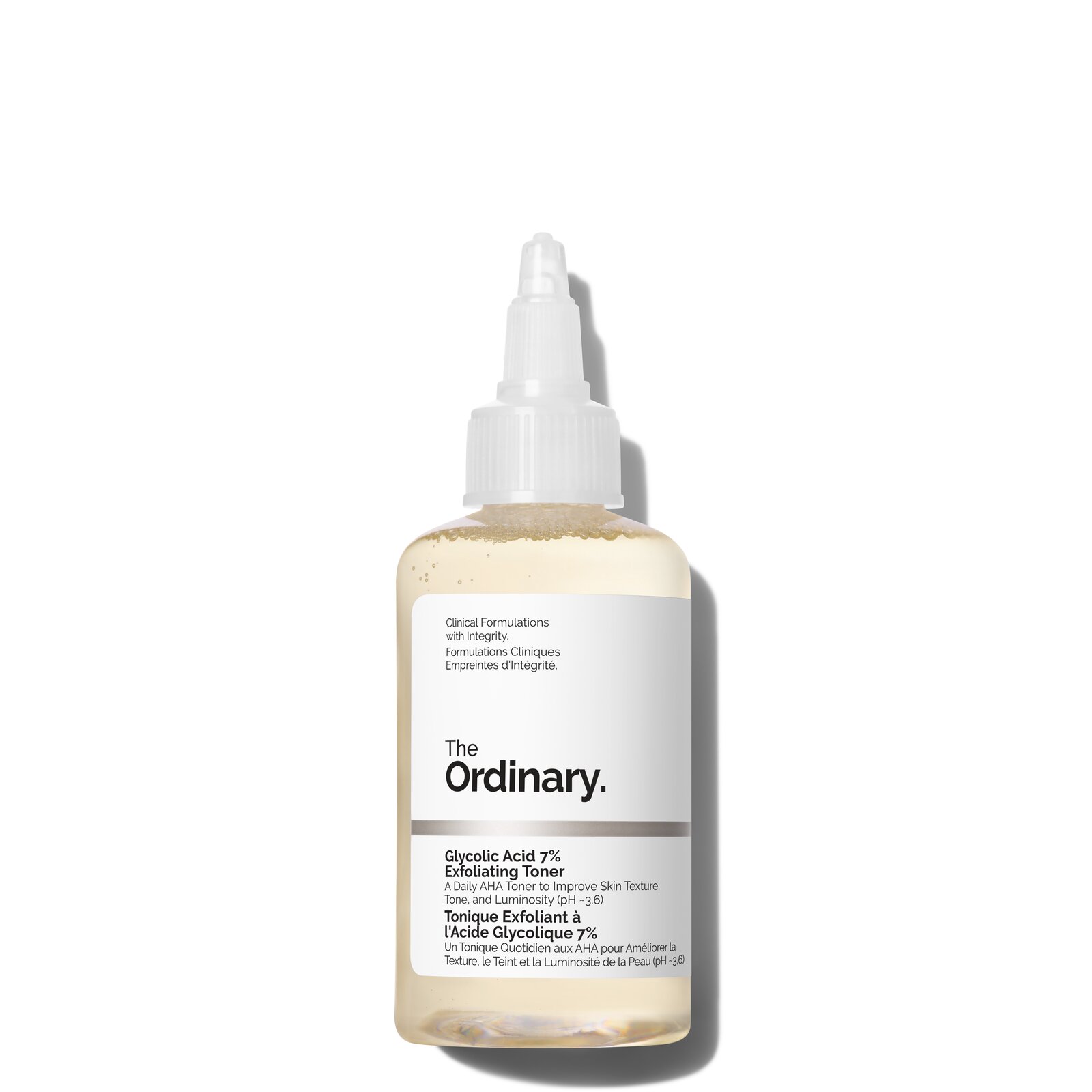
On November 26, 2026, we read the brand's own US product pages for the Glycolic Acid 7% Exfoliating Toner and the Retinol 1% in Squalane, and we read every entry on each product's do not use list. Of the 2 labels we read, the Glycolic Acid 7% page lists Retinoids and Direct Acids among the formulas it should not be paired with. The Retinol 1% in Squalane FAQ says the brand does not advise using it with direct acids, direct vitamin C or other retinoids. Of the hundreds of pairing guides on theordinary.com's first page, few quote these two sentences. Two of the best selling products in this category warn you about each other, on each other's page. Most TikTok pairing guides skip over this.
And yet dermatologists use the two together all the time. The question has never been whether. The question is how.
Is it safe to use retinol and glycolic acid together?
Glycolic acid loosens the glue between dead skin cells in the top layer. Retinol speeds the turnover of skin cells underneath. Those are two different jobs. The DermNet topical retinoids page lists dryness and peeling as the common side effects of a retinoid, and the AAD's exfoliation guide says exfoliating helps slough dull, dry cells away. A retinoid plus an acid, used thoughtfully, does line up with how skin actually renews.
The old literature says the same thing. The 1999 Appa review in the British Journal of Dermatology on retinoid therapy and compatible skin care walks through how AHA products were formulated to be tolerated alongside a prescription retinoid, as long as the patient's skin was already used to the retinoid. The PubMed record sits there quietly. Dermatologists have been pairing these two for 25 years.
Combination products exist, too. Several retinol night creams list lactic acid or glycolic acid in the same formula, at concentrations low enough to make the two stable together. If the pair were truly a fight, no formulator would ship one bottle with both.
What happens if you layer them on the same night?
The warning is not that the chemistry cancels. It is that the skin can't take both at once, at least not yet. The AAD's own page on safely exfoliating says, plainly, that "some medications and even over the counter products may cause your skin to be more sensitive or peel," and then names "prescription retinoid creams or products containing retinol." It adds that exfoliating while using those products "may worsen dry skin or even cause acne breakouts." That is the regulator adjacent voice on this question, and it is a yellow flag, not a green one.
Then there's the brand warning. The Ordinary's Glycolic Acid 7% page sets the product's pH at 3.6. At that pH, the acid is doing real work on the skin barrier. Layering a 1% retinol on top of an acid treatment is how people turn up on a dermatologist's Instagram with a red, stinging, peeling face at week two. The brand's own FAQ recommends alternating these products or putting one in the morning and the other at night. That is the brand telling you the pair is fine, with timing.
What is actually happening on the skin
This is the self contained read for people who want the mechanism in one block. A retinoid makes skin more responsive to everything, by design. Faster turnover means the stratum corneum, the brick wall on top, is thinner and younger. Dr. Tina Alster, who the AAD quotes in its retinoid primer, tells patients to use a retinoid only at night and to build up slowly. That slow build is the whole trick. Glycolic acid, meanwhile, works by lowering the pH at the surface and dissolving corneocyte bonds. Put an acid treatment on a stratum corneum that is already thinner than it was six weeks ago, and you are not multiplying the benefit. You are multiplying the irritation. Both actives also make skin more sun sensitive, so sunscreen the next morning is not optional.
The routine that actually works
Here is the version dermatologists give, read off two labels we opened today.
Alternate nights. Retinol Monday, Wednesday, Friday. Glycolic acid Tuesday and Saturday. Nothing on Sunday, or a plain moisturizer only. That gives each active two or three nights a week and lets the barrier reset in between. The AAD's exfoliation page says the more aggressive the method, the less often it is done, and a 1 percent retinol with a pH 3.6 glycolic are both at the aggressive end.
If alternate nights feel like too much, use glycolic in the morning and retinol at night. That is what The Ordinary's own FAQ suggests. Just remember that acid in the morning doubles the case for a broad spectrum sunscreen that day. The FDA's AHA page is explicit: products with these acids can increase sun sensitivity, and the agency's recommended sunburn alert names a one week window after you stop.
And if you are brand new to either active, start with one for 4 to 6 weeks before adding the other. The retinoid page from the AAD has Alster saying to build up every other night. A reader who is still peeling on week three from retinol alone is not ready for an acid on top.
Two more things, briefly. Watch for doubles. A moisturizer that quietly lists a low percentage lactic acid or an eye cream with retinol is a second dose you did not plan for. In the 3 serum labels we read for this piece, lactic acid showed up in one night cream that was not advertising itself as an exfoliant. And if your retinol is prescription, read what the retinoid your dermatologist chose actually says, not what an internet routine says. We don't give medicine instructions here. Your prescriber already set the dose.
A quick word on strength. A 1 percent retinol in squalane is near the upper end of what the US cosmetic shelf sells. The 0.3 and 0.5 percent compared piece lays out why most skin tolerates the lower rung better. If you are stacking that 1 percent bottle with a pH 3.6 toner, you are asking for trouble in a way that a 0.3 percent retinol would forgive. Dose compounds.
And a quick word on the acid. Glycolic acid has the smallest molecule in the alpha hydroxy family, which is why it penetrates faster than lactic. Our lactic against glycolic read of 4 labels found that the only head to head trial of the two put their results closer than the forum talk suggests. If glycolic is the active you cannot tolerate alongside a retinoid, lactic is a reasonable step down.
Can you use them in the same product?
Can I use them in the same product? Yes. Formulators who ship a single bottle have balanced the pH and the dose so the two work together. That is different from layering two separate bottles.
What about a glycolic toner and a retinol serum, on the same night, a few minutes apart? That is the layering the AAD page cautions against. It's not a hard clash. It is a probability thing: three in five people will overdo it, and the ones who don't are the ones whose barrier is already seasoned. If you must, wait 20 minutes, apply a moisturizer between them, and watch the skin honestly. If it stings beyond a minute or peels by day three, split them.
How many weeks apart before I know it's working together? The over exfoliation timeline sits at two to four weeks for a visible barrier reset. If you add glycolic to an established retinol routine and your skin reads as worse at week two, you have your answer.
What about the sensitive skin reader?
Rosacea, eczema, perioral dermatitis. The DermNet retinoids page says topical retinoids can make eczema worse because of their drying effect. A 1 percent retinol with any acid at pH 3.6 on inflamed skin is a project for a dermatologist, not a routine you build off a video. The sources we read do not clear this subgroup; they do not flag it with evidence either. The honest line is that nobody has shown it cleared, and the risk of a flare is higher than in regular skin. Patch test for a full week. Watch the cheeks.
The verdict
Clear, with timing. The pair is not the clash the forums made it. It is a pacing problem.
Photograph either bottle and Skinventry reads the ingredient list against your routine, flags when the shelf is stacking two actives that the AAD's own page says may worsen dryness, and the clash check tells you which night to keep each one on, every finding with its source.
