Three US sunscreens with the FDA's new bemotrizinol filter are on DailyMed as of November 1, 2026. Two of them, both Neutrogena, run bemotrizinol at the FDA's 6 percent cap. One, Ultra Violette's Unblock Screen, uses just 3 percent and leans on zinc oxide. La Roche Posay's October 20 launch is in stores but not yet in FDA's label repository.
Three of the first US sunscreens with bemotrizinol are on store shelves this fall. Two use the FDA's new filter at its legal cap, 6 percent. One uses exactly half that.
The June 10, 2026 FDA Final Order that cleared bemotrizinol was the first US sunscreen monograph update in roughly 25 years, per Practical Dermatology's write up. The order took effect 60 days later, August 9. Within 8 days, Kenvue had filed 2 Neutrogena bottles on DailyMed. Within 22 days, Grace and Fire USA Inc., Ultra Violette's US arm, had filed 2 more. Four US SKUs on the FDA's label repository, in under three weeks.
Then we read all four of those Drug Facts panels, label by label, against the June 10, 2026 Final Order.
They tell three different stories about what a US sunscreen looks like in 2026. We'll walk you through what's on each panel, how much the new filter is actually in each bottle, what the brands paired it with and what we think it means for the shelf.
What is bemotrizinol, and why is it the first new US sunscreen filter in over 20 years?
Bemotrizinol is a chemical UV filter the rest of the world has had since 2000. In the US it was never approved for sale in a sunscreen, because the FDA treats sunscreen filters as over the counter drug ingredients and runs them through a monograph process that stalled for most of two decades. In the June 10, 2026 Final Order, FDA added bemotrizinol as the first new filter in roughly 25 years. The order took effect August 9, 2026. Brands could start selling that day. US products can hold up to 6 percent bemotrizinol by weight, the agency's cap. The sponsor, dsm firmenich, owns an 18 month exclusivity, which means it's the only US supplier through February 2028. It sells the ingredient to brands under the trade name Parsol Shield.
The reason beauty editors have been excited is simple. Bemotrizinol covers both UVA and UVB on its own, which almost no US chemical filter does. Avobenzone covers UVA, but it degrades in sunlight unless it's stabilized by other actives. Dr. Abigail Waldman, a dermatologist at Brigham and Women's Hospital, put it this way to Healio: "a broad spectrum UV filter on its own," that "sits on top of the skin and does not appear to absorb into the bloodstream." She compared it to a mineral sunscreen, without the white cast.
That's the theory. The labels on the shelf are a different story.
Which US sunscreens have bemotrizinol right now?
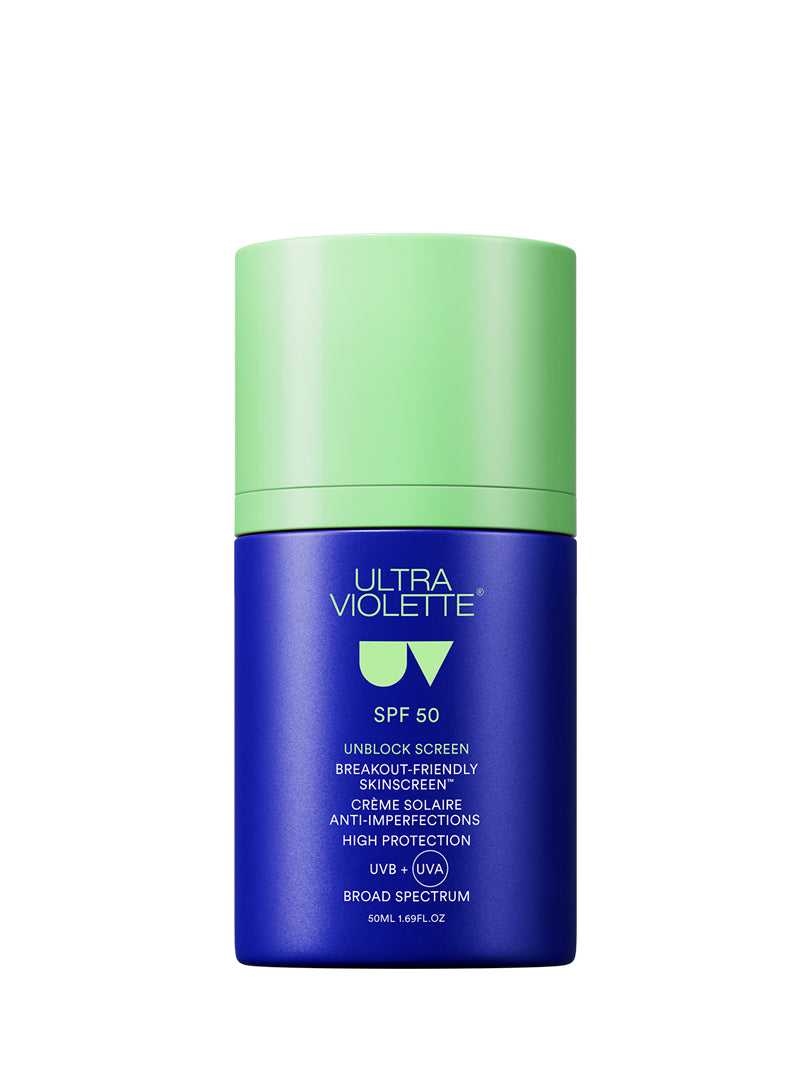
Three sunscreens from two brands are on US shelves today. A fourth is already on DailyMed waiting for its January 2027 launch window. The lineup, by DailyMed filing date:
- Ultra Violette Unblock Screen SPF 50, filed August 10, 2026 by Grace and Fire USA Inc. 50 mL. $40 at the brand's own site and Sephora. On Sephora.com since August 31, in Sephora stores from October 2.
- Neutrogena Ultra Sheer Daily Face Sunscreen SPF 70, filed August 17 by Kenvue Brands LLC. 1.4 fl oz (about 41 mL). $17 at launch. On shelves September 17.
- Neutrogena Clear Face Sunscreen Acne Prone Skin SPF 60, same filing date, same labeler. 1.4 fl oz. On shelves September 17.
- Ultra Violette Fave Screen SPF 50, filed September 2, 2026 by Grace and Fire USA Inc. Launching in January 2027.
La Roche Posay's Anthelios UV Defense SPF 50 "with BEMT" went on sale October 20, 2026 at $39.99 on the brand's US site and Amazon, per Cosmetics Business trade coverage. When we queried DailyMed's SPL API on November 1 for both "anthelios UV defense" and "bemotrizinol" among labels filed by L'Oreal USA Products Inc., it returned zero results.
The brand page lists the launch. The Drug Facts panel the agency actually publishes isn't there.
If you want to know how much bemotrizinol you're buying from LRP today, you have to read the carton.
How much bemotrizinol is in each bottle?
Only one of the three on shelf sunscreens uses bemotrizinol at FDA's cap on its own terms. Neutrogena's two formulas run bemotrizinol at 6 percent, as high as US law allows, and surround it with three older chemical filters. Ultra Violette's Unblock Screen runs bemotrizinol at 3 percent, half the cap, and gets its UV coverage from zinc oxide. On paper that's a huge difference in approach.
The best way to see what each brand is really doing is to read the Drug Facts panels side by side. Of the 4 US bemotrizinol sunscreens we pulled from DailyMed on November 1, this is what the actives list on each panel says, in the order the labels were filed:
| Product | Bemotrizinol | Other actives | SPF | Price per mL | Format |
|---|---|---|---|---|---|
| Ultra Violette Unblock Screen | 3% | Octocrylene 6%, Zinc Oxide 10% | 50 | $0.80 | Hybrid cream (zinc oxide plus chemicals) |
| Neutrogena Ultra Sheer Daily Face | 6% | Avobenzone 3%, Homosalate 15%, Octisalate 5% | 70 | $0.41 | Chemical only lotion |
| Neutrogena Clear Face Acne Prone | 6% | Avobenzone 3%, Homosalate 15%, Octisalate 5% | 60 | $0.41 | Chemical only lotion |
| La Roche Posay Anthelios UV Defense | Not on DailyMed yet | Not on DailyMed yet | 50 | $0.80 to $1.00 (size unverified) | Chemical, per brand page |
The 3 percent vs 6 percent gap is real, and it isn't a mistake. Ultra Violette's formula leans on zinc oxide, which does most of the UV blocking on its own. The bemotrizinol in Unblock Screen is a supporting player that smooths the mineral UVA curve. Neutrogena's two formulas have no zinc or titanium at all. Bemotrizinol is their only broad spectrum filter, which is why it gets maxed out.
The avobenzone, homosalate and octisalate in both Neutrogena bottles are the same four actives you'd find in a 2022 Ultra Sheer, swapped around and topped with bemotrizinol. In other words, Neutrogena treated the new filter as an upgrade to its old recipe, not a reason to rewrite it. The Clear Face SPF 60 and the Ultra Sheer SPF 70 have the exact same actives, in the exact same percentages, on their Drug Facts panels. The difference between them lives in the inactive list: niacinamide and salicylic acid for the acne version, more silky silicones for the standard version. The sun protection math is identical.
That's not an insult. Neutrogena is doing the version of this launch that reaches the most people. Kenvue, its parent since the 2023 Johnson and Johnson consumer spin, moves product through roughly a quarter of the US sunscreen aisle on any given week. If you want to make the new filter accessible, you ship it in your two highest volume faces at $17 each and let the scale do the work.
Why doesn't anyone use bemotrizinol alone?
If bemotrizinol is a broad spectrum filter in its own right, as Dr. Waldman and a CU Anschutz dermatology interview both say, why doesn't anyone use it on its own in the US? The short answer is math. FDA caps bemotrizinol at 6 percent. To reach SPF 50, the formulator typically needs between 20 and 30 percent total filter load, depending on the vehicle and how good the UV spread is. Even at 6 percent, bemotrizinol can't carry an SPF 70 label by itself. Overseas, where regulators allow it up to 10 percent, formulators sometimes do run it near solo. Here, the 6 percent cap means every brand pads the rest with older actives.
You can see each brand's choice in that padding. Neutrogena's Ultra Sheer SPF 70 stacks 15 percent homosalate, 5 percent octisalate, 3 percent avobenzone and 6 percent bemotrizinol, for 29 percent total actives. That is high. Ultra Violette's Unblock Screen stops at 19 percent total, half of which is zinc oxide.
There's a reason for the difference. The chemistry Neutrogena picked is harder to stabilize in a lightweight lotion than a mineral assist, and the SPF ceiling is higher. The chemistry Ultra Violette picked costs more and sits heavier on skin. Neither path is wrong. They're just two readings of the same new rulebook.
The co filter arithmetic
Here's the chemistry in two paragraphs. Avobenzone is the only UVA filter approved in the US before 2026, and it falls apart in sunlight. To keep it stable, formulators pair it with octocrylene (an UVB filter that also acts as a photostabilizer) or encapsulate it in silica. Homosalate is a cheap UVB filter the EU has started restricting to 7.34 percent in face products, over concerns from a 2020 opinion by the EU's Scientific Committee on Consumer Safety on endocrine disruption. The US still allows 15 percent, and both Neutrogena bottles use that cap. Octisalate is a mild UVB and solvent that helps the oil phase hold the harder filters.
Stack those four together, and you get the Neutrogena recipe: a chemical only filter wall that covers UVA (bemotrizinol plus avobenzone), UVB (homosalate plus octisalate plus bemotrizinol again), and the self degradation of avobenzone (bemotrizinol stabilizes it). Swap out avobenzone and the UVB fillers for 10 percent zinc oxide, and you get Ultra Violette's recipe: a hybrid where the mineral does the heavy UV work and bemotrizinol tunes the UVA tail. Both reach SPF 50 on the carton. Only Neutrogena's recipe scales to SPF 70, because zinc oxide at skin friendly concentrations caps out below that number.
What do the labels say about price and sun protection?
Price is where the comparison stops looking like skincare and starts looking like a shelf audit. Neutrogena Ultra Sheer SPF 70 is $17 for 1.4 fl oz, which works out to about $0.41 per mL. Ultra Violette Unblock Screen is $40 for 50 mL, or $0.80 per mL. That's roughly double. La Roche Posay's Anthelios UV Defense is $39.99, and the brand's site hasn't published a US specific carton size in the trade coverage we found. If it's a 50 mL product, as the October 20 launch coverage suggests, it will sit at Ultra Violette money.
Why pay twice as much for half the bemotrizinol? The honest answer is that mineral forward sunscreens cost more to make, and they feel different on skin. Zinc oxide in a lightweight vehicle is harder to formulate than loading up on avobenzone and homosalate. Ultra Violette's bottle also carries the Australian aesthetic that got the brand into Sephora in the first place.
If you don't want zinc, you still pay for it.
On the other side of the shelf, Neutrogena is doing what Neutrogena always does. It puts a drugstore price on a reformulated hero and trusts the brand on the label to carry the rest. For many shoppers that's going to be the right trade. For anyone who reacts to octocrylene or doesn't want 15 percent homosalate on their face, it will not be.
How much coverage you actually get
SPF is a laboratory number. In the lab, FDA requires a sunscreen to be tested at 2 mg per square centimeter of skin, which is the dose the number on the carton is based on. Most people apply roughly a quarter of that amount. If you cover your face with half the recommended dose, you cut your sun protection factor by a factor of about four, which means your SPF 50 behaves like an SPF 12 and your SPF 70 behaves like an SPF 17. We've broken that math down in a longer piece on the real SPF you get.
What that math means for the four bottles here: if you can actually apply half a teaspoon of sunscreen to your face every day (which is what the FDA's test dose implies), your filter choice matters less than your reapplication habit. If, like most people, you under apply, Neutrogena's SPF 70 is more forgiving than Ultra Violette's SPF 50 even if the chemistry is older, because the math leaves you with more room. The 2026 bemotrizinol story often forgets that part.
What should you look for on the Drug Facts panel when you shop?
Three things I'd check on any bemotrizinol sunscreen you're thinking about:
The percentage. Both Neutrogena bottles say "Bemotrizinol 6%" right under the words "Active ingredient." Ultra Violette's says "Bemotrizinol 3%" and then two more lines. If the sunscreen you have in hand doesn't print a bemotrizinol percentage at all, it either doesn't contain it, or the carton is a holdover from a pre August 2026 run. On a Drug Facts panel it will always be called bemotrizinol, not Parsol Shield (that's the dsm firmenich trade name) and not the industry shorthand.
The co filters. If bemotrizinol is paired with zinc oxide or titanium dioxide, you've bought a hybrid. If it's paired only with avobenzone, homosalate, octisalate or octocrylene, you've bought a chemical only formula with a modern UVA assist. Neither is better in a vacuum. Mineral is more stable in bottle and sometimes gentler on sensitive skin. Chemical goes on lighter and layers better under makeup.
The size and the math. A 1.4 fl oz Neutrogena bottle lasts an average adult using the recommended quarter teaspoon for the face about seven weeks. A 50 mL Ultra Violette bottle lasts eight. We've written before about how SPF and PA ratings diverge on what they protect against; most people apply roughly a quarter of the clinically tested dose, which means you may be getting SPF 15 out of your SPF 60 bottle. The filter is only as good as the dose on your skin.
A caveat worth saying plainly
Bemotrizinol is the biggest change to US sunscreen in a generation, and it is also one new filter. It is not a cure for skin cancer and it is not a reason to toss a bottle you already like. FDA's own filing calls the ingredient safe at the levels approved, through adult and child use at 2 mg per square centimeter, which is a dose almost nobody manages in the real world. If you're using an SPF you tolerate, that you'll actually apply, and that your dermatologist is OK with, you don't need to switch. The shoppers who stand to gain the most are people who react to the older US chemical filters (think stingy eyes with avobenzone, or sensitivity to octinoxate), people buying for post inflammatory melasma, and the Australian expats who have been smuggling in Ultra Violette for years. If you don't love what's on your current label, bemotrizinol gives you one more option on the shelf. That's the news.
What we expect to change by spring
Three things are worth watching. First, La Roche Posay's Anthelios UV Defense will likely land on DailyMed, and when it does, the percentage will fill in. Based on the brand's European Anthelios UVmune 400 line (which uses a related dsm firmenich filter at 2.9 percent) and L'Oreal's past behavior with new monograph entries, our bet is 3 percent to 4 percent. We'll update the chart when the panel is live.
Second, Ultra Violette's Fave Screen SPF 50, filed with FDA on September 2 for a January 2027 launch, swaps the zinc oxide out and runs avobenzone with bemotrizinol and octisalate. That's a lighter formula and a more conventional UVA pairing. The brand told trade press it's aimed at the daily SPF slot, not the acne first slot Unblock Screen owns.
Third, dsm firmenich's 18 month exclusivity on bemotrizinol in the US runs out in February 2028. After that, other suppliers can file. The number of US bemotrizinol SKUs on DailyMed could jump the way niacinamide SKUs jumped after Procter and Gamble's early patents expired. A smaller brand launching on day one of the shared supply window would be a cheap way to grab the "first non Neutrogena at your drugstore" headline.
What I read, and when
Everything in the chart and the table above comes from FDA's DailyMed labels for the four US SKUs filed under US labelers, pulled November 1, 2026. We queried the SPL API for every sunscreen product whose active list contains the word bemotrizinol, filtered to US labelers (Grace and Fire USA Inc. for Ultra Violette, Kenvue Brands LLC for Neutrogena), and read each of the 4 Drug Facts panels line by line. We re queried for "anthelios UV defense" and for "bemotrizinol" among L'Oreal USA Products Inc. filings on the same date and got no hits, which is why the La Roche Posay row carries a question mark. Prices and launch dates came from Sephora's Ultra Violette listing, Dermatology Times' Neutrogena coverage and Cosmetics Business's piece on the Anthelios launch.
We'll keep the chart live. If La Roche Posay files its Anthelios UV Defense label and the percentage lands in DailyMed, we'll update the number.
If a fourth brand launches a bemotrizinol SKU with a US label on it, same.
The single bottle review of Unblock Screen runs deeper into Ultra Violette's own formula story, and the Neutrogena ownership teardown covers Kenvue's broader sunscreen push. The La Roche Posay recall post explains why the parent company's regulatory file matters even when the launch doesn't.
The verdict in one line
If what you want is the most bemotrizinol per dollar in a US sunscreen today, it is sitting in a Neutrogena bottle at the drugstore for seventeen dollars.
Photograph any sunscreen you're considering and Skinventry pulls the Drug Facts panel, flags each active with its percentage, and shows the labeler and the parent company, every line linked to its source. If the carton skips the percentage, the app will tell you so.
