Most of your makeup doesn't have forever chemicals. FDA's December 2025 report found PFAS in 1,744 US products, about 0.41 percent of listings, with 51 names in play. You'll spot them on a label by six written forms: PTFE, and anything starting with perfluoro or polyfluoro or ending in fluoropolymer or fluoroalkyl.
Someone passed me a tube of blush at a party last week and said she was throwing out her makeup over forever chemicals. She'd read a headline, panicked, and hadn't looked at a single label. Three friends asked the same question that week. The headlines they're reading are right on the shape and wrong on the size, and none of them tell you what to do when you get home.
So here's the short version. The FDA counted them in US cosmetics. The number is smaller than the news cycle suggested, and the safety picture is honestly uncertain. You can read the names yourself in about a minute.
What are PFAS doing in makeup?
PFAS stands for per and polyfluoroalkyl substances, a class of about 15,000 chemicals built around a carbon fluorine bond so strong it rarely breaks in the environment. That's why the EPA calls them forever chemicals. In makeup they do real jobs. PTFE gives powders a silky slip, perfluorononyl silicone and fluorinated dimethicones make a foundation sit on skin without separating, and some perfluorocarbons are oxygen carrying emollients that spread quickly. The question isn't what they do. The question is whether the exposure's worth it, and whether you know when you're being exposed.
Here's the context the panicked tweets skip. FDA's December 29, 2025 report, mandated by the Modernization of Cosmetics Regulation Act, pulled data from the agency's own cosmetic product listing database and found 51 PFAS intentionally added to 1,744 US cosmetic formulations. That's roughly 0.41 percent of registered listings, not half. Five categories hold most of them: eyeshadow leads at about 20 percent of PFAS containing products, then leave on face and neck products, then eyeliner, then face powder, then foundation; together those five are about 56 percent of the list. For the 25 most used PFAS, which account for roughly 96 percent of uses, the agency reviewed the toxicology it could find. It judged five low concern, flagged one, perfluorohexylethyl triethoxysilane, as a potential concern in body lotion at the highest use level, and said the data were insufficient to decide for the other 19.
That last sentence is the one worth remembering.
Nineteen out of twenty five, unknown.
The six written forms on a label
You don't need chemistry to find PFAS on a US label. The FDA's own cosmetics page names the common ones, and the pattern is simple. Scan for these six written forms:
- PTFE. Short for polytetrafluoroethylene, the slip agent inside Teflon pans. The single most common PFAS in US cosmetics, in about 490 products by FDA's count, which is close to 28 percent of the PFAS containing list. It shows up in powders, blushes and primers, usually spelled as the four letters.
- Anything that starts with perfluoro. The agency names perfluorooctyl triethoxysilane, perfluorononyl dimethicone, perfluorodecalin and perfluorohexane on its PFAS in cosmetics page. The prefix is your tell.
- Anything that starts with polyfluoro. Same family, more atoms. C9 15 fluoroalcohol phosphate sits here, and so do some dimethicone copolymers that carry a fluoro chain inside them.
- Names that end in fluoroalkyl or fluoropolymer. A perfluorinated backbone, written in reverse. If you see either word at the end of an ingredient, it's a PFAS.
- Methicone or dimethicone with a fluoro prefix. Silicones are everywhere in makeup and most aren't PFAS. The ones that carry a fluoro or a perfluoro prefix are. Perfluorononyl dimethicone is the one the UK's Environment Agency has pulled from shelves, and the EU has banned it.
- Trade name hints: Teflon, Fomblin, Krytox. These show up rarely on US cosmetic labels, but when they do, they're PFAS. Teflon is PTFE. Fomblin and Krytox are perfluoropolyethers.
Six forms, one sweep. On a mascara, a foundation, an eyeshadow, a powder or a long wear lipstick, those six catch almost every intentionally added PFAS the FDA counted. The ones they miss are a short list of odd derivatives the agency named in its report, and even those usually carry fluoro or perfluoro somewhere in the word.
Which US products still list these names?
We read the current ingredient lists of three widely sold US cosmetics on November 5, 2026, pulled from independent INCI databases that reproduce each brand's published label, and cross checked each against the brand's own product page. Here's what we found:
| Product (US retailer) | PFAS on the current INCI | Category (FDA leaders) |
|---|---|---|
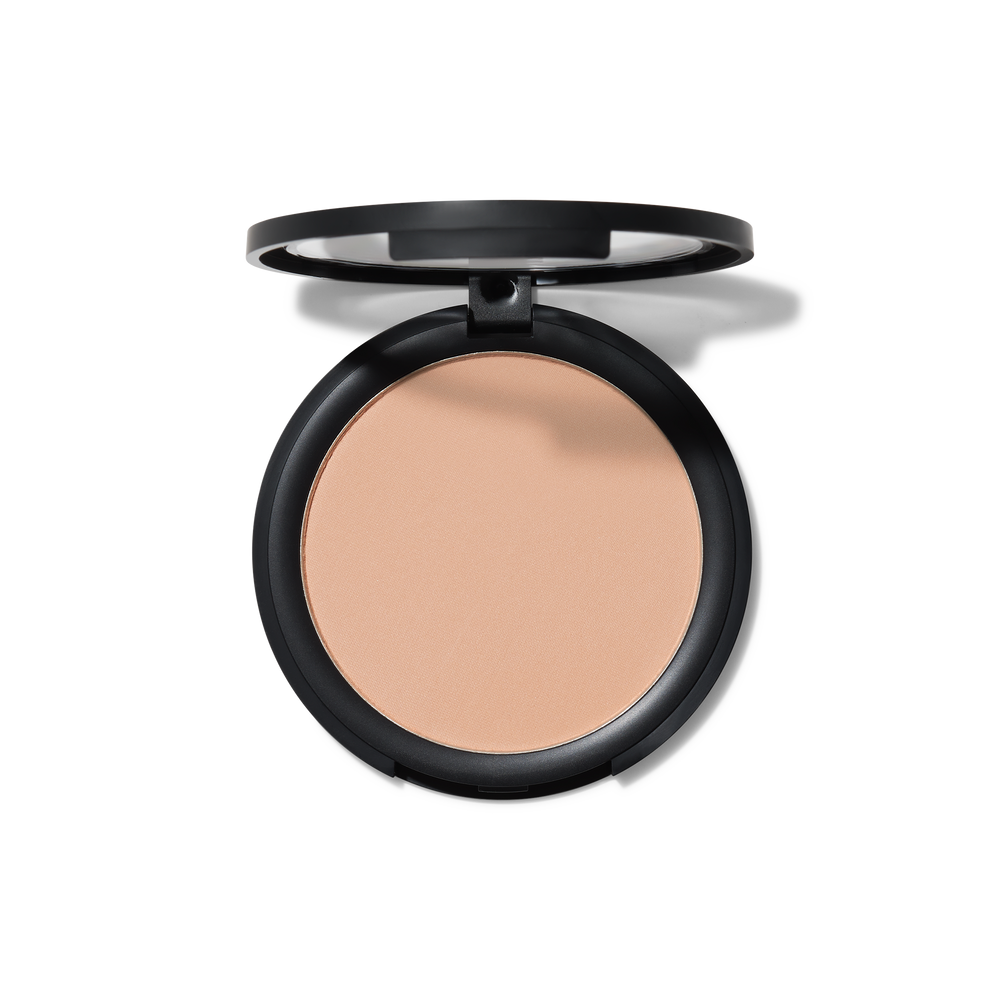
| e.l.f. Primer Infused Matte Blush | PTFE | Blush (face powder family) |
| e.l.f. Hydrating Camo Concealer | Perfluorooctyl Triethoxysilane | Leave on face |
| IT Cosmetics Your Skin But Better CC+ Cream SPF 50+ | Perfluorodecalin and Perfluorohexane | Foundation (SPF) |
Three products, three of the five FDA category leaders, four named PFAS between them. None of these brands is doing anything unlawful: there's no federal ban. All of these ingredients appear on the labels, which is the whole premise of the sweep. If you've read our breakdown of the Rare Beauty blush's label, you already know the drill. Several of the big long wear mascaras and foundations your friends might name have already dropped PTFE for silicone polymers like dimethicone crosspolymer and trimethylsiloxysilicate. Some haven't. The way you tell is to read.
What has your state actually banned?
The federal rule is the empty space. There's still no FDA ban on intentionally added PFAS in cosmetics; the December 2025 report was Congress asking the agency to tell it what it knew, and the agency's answer was mostly that it didn't know enough. The states moved anyway. The first wave took effect January 1, 2025, with Minnesota's Amara's Law, which banned 11 product categories including cosmetics from being sold or offered for sale in the state with intentionally added PFAS, and a broader phase out runs through January 1, 2032.
Vermont and Maine joined the cosmetic specific ban on January 1, 2026, Connecticut requires PFAS labeling from July 1, 2026, and California, Colorado, New Hampshire, New Mexico, Oregon, Rhode Island and Washington have their own schedules on a phased runway through 2028. Eleven states in total; the agency named them in its own report. It's a bigger map than you'd think.
Translation: a bottle sold legally in Alabama may not be sold legally in Minnesota, and a labeled product in Connecticut will carry a note in July that the same product on a Texas shelf will not. If you want a short answer to whether the thing in your hand is sold in a state that already banned it, check the state agency's own page. The Minnesota Pollution Control Agency keeps the running list; Maine's Department of Environmental Protection does the same. For a comparable walk through the one word the FDA still polices on a label, our deodorant post works through the antiperspirant rule.
The 2021 Notre Dame study isn't the whole story
Every article you read will mention it. Whitehead and colleagues, publishing in Environmental Science and Technology Letters in 2021, tested 231 cosmetics sold in the US and Canada and measured fluorine, a proxy for PFAS, in every one. Fluorine showed up in 56 percent of foundations and eye products, 48 percent of lip products and 47 percent of mascaras.
The highest concentrations were in waterproof mascaras, 82 percent of which had elevated fluorine, and long lasting lipsticks at 62 percent. In 29 products they followed up with chemistry, the researchers found between 4 and 13 PFAS per product. Only one of the 231 products listed any PFAS as an ingredient on its label.
Two things to understand about that last line. Fluorine is a proxy; not every fluorine atom is a PFAS atom. Scientists use it because PFAS are fluorine rich and the test is cheap, but the follow up chemistry is what nails down the identification. And the US labeling rule is that any ingredient intentionally added must be listed. If a PFAS is present as a trace manufacturing residue, it may not be on the label. The FDA report is about ingredients added on purpose, and the Notre Dame study caught both kinds. That's why the two numbers, 0.41 percent of registered formulas and roughly half of tested cosmetics, don't contradict each other. They're measuring different things. A similar gap between the headline claim and the label shows up in our read of Aquaphor's Drug Facts panel.
What changes for a Thursday night shopping cart?
You don't have to throw out your makeup. The FDA couldn't determine safety for most of the common PFAS at the exposures it looked at, and it flagged one chemical in body lotion. That's honest uncertainty, not a product warning. What you can do is read, now that you know the pattern.
The six written forms in the list above catch almost everything. The categories that lead the FDA's count tell you where to look first: eyeshadow, long wear face products, eyeliner, face powder, foundation. The way to shrink your exposure is to pick products that were reformulated already, and the way to tell is the ingredient list on the box or on the brand's own product page. If the label has none of the six, you're done.
That is the whole method.
If your bathroom includes a waterproof mascara, a long wear foundation or a setting powder from before 2023, those are the places to look first, because that's the category and the window the Notre Dame study caught most often. If you prefer a brand with a public no PFAS policy, several retailers like Sephora and Credo and their own vendor brands have made commitments and dropped the ingredients, and their lists are public too.
If I were starting from scratch today
I wouldn't panic. I wouldn't start a spreadsheet. I'd put the six written forms on a sticky note, flip over the next primer I buy, and spend fifteen seconds on the ingredient list before paying. When I'm out, I'd open the brand's own product page on my phone. If a US retailer sells the same item in a state like Minnesota that already banned intentionally added PFAS in cosmetics, the formula sold nationally is often the reformulated one, because brands rarely run two versions.
And I'd remember what the FDA really said: not that this stuff is safe, not that it is dangerous, but that the toxicology homework on most of the 25 most used wasn't done. That's a reason to read, not to catastrophize.
Read, then decide.
Skinventry does the same label read for you, instantly. Point the camera at a product and it lists the full ingredient panel, pulls out the PFAS and other personal flags, names the maker and the owner, shows where it was made, and opens the public record for the brand, with a source attached to every line. For a label you only check once in a while, a sticky note is enough. For the rest of your shelf, the app's the sticky note that reads itself.
