They work on the exact same kind of pimple your face patch works on. A shallow, drained whitehead that leaks the fluid a hydrocolloid film can absorb. On a deep, unbroken chest cyst they do essentially nothing. Fabric, sweat, and hair can also work a small face dot loose. Buy patches sized for a body, or reach for actives.
A 2019 JCAD survey of 965 acne patients found 61% had chest breakouts and 45% had back breakouts. Almost none of the patches on your CVS shelf are built for skin that sweats, moves, and rubs against a bra strap for eight hours a day. The two body patches in this post, from Hero and Rael, are plain hydrocolloid film with no active ingredient added, just cut larger than the face versions. That isn’t a scam. It’s worth knowing before you spend two dollars a dot.
The market has quietly convinced people that any sticker will heal any bump. It won’t.
Do pimple patches work on chest acne?
Yes, but only on one specific kind. A hydrocolloid dressing is a hospital wound dressing. It absorbs exudate, which is the yellow fluid a broken pimple weeps. That’s it. If the pimple has come to a head and you’ve either popped it or it drained overnight, the patch will pull the moisture, flatten the bump within six to eight hours, and stop you from picking. A recent 14 day randomized trial published in JAAD showed the same effect on facial acne: statistically better scores on crusting, redness, and elevation by Day 4, but only on lesions that had already surfaced. On a deep, painful chest cyst that never breaks the skin, the patch has nothing to absorb. It just sits there.
Why is chest acne a different job from face acne?
Two reasons. First, the sebaceous glands on the chest and back are bigger and run oilier than the ones on your cheeks, and truncal breakouts skew toward deeper inflammatory papules and nodules rather than surface whiteheads. Second, the skin on your chest lives inside a shirt. It gets wet with sweat, dragged by seat belts, and pressed by bra elastic for hours on end. The average pimple patch was engineered for a face that sits still on a pillow, not for a shoulder blade rubbing against a tank top.
Body skin also runs a different microbiome. A 2016 Cell Host and Microbe paper found that Cutibacterium acnes strains from the trunk are more diverse and more inflammatory than the ones on facial skin, which is part of why chest acne tends to leave darker marks and takes longer to clear. A pretty sticker on top isn’t going to move that number.
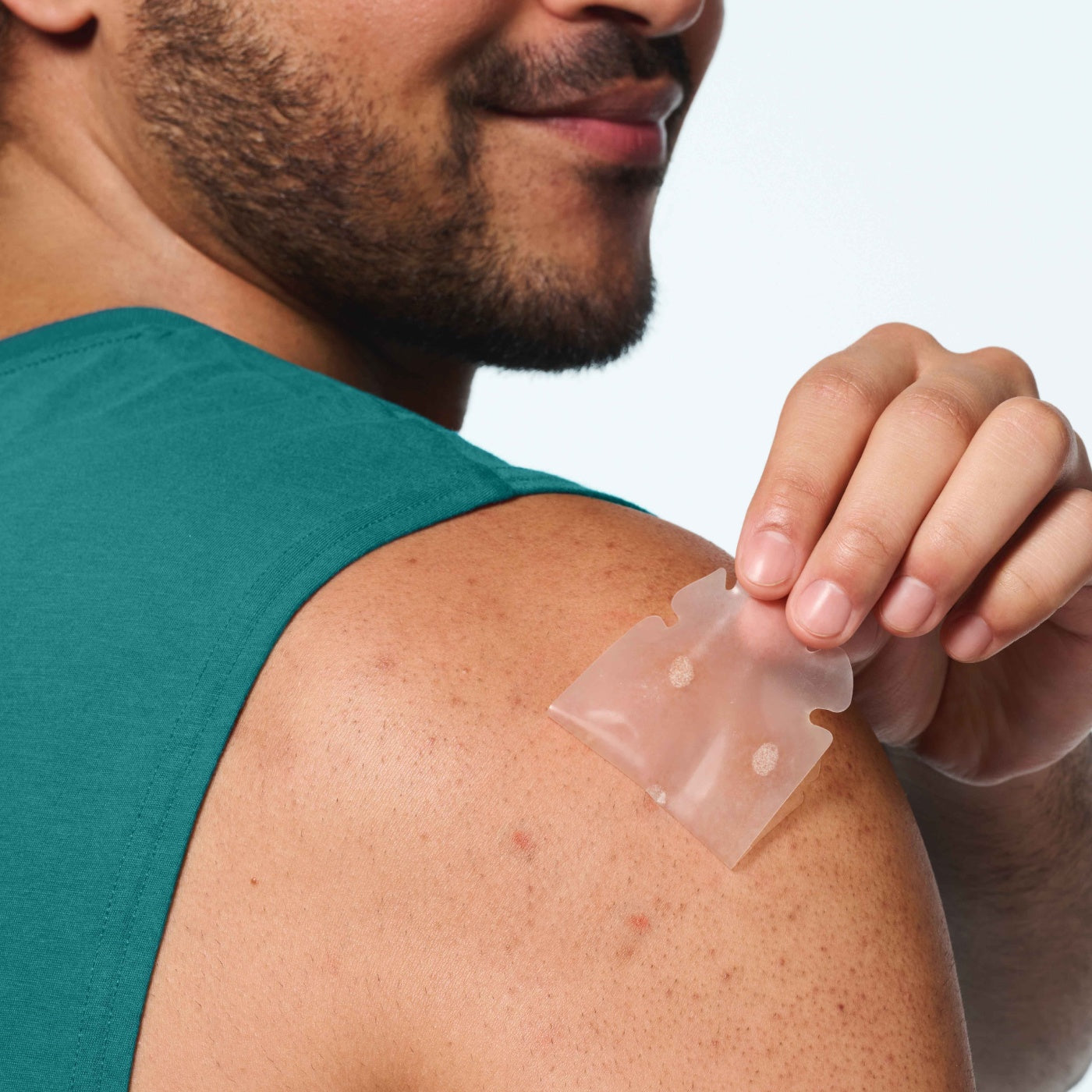
Which pimple patches actually work on the body?
| Patch | Size | Actives | Body sold | Real price | Best for |
|---|---|---|---|---|---|
| Hero Cosmetics Mighty Patch Body | XXL, roughly 2.9 by 1.4 inches | Plain hydrocolloid | Yes | $14.97 for 4 | A cluster of surface whiteheads across a shoulder or collarbone |
| Rael XL Spot Control Cover | 50 by 50 mm, cuttable | Plain hydrocolloid | Yes | About $9 for 8 | Odd shapes along a bra line, trimmed to fit |
| Peace Out Acne Dots | 12 mm face dot | Salicylic acid, retinol, aloe | No, face dose | $19 for 20 at Sephora | One fresh face zit; expensive on the chest |
| ZitSticka Killa Kit | 12 mm microdart | Salicylic, niacinamide, sodium hyaluronate, oligopeptide | No | $34 for 8 patches | A deep, throbbing pimple that hasn’t surfaced yet |
| Cosrx Acne Pimple Master | Three assorted diameters | Plain hydrocolloid | No | $6 for 24 | The cheapest way to double stack a chest whitehead overnight |
Here’s how they compare on paper. The Hero XXL body patch has scored notches meant to let it flex over a curve like the sternum. The Rael XL is sold as cuttable, so it can be trimmed to sit along a bra strap. Peace Out’s 12 mm dot is a face product with a face dose. The ZitSticka microdart patch, which delivers salicylic acid and niacinamide below the surface via 24 dissolving points, is the only one here designed for a deep pimple that hasn’t come to a head yet. It also costs about four dollars per patch, which is about 17 times what a Cosrx circle runs.
Bra strap acne is its own case. The friction and the sealed moisture create a mild mechanical acne on top of the hormonal one. A strip of cuttable hydrocolloid along the strap acts more as a friction shield than as a treatment for any single pimple. Which is fine. A shield is a shield.
What one dermatologist says about the limits
Hydrocolloid patches “contain ingredients that people with certain allergies or sensitive skin may want to avoid,” Dr. Kord Honda, a dermatologist at University Hospitals Cleveland Medical Center, told UH Now. He also flagged the deeper limit that has nothing to do with the patch itself: a pimple patch can’t treat the underlying causes of acne, like clogged pores or hormonal changes, and it won’t prevent future breakouts.
That’s the caveat that has to sit next to any best of list. A patch is a bandage, not a treatment. It won’t reduce oil, kill C. acnes, or shrink a sebaceous gland. If your chest breakouts show up in the same three spots every cycle, or if you have painful lumps that never come to a head, no patch on any shelf is going to change the outcome. That’s when to see a dermatologist about oral therapy. A 2021 pooled analysis of two Phase 3 trials of oral sarecycline beat placebo on IGA success for the chest (33.4% vs 20.8%) and the back (33.1% vs 21.9%) at week 12, which is the class of treatment the actual data supports for deeper body acne.
When should you skip the patch entirely?
Skip it if the bump is under the skin. Skip it if it’s a blackhead: the pore is open and the plug is oxidized sebum, not fluid, so there’s nothing for the film to draw out. Skip it if the skin under a bra strap is already macerated from sweat, because slapping an occlusive dressing on top will make it worse. And skip the fancy face dot on your chest at one dollar per patch when a twenty five cent Cosrx circle does the same job.
Expiration matters too. Pimple patches lose their tack after their listed date, and hydrocolloid stops absorbing well once the film dries out. Check the three different expiration systems on a skincare label before you use a two year old kit that’s been baking in your gym bag.
Buy for the job you actually have.
What would I buy?
Skip Peace Out and ZitSticka on the chest. They are built and priced for a face. Neither is what you want spread across a back. Buy one four count box of the Hero XXL for the collarbone and one eight count of the Rael XL for anywhere you need to trim a custom shape. That’s about twenty four dollars, and it’s honest about what a patch can and can’t do. For deeper stuff, stop shopping and book the derm.
A patch was designed to protect a draining pimple and stop you from picking one, not to fix acne. On the chest, where breakouts run deeper and skin gets more friction, that job is smaller than the marketing suggests. Which is fine, as long as you buy the right one and stop asking a bandage to do more than a bandage does. Before you buy, photograph the box and Skinventry shows the published ingredients or materials, who makes the patches and who owns the brand, each linked to its source.
For a look at why body skin behaves differently after a workout or a long shower, see what your barrier is telling you when your routine makes skin feel worse. If you’re trying to figure out which of the actives inside a patch or a serum are really at their label percentage, our piece on niacinamide serums hiding their real percentage covers the same trick the patch brands use. And when a patch box claims dermatologist tested, our breakdown of what that phrase legally means is the thing to read first.
Verdict: worth it on shoulder whiteheads. Useless on deep chest lumps. Buy body sized or don’t bother.
