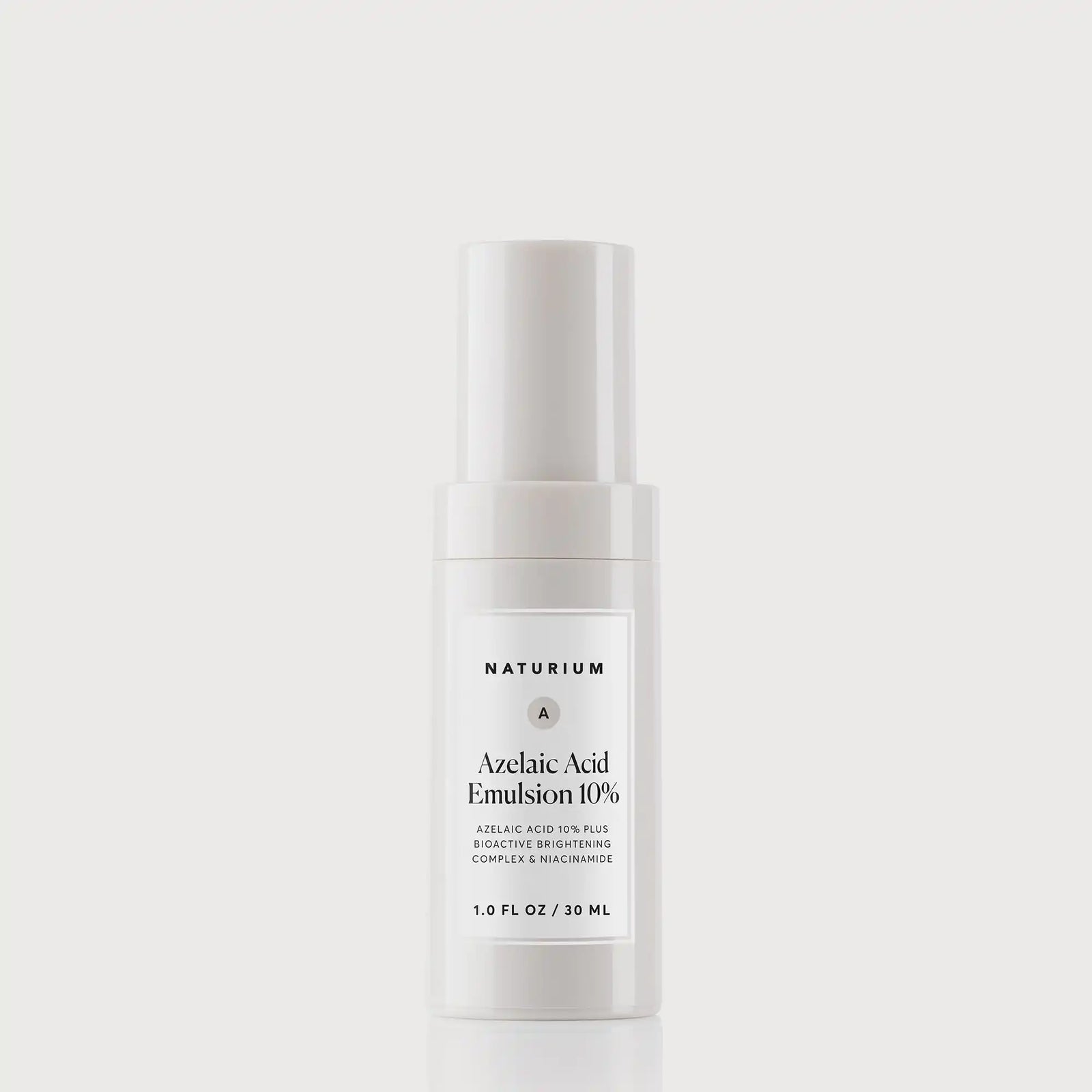
Yes. Dermatologists layer them, formulators put both in the same bottle, and the pH scare traces to a 1960s stability study that needed 90 degrees Celsius and pH 2 for 75 hours. Naturium's Azelaic Acid Emulsion 10% prints both on the front of one bottle, and The Ordinary's own routine layers them in sequence.
On TikTok and in Reddit threads, you'll read that azelaic acid "cancels out" niacinamide. It doesn't. For an adult with acne, rosacea or dark spots, the two work in the same routine and often in the same bottle. A 2023 systematic review in the Journal of Cosmetic Dermatology pooled 43 azelaic acid randomized trials (20 in rosacea, 16 in acne, 7 in melasma) and reported consistent benefit at 15 to 20 percent, with no flagged interaction when niacinamide was in the regimen (PubMed, Aug 2023). The pH fear turns out to be the classic case of a lab condition that never reaches your face.
What the internet actually says
The warning usually comes from one of three sources. A 2020 Instagram post by a US dermatologist that lumped azelaic acid in with glycolic acid under "don't mix with niacinamide," without a citation. Two dozen aggregator blog posts that copied each other. And a cottage of TikTok dermatology accounts repeating the niacin flushing scare, usually while selling a serum. The most cited claim is that azelaic acid's low pH will push niacinamide to convert into niacin, a related vitamin that can cause a hot, red, itchy flush when it hits skin at concentration.
That reaction is real. It is also chemistry, not opinion, and the chemistry is older and better understood than any 2020 Instagram caption. The question is whether a 10 percent azelaic acid serum and a 10 percent niacinamide serum, sitting on your cheek at room temperature for a few minutes before the next step, can push the reaction fast enough to matter. The answer, in every formulator's notebook that has been published on it, is no.
What the chemistry does
Niacinamide (nicotinamide) can hydrolyze into niacin (nicotinic acid) under acidic conditions. That reaction is slow at skin pH and slow at room temperature, and it speeds up only when both are extreme. The most cited data on how fast it moves comes from cosmetic formulator reviews of the mid century pharmaceutical literature. At pH 2 and 90 degrees Celsius, roughly the acidity of your stomach and the temperature of a hot cup of coffee, it takes over 75 hours to convert half the niacinamide to niacin, by a formulator's reading of the Nicotinamide monograph. At skin pH (around 4 to 6) and room temperature, the conversion is negligible. Supplier stability data treats niacinamide as stable from pH 5 to 7.5, with best shelf life closer to neutral. Azelaic acid serums land at pH 4 to 5. The gap is small and the timeline is in minutes, not days.
The study everyone cites, and what it actually showed
Trace the warning back far enough and you land on the 1960s U.S. Pharmacopeia stability work on injectable nicotinamide, repeated in hospital pharmacy journals through the 1970s. Those studies heated nicotinamide in buffered aqueous solutions to accelerate degradation so they could project a shelf life. The 90 degree, pH 2 condition was a stress test, not a use case. Nobody studied it on human skin because the answer was obvious to pharmacists: no leave on topical sits for days at 90 degrees. The scare entered skincare blogs through a telephone game, where "hydrolyzes under heat and acid" became "cancels out," which became "never mix." The 2023 Journal of Cosmetic Dermatology review already named above found no clinical signal of either active undermining the other in any of the 43 trials it pooled.
What the labels prove
We read the published ingredient lists of 4 real azelaic acid products on the brand's own pages on November 12, 2026, and checked each against the FDA DailyMed label for the only approved prescription azelaic acid, Finacea 15% gel. Three of the four sit at skincare pH. The fourth is a drug. None flags niacinamide as a conflict.
| Product | Azelaic % | Niacinamide in same bottle? | Brand's own layering note |
|---|---|---|---|
| Naturium Azelaic Acid Emulsion 10% | 10% | Yes (ingredient 13 on the INCI, named on the front label) | Formulated together; pairs with any routine |
| The Ordinary Azelaic Acid Suspension 10% | 10% | No | Brand's sample routine for blemish prone skin: Niacinamide 10% + Zinc 1% first, then this |
| Paula's Choice 10% Azelaic Acid Booster | 10% | No (adds 0.5% salicylic acid, licorice root) | Brand: no research suggests a problem with layering niacinamide |
| Finacea Azelaic Acid 15% Gel (Rx) | 15% | No (prescription gel base) | FDA label, 2024 revision: no niacinamide contraindication listed |
The desk audit is the point. The brands that make money on azelaic acid, including the one that makes the only version the FDA has approved for mild to moderate rosacea, do not name niacinamide as a reason to pause. Naturium goes further: they put both ingredients in one 30 ml bottle and print both on the front.
How to layer them if you want to
Three sensible patterns, by what you own.
Same bottle. Buy a product that already combines them, like Naturium's Azelaic Acid Emulsion 10%. Apply once a day to start, twice if your skin tolerates it. No layering decisions to make.
Thinnest texture first. If you own separate serums, apply the niacinamide product first on clean, dry skin and wait a couple of minutes for it to set. Then apply the azelaic acid. This is what The Ordinary's own blemish prone routine does, and the reason is boring: a water based niacinamide serum absorbs faster, so the azelaic layer stays where you put it.
Split the sessions. If you are brand new to acids or your skin is reactive, use the niacinamide in the morning and the azelaic acid at night for the first two weeks. Build up before you stack them in the same routine. The 2023 review found that most trial irritation resolved inside the first 4 weeks when patients titrated use, so the ramp up matters more than the order.
Two things not to do. First, do not layer azelaic acid over a straight vitamin C acid (L ascorbic acid at pH 3) without a five minute wait; that is a different compatibility question with real evidence behind it. Second, do not add benzoyl peroxide on top of either without checking your sunscreen tolerance, because stacking three actives raises the barrier cost.
Who actually gains from stacking them?
The pairing isn't for everyone who owns an azelaic acid bottle. It's worth stacking when the skin problem has two layers: inflammation plus pigment, or inflammation plus visible pores. That's why the brands pair them.
Rosacea with post inflammatory redness. Azelaic acid is the only topical the FDA has cleared for the bumps of mild to moderate rosacea; niacinamide calms the residual flush between flares. The 2023 review of 43 trials found both in use together in rosacea regimens without a flagged interaction.
Acne with dark marks on medium to deep skin. Azelaic acid is a tyrosinase inhibitor, so it goes after new pigment at the source. Niacinamide slows the transfer of pigment granules from the melanocyte to the skin cell. They act on different rungs of the same ladder, which is why dermatologists prescribe both for melasma that follows acne.
Oily, congested skin where pores read as dark. Niacinamide gets credit for pore refinement because it lowers sebum output after a few weeks of use; azelaic acid loosens the keratin plug. If your skin is clear but your pores read as stippled, the pairing earns its slot.
Who should skip it? Anyone already using a prescription retinoid on a visibly irritated barrier. Add one new active at a time, and a dermatologist is the right person to referee what comes next.
What about pregnancy and deeper skin tones?
Azelaic acid is one of the few topicals most dermatologists keep on the pregnancy safe list, which is why both ingredients turn up in prenatal brightening routines. The 2023 systematic review noted that azelaic acid foam's effect on pigmentation in Fitzpatrick IV to VI skin is under studied compared with the data on lighter skin, and the Finacea label itself warns to monitor patients with darker complexions for isolated hypopigmentation reports (DailyMed, Finacea 15% Gel). Start on alternate nights, stop and see a dermatologist if any patch of skin lightens beyond the area you are treating.
For the related pH myth about vitamin C and niacinamide, I'd see our breakdown of the 1960s raw niacin study. For the azelaic + tretinoin question that gets asked next, we covered that in this post on prescribed combinations. And if you want to know why label percentages often overstate what your skin actually gets, this post on niacinamide labeling is the back pocket read.
"The niacinamide to niacin conversion is a manufacturing concern, not a consumer one," cosmetic formulators have written on Chemists Corner, where the pH stability of niacinamide has been debated since 2012. "At room temperature and the pH of a finished leave on product, the interaction is minimal, reversible, and irrelevant at physiological pH."
Photograph either bottle and Skinventry shows the full ingredient list, who makes it, who owns the brand, where it is manufactured and the public record on the maker, each labeled Official, Government or Independent, with a source for every line. It also flags the allergens and ingredients you have chosen to watch. The app does not score products or tell you to buy. It gives you the record and leaves the call to you.
