Chemical or mineral isn't the real question for dark skin. Iron oxides are. They sit in the inactive list, block the visible light that drives melasma, and stop the white cast. A 2026 JDD audit of 37 tinted sunscreens found almost none disclose iron oxide concentration or visible light testing online.
Every "best sunscreen for dark skin" list ranks the wrong thing.
They sort by brand, by filter type, by whether a formula is marketed for deep tones. The question a shopper actually types is whether a sunscreen leaves a chalky film. The question dermatology research is actually answering is whether a sunscreen blocks the wavelength that darkens melasma and old acne marks on melanated skin. Those two questions have the same answer, and it's on the inactive list, not the active list. Iron oxides. A 2026 Journal of Drugs in Dermatology product audit of 37 tinted sunscreens found 97.3% did not name iron oxides as an active ingredient on their public pages, and almost none disclosed the concentration or any visible light testing. The ingredient doing the work is the one hardest to confirm from a brand page, and the one no "best of" list sorts for.
The clinical anchor is a 2014 randomized trial of 68 melasma patients. The iron oxide group at SPF 50 saw a 15% greater MASI improvement over 8 weeks than the UV only SPF 50 group. We come back to its limits later; it is a small trial. It is also the number everything else cites.
Why does sunscreen leave a white cast on dark skin?
A sunscreen leaves a white cast for one reason. The ingredient blocking UV is also blocking visible light, and because it isn't a dye, it blocks visible light the way a wall does. It scatters it. On fair skin the scatter blends in. On deep skin the scattered white shows up as a chalky film, a gray haze, or a flash in a photograph.
Two filters scatter: zinc oxide and titanium dioxide. These are the mineral filters. Chemical filters, like avobenzone and homosalate and octisalate and octocrylene, dissolve into the formula and absorb UV without scattering, so a well made chemical sunscreen reads clear even at high concentrations. That's why every "no white cast" roundup leans on chemical and hybrid formulas. That's also why so many of those formulas do almost nothing for the real pigment problem on melanin rich skin. They skip the ingredient that would do it.
The mineral filter story has its own twist: the particles aren't reflecting UV, they're absorbing it. We covered that in the science behind why mineral sunscreen does not reflect UV. The short version is that the particles are solid and visible on skin, even though their chemistry is similar to the chemical filters most people assume are their opposite.
What do iron oxides actually do, and why does dark skin need that?
Iron oxides are the pigments that tint a sunscreen. They're the three colorants listed by their CI numbers 77491, 77492, 77499 in the inactive section of a tinted sunscreen's Drug Facts panel. They do two things at once. First, they color the formula so it blends into deep skin instead of showing up chalky. Second, and the reason this matters medically, they absorb visible light, especially the short wavelengths spanning blue and violet. That matters because visible light drives melasma and post inflammatory hyperpigmentation on Fitzpatrick IV, V and VI skin, and SPF measures only UV. A sunscreen can be SPF 50 and still let melasma darken all summer, because SPF doesn't touch visible light. Iron oxides do. A 2026 Dermatology AMJ PRISMA guided review found iron oxide formulations consistently showed superior protection against visible light induced pigmentation compared with non tinted mineral sunscreens.
So the mineral vs chemical argument is beside the point for a melasma shopper. Visible light is the enemy, and only iron oxides consistently blunt it in a cosmetic sunscreen.
We read the Drug Facts of 5 sunscreens marketed for dark skin
On October 17, 2026 we pulled the Drug Facts panel for five sunscreens widely sold to shoppers who search "no white cast" or "for dark skin." We used DailyMed, the official FDA site that publishes the printed label for every US sunscreen, for the four that are posted there, and the brand's own product page for the Supergoop lotion. We tabled the active ingredients, whether the formula is tinted, and whether iron oxides appear in the inactive list.
| Product | Actives (as the label prints them) | Tinted | Iron oxides in inactive list |
|---|---|---|---|
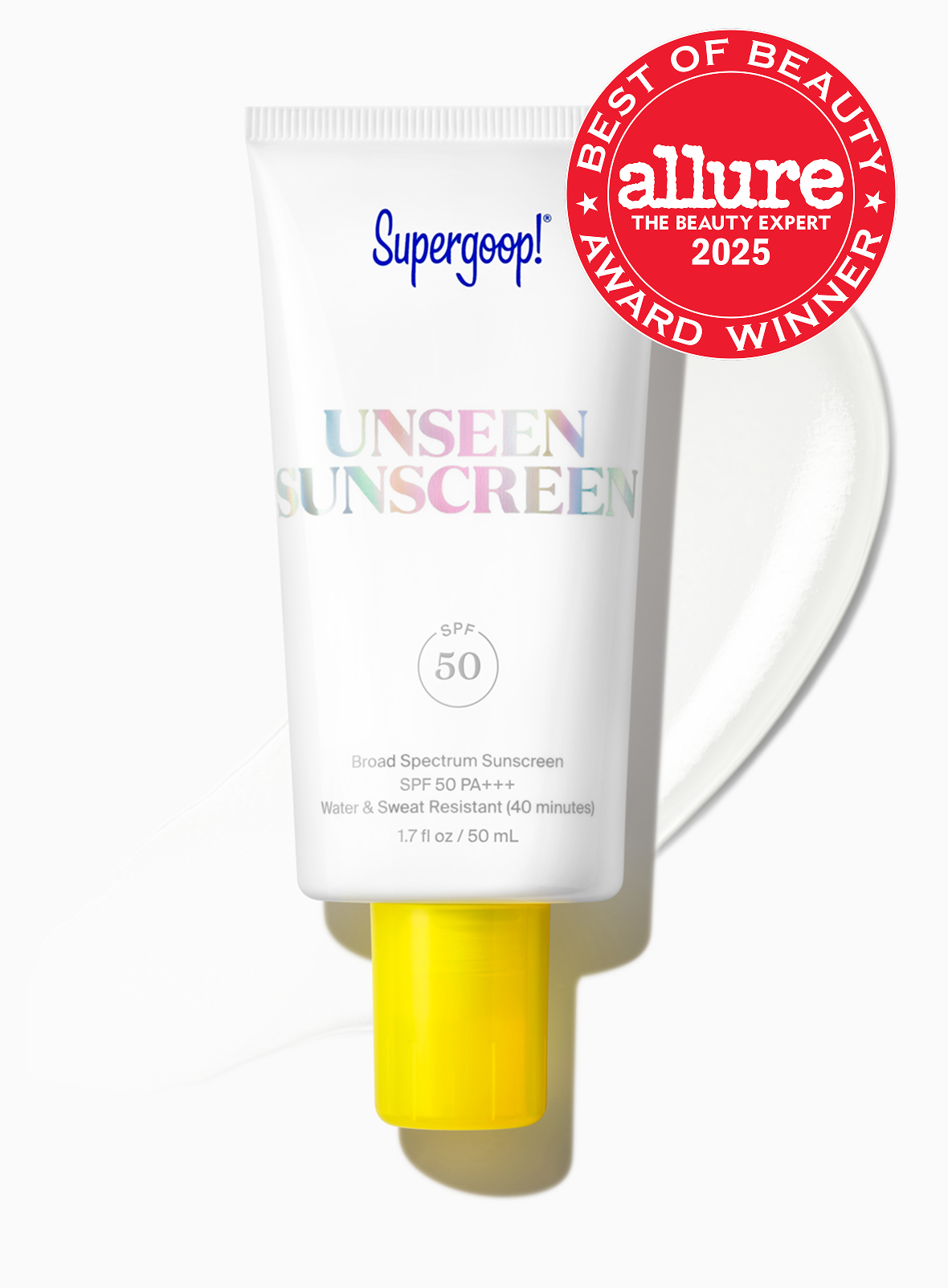
| Supergoop Unseen Sunscreen SPF 50 | Avobenzone 3%, Homosalate 7%, Octisalate 5%, Octocrylene 9% | No, clear | No |
| La Roche Posay Anthelios Tinted Mineral Face Sunscreen Fluid SPF 50 | Titanium dioxide 11% | Yes | Yes |
| EltaMD UV Clear Tinted SPF 46 | Zinc oxide 9%, Octinoxate 7.5% | Yes | Yes |
| Black Girl Sunscreen Broad Spectrum SPF 30 | Avobenzone 3%, Homosalate 10%, Octisalate 5%, Octocrylene 2.75% | No | No |
| CeraVe Hydrating Mineral Sunscreen Face Sheer Tint SPF 30 | Titanium dioxide 5.5%, Zinc oxide 10% | Yes | Yes |
Three of the five, all tinted, carry iron oxides. Two don't.
The two clear chemical formulas, Supergoop Unseen and Black Girl Sunscreen, win every "no white cast" roundup, and neither has iron oxides on the label. The two tinted mineral options and the one tinted hybrid, which lose those roundups for being thicker and harder to blend, are the three that would actually block the visible light driving melasma on deep skin. The ranking a shopper sees inverts the ranking the research supports.
Our audit is small by design. The JDD team's 2026 audit went wider: 37 tinted sunscreens, almost none disclosing iron oxide concentration or visible light testing on the public page. A shopper has to physically hold the bottle to confirm, which almost no one does before buying.
What dermatologists worry about, and what the research says
The missing piece in the "dark skin needs SPF too" message of the last decade is that SPF only measures UVB. People with melasma, post inflammatory dark marks, or deep natural pigment are losing ground to visible light, which penetrates deeper than UVB and triggers more sustained pigment production in melanocytes already primed to produce.
"The classic SPF label tells you what a sunscreen does for sunburn," Dr. Henry W. Lim, chairman emeritus of dermatology at Henry Ford Health System and a longtime visible light researcher, said in a 2024 Practical Dermatology summary. "It does not tell you what it does for melasma or for darkening of existing pigmentation. For that, you need visible light protection, and iron oxides are the main tool we have in a cosmetic sunscreen."
The clinical evidence is small but consistent. The anchor trial is a 2014 double blind randomized study of 68 melasma patients. Patients using a sunscreen with iron oxides and UV filters at SPF 50 saw a 15 percent greater improvement in MASI, the standard melasma severity score, than the group using a sunscreen with UV filters alone, both at SPF 50, over 8 weeks. The visible light protection group also had a longer time to melasma relapse. A newer 2026 trial of 42 women confirmed the same pattern in a shorter period. The 2026 Dermatology AMJ systematic review that pulled it all together concluded iron oxide formulations consistently beat untinted sunscreens on visible light induced pigmentation. Honest reviewers always flag the limits: trials are small, several were industry sponsored, long term data are thin.
None of this says a chemical sunscreen without iron oxides is bad. It stops sunburn, lowers skin cancer risk, slows photoaging on every skin tone. It just doesn't do the melasma job on its own.
What should you look for on a sunscreen label if you have dark skin?
Four checks will tell you most of what matters, in order:
- Is the formula tinted? If the bottle calls itself a tint, a BB, a CC or a universal shade, iron oxides are usually in it. A clear or invisible formula almost never has them.
- Flip the box and read the ingredients printed below the Drug Facts panel. Look for the words iron oxides, or the three CI codes 77491 in red, 77492 in yellow and 77499 in black. All three together means a full visible light tint. One or two means a lighter tint that may do less.
- If you want chemical filters for finish, consider layering. A clear chemical SPF underneath, a tinted mineral SPF or a tinted moisturizer with iron oxides on top. The top layer carries the visible light protection. The bottom layer carries the UV load.
- Check the shade range. A tinted sunscreen made in two shades, light and medium, won't match deep skin cleanly. The brands with 10 plus shades, and the ones that sell a universal tint that neutralizes rather than matches, are the ones to try first.
None of this changes the SPF rules. Use enough. Reapply every 2 hours in sun. For how much SPF you actually get at the amount people really apply, we published a separate explainer on the SPF number and the fraction you get.
The honest caveat
A tinted sunscreen is a cosmetic sunscreen. It can shade visible light. It can't match the broad spectrum coverage of a prescription or an in office treatment, and nothing a label does will clear an existing melasma patch on its own.
If you're treating melasma, a dermatologist will want to pair sunscreen with a pigment active like tranexamic acid, azelaic acid, or a cysteamine formula; we covered the cysteamine 5 percent evidence over 12 weeks. A tinted sunscreen is the floor of that treatment, not the whole treatment.
The second caveat is match. A tinted sunscreen that reads orange or ashy on your real skin tone is one you won't wear, and the one you won't wear does nothing. The best iron oxide formula is the one that matches, and matching deep skin is where many of the mineral options still fail. Try before you commit to a size.
Three things we read while writing this
- Boukari F. et al. 2015. Prevention of melasma relapses with sunscreen combining protection against UV and short wavelengths of visible light, a prospective randomized comparative trial. PubMed 24313385.
- Sharma A. et al. 2026. Efficacy of Sunscreen Filters and Visible Light Blockers on Photoprotection of Melanated Skin, a PRISMA guided systematic review. Dermatology AMJ.
- Doan V. et al. 2026. Iron Oxides in Tinted Sunscreen for Hyperpigmentation, a product analysis and literature review of 37 tinted sunscreens. Journal of Drugs in Dermatology.
Photograph the tube of your current sunscreen and Skinventry pulls the label for you, tags iron oxides and the four UV filters in it, names the maker and the parent company, and shows the public record on that product, each with its source. For a melasma shopper, that's one tap to confirm the ingredient most "best of" lists refuse to sort for.
