Chemical sunscreens marketed to dry skin list vitamin E as tocopheryl acetate or plain tocopherol, mostly to keep the formula stable. Tocotrienols, the vitamin E form with the better photoprotection data, appear on none of the five compared here. Buy the best formula for hydration, then layer tocotrienols underneath if you want the antioxidant story to be true.
The vitamin E on your sunscreen bottle isn't the vitamin E with the good data.
None of the five chemical sunscreens compared below lists a tocotrienol on its INCI; they carry tocopheryl acetate or tocopherol instead. That gap is the whole story of the "vitamin E sunscreen" claim, and it matters because the forms do very different things under UV.
A 1997 study in Free Radical Biology and Medicine found tocotrienols penetrated murine skin more quickly than tocopherols and reached tissue concentrations several fold higher than tocopherol at the same topical dose, which mattered when the skin was then irradiated with UV, because more antioxidant sitting in the right cellular compartment is what the entire mechanism turns on. The more recent 2022 review in Frontiers in Pharmacology traced the same pattern in human keratinocyte lines: gamma tocotrienol suppressed UVB inflammatory markers where alpha tocopherol did nothing measurable. And delta tocotrienol from annatto has an intrinsic SPF around 5.5 in isolation, per the SpecialChem technical datasheet. Tocopheryl acetate has no such reading. It's stable, cheap, and mostly there to keep the oil phase from oxidizing on the shelf.
Is the vitamin E claim on your sunscreen really doing anything?
Read the label. If it says tocopheryl acetate, the vitamin E is an ester the skin has to hydrolyze before any of it becomes active. That conversion is slow and partial. If it says tocopherol, you've got the free alcohol form, more active but easier to oxidize. Tocotrienols look almost identical on paper, but the tail is different. That structural difference lets them slot into cell membranes faster and rove more freely, which is why they show up in the skin at higher concentrations after the same topical dose. Almost no mainstream sunscreen has them. Your "vitamin E sunscreen" almost certainly lists the acetate or plain tocopherol, added at fractions of a percent to protect the emulsion, not you.
That's the honest part.
The case for keeping the acetate anyway
There's a defense of tocopheryl acetate that isn't just marketing. It's the workhorse antioxidant that keeps the emulsion honest. Chemical sunscreen filters oxidize on the shelf, and once they oxidize they generate the same free radicals you're trying to block. A little vitamin E in the oil phase slows that. It's why almost every emulsion sunscreen carries it, dry skin claim or not.
The other defense is regulatory. Tocopheryl acetate has decades of safety data, no comedogenic red flags at the low percentages sunscreens use, and doesn't destabilize the SPF filter blend. The tocotrienol forms are newer to cosmetic formulation and behave differently in oil in water systems. That's a real formulation constraint, not a conspiracy against dry skin.
So the acetate isn't fraud. It's just not the antioxidant you're being sold on the front of the bottle.
Why does tocopheryl acetate do so little under UV?
Because you'd need it to convert. Tocopheryl acetate is a prodrug of tocopherol. Enzymes in the viable epidermis have to snip off the acetate ester before the molecule can scavenge a radical. Studies of ex vivo human skin put that conversion in the low single digit percentages under normal conditions and closer to zero when skin is dehydrated and cell turnover is sluggish, which is precisely the skin the sunscreen is being marketed to. The 2022 review is blunt about this: at the low percentages sunscreens use, tocopheryl acetate doesn't measurably lower UVB inflammatory markers in vitro, while gamma tocotrienol at comparable doses does.
Tocotrienols also seem to inhibit tyrosinase, which is the enzyme that drives UV pigmentation. If you get melasma or sun freckles after a beach day, the vitamin E on your INCI isn't the reason. You'd need the tocotrienol form, applied consistently, at a real percentage. None of the chemical sunscreens compared here lists tocotrienol at all.
The FDA sunscreen monograph is worth naming here. Vitamin E in any form isn't on the FDA list of allowed sunscreen actives. It's an additive, not a filter. Any protective effect it adds is a bonus, not the SPF number on the front of the bottle. For how that SPF number gets tested, and why you get a fraction of the labeled protection in real use, our breakdown of the SPF number and what it actually buys you is the piece to read first.
Which chemical sunscreens for dry skin actually earn the shelf?
Dry skin needs a formula that won't sit on top of it or lift a moisturizer off. The five compared here vary more on humectant load than on vitamin E. Here's the scorecard, taken from each product's published ingredient list.
| Product | Vitamin E form on INCI | Humectants that matter | Price (USD, 2026) | Best for |
|---|---|---|---|---|
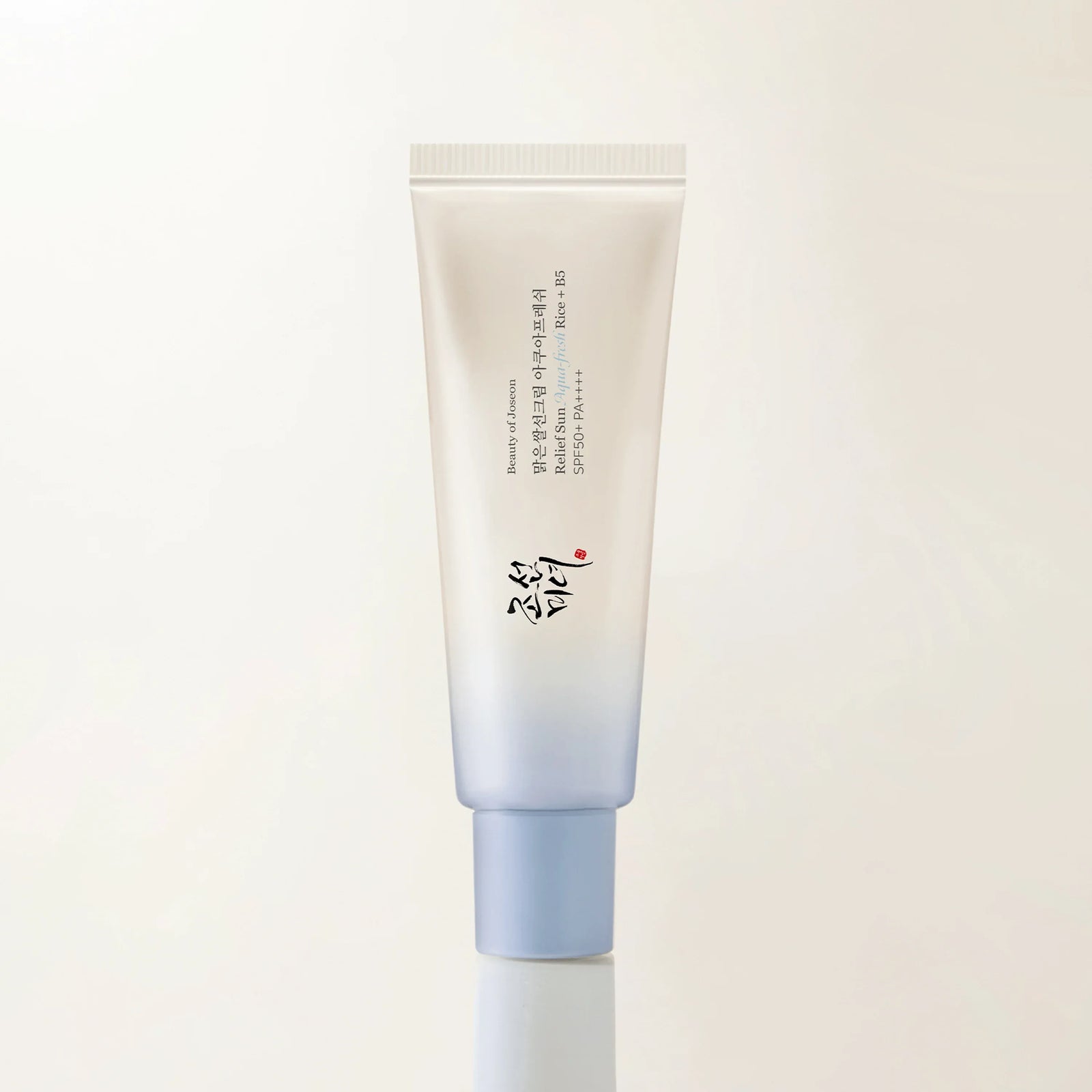
| Beauty of Joseon Relief Sun Rice and B5 | Tocopherol | Sodium hyaluronate, panthenol, glycerin | $18 | Everyday dry skin that gets tight by 3pm |
| COSRX Aloe Soothing Sun Cream SPF 50 | Tocopheryl acetate | Aloe leaf extract, sodium hyaluronate | $17 | Sensitive dry skin, no fragrance concerns |
| Isntree Hyaluronic Acid Watery Sun Gel | Tocopherol | Several forms of hyaluronic acid | $28 | Dehydrated skin under makeup |
| Neutrogena Hydro Boost Water Gel SPF 50 | Tocopheryl acetate | Sodium hyaluronate, glycerin | $14 | Drugstore access, thin texture |
| La Roche Posay Anthelios UVMune 400 Fluid | Tocopherol (free) | Glycerin, thermal spring water | $36 | Dry skin that tolerates alcohol denat |
All five are workhorses for dry skin because of humectants, not vitamin E.
Is layering a tocotrienol serum worth it?
Probably, if you're already sold on antioxidant serums. A serum with a tocotrienol complex applied under sunscreen behaves like a passive antioxidant boost. It doesn't replace SPF. It reduces the free radical damage that gets past the filter, which is the point of any topical antioxidant under sun exposure.
Do it in this order. Cleanse, hydrate with a humectant toner, apply your tocotrienol serum and wait sixty seconds, then a moisturizer, then a chemical sunscreen at two milligrams per square centimeter. That's roughly a quarter teaspoon for the face and neck. If you skip the wait, the serum and the sunscreen will pill, which isn't a formulation failure but a friction failure. Our post on what pilling actually is gets into why.
If layering feels like too many steps, skip it. The tocotrienol upside is real but modest. The hydration upside from a well built humectant sunscreen is bigger and more immediate. Trade off honestly.
So who is each pick actually for?
If your skin is dry because it's dehydrated (feels tight, drinks up water, looks fine when you press a mirror against it), you want the Beauty of Joseon Rice and B5 or the Isntree. Both lean on humectants.
If your skin is dry because your barrier is impaired (visible flaking, red patches, stings when actives touch it), the La Roche Posay Anthelios UVMune Fluid uses tocopherol, not the acetate, but alcohol denat is its second ingredient, so patch test it first if your barrier stings.
If you want tocotrienols, none of these sunscreens will give them to you; that takes a separate serum.
The verdict, and one honest caveat
Buy the sunscreen your dry skin will actually wear at 2 milligrams per square centimeter. That's the number the SPF label is based on, and it's the one people underapply the most. For most dry skinned adults, that's the Beauty of Joseon Rice and B5 at $18. If tocotrienols matter to you specifically, layer an annatto tocotrienol serum underneath.
Caveat. None of these products have head to head clinical data comparing dry skin outcomes over 12 weeks. The tocotrienol photoprotection literature is mostly murine or in vitro, and the doses are higher than what a sunscreen would carry. Don't read this as "tocotrienols will fix your melasma." Read it as "the vitamin E claim on most sunscreens isn't the vitamin E that has the good data." That's a smaller, truer story.
Two adjacent reads that go deeper on the mechanics: our piece on what mineral sunscreen actually does with UV, and the primer on SPF versus PA numbers. If reactive dry skin is the concern, our reading of what really triggers perioral dermatitis pushes back on the sunscreen blame that gets popular on Reddit. Photograph a sunscreen and Skinventry shows its published ingredient list, so you can see which form of vitamin E it carries, with each fact linked to its source.
Three things I read while writing this
- Weber et al., "Efficacy of topically applied tocopherols and tocotrienols in protection of murine skin from oxidative damage induced by UV irradiation," Free Radical Biology and Medicine, 1997. Old but the mechanism paper everyone else quotes.
- Ghazali et al., "Effects of tocotrienol on aging skin: a systematic review," Frontiers in Pharmacology, 2022. Cleanest recent meta on the topical data.
- The FDA sunscreen monograph page, which quietly reminds you that no vitamin E form is an approved sunscreen active in the United States.
