ISDIN is a Barcelona dermocosmetics brand built in 1975 as a 50/50 joint venture between the Puig family's beauty house and the pharmaceutical group Esteve. On September 14, 2026 Puig agreed to buy out Esteve's half for about €1.2 billion. The bottle on your shelf does not change. The company holding the paperwork does.
What is ISDIN, and why is Puig writing a €1.2 billion check this year to buy the half of the company it does not already own? The short answer is that for fifty years ISDIN has been owned by two companies at once, and the longer answer is a story about a Spanish fragrance house that keeps growing a dermatology side of its business.
Puig and the pharmaceutical group Esteve, both based in Barcelona, built ISDIN in 1975 as a 50/50 joint venture. On September 14, 2026 Puig told the market it had agreed to buy Esteve's half for about €1.2 billion all in: €900 million in cash at closing and €300 million deferred to the first quarter of 2029, according to Fashion United's reporting on the deal. The deal values ISDIN at roughly €2.4 billion enterprise value by one analyst note, and some sell side analysts in Madrid called the price rich, which pushed Puig's own shares down the day of the announcement, Beauty Matter reported.
This is the same question of corporate structure we wrote through when e.l.f. Beauty paid nearly a billion dollars for Hailey Bieber's rhode: who holds the paperwork, and what, if anything, changes for the person who buys the bottle.
Who Owns ISDIN Now?
As of today, both Puig and the Esteve group still own half of ISDIN each on paper. Puig has agreed to buy Esteve's 50 percent and expects the sale to close at the end of the first quarter of 2027, pending competition approval, according to Premium Beauty News. Once the deal closes, Puig will own 100 percent of ISDIN. The CEO is Juan Naya, who has run the company since 2017. Nigyar Makhmudova has been non executive chair since 2026 after joining the board in June 2024, with a brief to grow ISDIN outside Spain. Marc Puig, the Executive Chairman of Puig, framed the deal in the Sept 14 release as a long term commitment to ISDIN's people, its science and its future. Albert Esteve, who runs the Esteve group, said the sale lets his family refocus on pharma.
How ISDIN Started as a 50/50 Joint Venture
ISDIN was founded in 1975 as a joint venture between Puig and Esteve, with each company holding half.
Puig was already a century old fragrance and fashion house, run by the Puig family out of Barcelona since 1914. Esteve was a Barcelona pharmaceutical group founded in 1929 by Dr. Antoni Esteve i Subirana. The brand lived on pharmacy shelves in Spain for decades before it reached the United States, and it still markets itself today as a dermocosmetics company, which is a European term for products sold through pharmacies and dermatologists rather than mass retail. The 50/50 structure meant neither side could sell to a third party without the other, which is one reason the brand has changed hands this slowly. The Sept 14 release says the deal lets the Esteve family go back to the pharma company at the center of its origins.
What Puig Already Owns in Beauty
Puig has been listed on the Madrid stock exchange since May 2024 and still has a controlling Puig family stake. Its fragrance side runs houses like Jean Paul Gaultier, Paco Rabanne, Carolina Herrera, Nina Ricci and Penhaligon's. Its beauty side has been assembling a quieter portfolio: a majority stake in Charlotte Tilbury in 2020 at a reported £1.3 billion valuation, Byredo in 2022, and a majority stake in Dr. Barbara Sturm in January 2024 after the German dermatologist's cult following crossed over to the US. ISDIN joins that side of the house. In March 2026 Puig and Estee Lauder told the market they were in merger talks; the two companies called the talks off in May 2026. If you want the full map of who owns what beauty brand on your shelf, our rundown of who is behind what you buy is the starting point. Over at the drugstore, Neutrogena's parent Kenvue is in a sale of its own.
What Is in the US Eryfotona Actinica Bottle
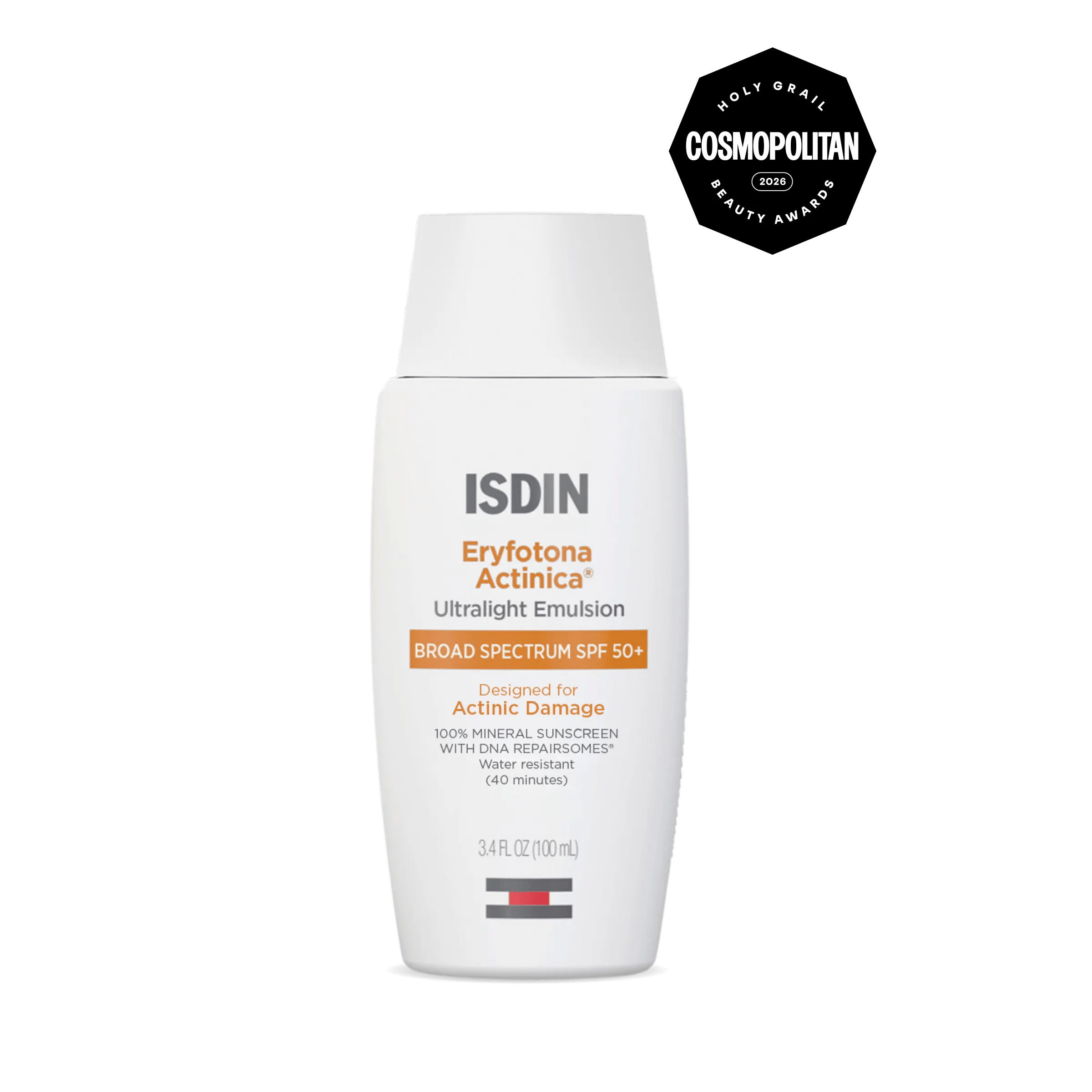
On October 9, 2026 we read the full US Drug Facts panel and the complete ingredient list for ISDIN's flagship, Eryfotona Actinica Ultralight Emulsion SPF 50+, on the brand's own site. Zinc Oxide at 11 percent is the only active sunscreen filter in the US bottle, which makes it a 100 percent mineral SPF 50+. There is no bemotrizinol in the US formula, even though ISDIN sells different formulas in Europe and Latin America that use other filters. The 'DNA Repairsomes' the brand highlights in its marketing are a photolyase enzyme sourced from a kind of plankton, and we found them listed among the inactive ingredients, not the actives. The FDA does not recognize photolyase as a sunscreen active. The repair language on the box describes a marketing claim, not an FDA approved use. Here is what the US product page shows today, next to what the Drug Facts panel says:
| What ISDIN says on the US product page | What the Drug Facts panel says |
|---|---|
| Dermatologist recommended, non comedogenic, water resistant, non greasy finish, SPF 50+ broad spectrum | Active ingredient: Zinc Oxide 11% (sole UV filter) |
| Science driven protection with DNA Repairsomes to help repair existing sun damage | Inactive ingredients include photolyase (the 'DNA Repairsomes'), Vitamin E, Panthenol, Water, Diethylhexyl Carbonate |
| A light activated enzyme derived from plankton | Photolyase sits among inactives; it is not an FDA recognized sunscreen active |
Does the Owner Switch Change the Bottle on Your Shelf?
Not yet, and probably not in a way you will notice at the pharmacy next month.
The deal closes at the end of the first quarter of 2027 if European competition regulators do not raise concerns. Formulas and manufacturing contracts tend to carry forward through ownership changes. The FDA does not revisit a sunscreen monograph because the parent company changed hands. What tends to change over the following year or two is the surface of the brand: the ad spend, which countries get the launches first, which retailers carry which SKUs, and which pharmacist facing campaigns continue. Puig told the market it will keep ISDIN's current leadership and its science led positioning. We will know how long that lasts when the first ISDIN launches land under full Puig ownership, probably starting in late 2027. Nothing about the deal changes the fraction of SPF you actually get from a mineral bottle if you under apply it, which is still the bigger shopping concern for most of us.
What ISDIN Says, and What the Analysts Say
Marc Puig, the Executive Chairman of Puig, called the deal a long term commitment to ISDIN's people and science. Jose Manuel Albesa, Puig's CEO, called dermocosmetics a strategic priority. Juan Naya, ISDIN's own CEO, said the brand will keep its focus on photoprotection and dermatology led skincare. The analyst reaction was mixed. J.P. Morgan told clients Puig was paying about 25 times trailing twelve month EBITDA, and some brokers in Madrid called the price expensive, per Il Sole 24 Ore. Puig's own share price fell the day of the announcement before recovering later in the week. ISDIN itself does not trade publicly, so there is no stock to watch directly; what you can watch is where ISDIN products end up on US shelves over the next 18 months.
So, What Is ISDIN Now?
After Q1 2027, ISDIN is simply what the top of this piece asked.
It is a 50 year old Barcelona dermocosmetics brand that used to be half owned by a Spanish pharmacy group and that will be fully owned by one of the biggest beauty companies in Europe. The question is not whether Puig can run ISDIN; Puig is already running half of it. The question is which end of the beauty counter a full Puig owned ISDIN ends up on. Dr. Barbara Sturm has stayed niche and expensive under Puig. Charlotte Tilbury became a Sephora anchor. Byredo moved deeper into luxury fragrance. Which of those paths ISDIN takes, five years from now, will show up on the bottle: in the price, in where you have to go to buy it, and in whether the pharmacist still gets a sample before the influencer does.
Photograph an ISDIN tube or any product in your routine and the Skinventry app will show the active sunscreen filter on the Drug Facts panel, the full ingredient list, the brand's parent company and the dated public record on that company. Every line comes back with a source.
