Give retinol 12 weeks before you judge it. In the published studies, skin changed under the microscope by week 4, wrinkles looked better at 12 to 24 weeks, and gains kept building at a year. Differin's FDA label says acne can take 3 months. Neutrogena advertises one week, a point its owner's pooled studies never measured.
Two retinoids you can buy without a prescription run on two different clocks. Neutrogena's product page says its Rapid Wrinkle Repair Retinol Regenerating Cream smooths the look of fine lines in just one week. Differin's Drug Facts panel, the label the FDA governs, says it may take up to 3 months of daily use to see results.
That gap is nearly three months. Same family of ingredient, two very different promises.
We went to the studies to see which clock the research supports, and the answer changes with what you're trying to fix. So here it is as rules, one concern at a time, with who ran each study named next to its numbers.
Rule 1: Change starts by week 4, mostly where you can't see it
In a 2016 study by Amway's research team and University of Michigan dermatologists, four weeks of retinol thickened the outer layer of skin and switched on collagen genes in biopsies. The wrinkle photos were measured at 12 weeks, and that's when they showed a significant drop. Your skin can start changing before your mirror notices.
The biggest pooled data set points the same way. Kenvue, the Neutrogena owner that Kimberly Clark agreed to buy, pooled six studies of its 0.1% stabilized retinol in 471 women with an average age of 47. Retinol improved every sign they graded more than the same cream without retinol "as early as week 4", the 2024 paper reports. One dermatologist graded every face, and the checkpoints were weeks 4, 8 and 12. This analysis never looked at week one.
The first month is also when retinoids tend to sting. The prescription label for Differin's stronger 0.3% gel says redness, scaling and dryness were most likely to occur during the first four weeks and usually lessened after that.
Rule 2: Judge fine lines at 12 weeks, then again at 24
Here's the clock the wrinkle studies actually ran. In the Amway and Michigan work, facial wrinkles measured by image analysis fell significantly after 12 weeks of retinol. In a 2007 University of Michigan trial, study staff applied 0.4% retinol lotion to one arm and a plain lotion to the other arm of 36 people with an average age of 87, up to three times a week. After 24 weeks, fine wrinkle scores dropped 1.64 points on a scale of 0 to 9 on the retinol arm, against 0.08 on the plain arm, and biopsies from a few of them showed more collagen being made. So the honest window for lines is 12 weeks to see something and 24 weeks to judge it. Take one photo in the same window light every four weeks. Memory is a terrible instrument for slow change, and that's the whole point of a trial camera.
Why does acne look worse before it clears?
Rule 3: give acne three months, and expect a rough start. The three retinol products in our check are sold as cosmetics and carry no Drug Facts panel. Differin Gel, the 0.1% adapalene sold over the counter, is a regulated acne drug, and its Drug Facts say "it may take up to 3 months of once daily use to see results". The same panel warns that during the early weeks your acne "may appear to worsen before it improves." That's the purge, written into a federal label.
The prescription label for the stronger gel tells doctors to rethink treatment if results aren't noticed after 12 weeks. The trials point the same way. A 1998 analysis of five randomized trials covering 900 people, led by the Leeds dermatologist William Cunliffe, found adapalene 0.1% matched tretinoin 0.025% on total breakouts and pulled ahead on speed, with a significant gap as early as week 1. Early movement is real. Clear skin takes longer. In our reading of the label, nothing promises you clear skin at week 1.
Rule 4: Dark spots move slowly, and the best numbers took a year
In Kenvue's pooled data, brown spots and uneven tone were among the signs that improved more than the plain cream from week 4 through week 12. The headline numbers came much later. A year later. In a one year trial of 0.1% stabilized retinol with 62 people, mottled pigmentation improved 84% and crow's feet fine lines 44% by week 52, and the retinol group led the plain cream at every checkpoint. Johnson & Johnson scientists were on that team, and a 2014 conference abstract on biopsies from a one year 0.1% stabilized retinol study by the same researchers lists Johnson & Johnson Consumer Companies as its sole sponsor.
Company money doesn't make a result wrong. It does change how we read it. That's why we name who ran each study, and who paid when the record says. Dr. Patricia Farris, the Tulane dermatologist who led the Kenvue analysis, framed it for patients who can't tolerate a prescription retinoid or want a cheaper one:
"This paper gives us the data we need to reassure them that they are going to see clinical improvement in the visible signs of photoaging," Dr. Patricia Farris said in a video abstract reported by Practical Dermatology.
Does retinol do anything for acne scars?
Rule 5: don't time scars with a retinol clock, because nobody has built one. We searched PubMed on October 16, 2026 for trials of retinol on acne scars and found none that tested over the counter retinol on its own. The closest controlled evidence is a prescription retinoid. In a split face trial of trifarotene in 121 people, run with Galderma researchers, the treated side lost 5.9 sunken scars on average by week 24, against 2.7 on the side given the same base without the drug, with a gap showing from week 2. If a retinol product talks about scars, ask which study it means. We couldn't find one.
What should you see at week 4, 12 and 24?
Put the studies on one calendar and this is what they support. It isn't a promise for your face. It's what the research measured, in order.
- Weeks 1 to 4: irritation, if it comes, is most likely now, per both Differin labels, and acne may look worse before it improves. Under the surface, biopsies already show change by week 4.
- Weeks 4 to 12: lines, uneven tone and brown spots start to beat a plain cream in the Kenvue data, graded by one dermatologist.
- Week 12: Differin's own page says to use it 12 weeks for best results, and the Amway and Michigan wrinkle photos turned significant here.
- Week 24: the Michigan arm trial showed its clear change in fine lines.
- Week 52: the one year study posted the biggest numbers, including 84% on mottled pigmentation.
We built this calendar from the studies and labels above on October 16, 2026. Write your start date on the box. Then wait.
What do the labels promise?
We read the labels of four retinoid products on the brands' own pages, and Differin's on DailyMed, the federal label library, on October 16, 2026. Three are retinol cosmetics and one is the adapalene drug. Two print no strength at all. The other two do, and only the drug pairs its strength with a timeline written into an FDA label.
| Product | Retinoid | Strength printed | Where it sits on the list | Timeline on the page |
|---|---|---|---|---|
| Neutrogena Rapid Wrinkle Repair Retinol Regenerating Cream | Retinol | None | 25th of 31, after fragrance | Fine lines and dark spots "in just 1 week" |
| CeraVe Resurfacing Retinol Serum | Encapsulated retinol | None | 19th of 33 | None |
| The Ordinary Retinol 0.5% in Squalane | Retinol | 0.5% | 4th of 8 | None |
| Differin Gel | Adapalene, a drug | 0.1% | Listed as the active ingredient | Up to 3 months, per its Drug Facts |
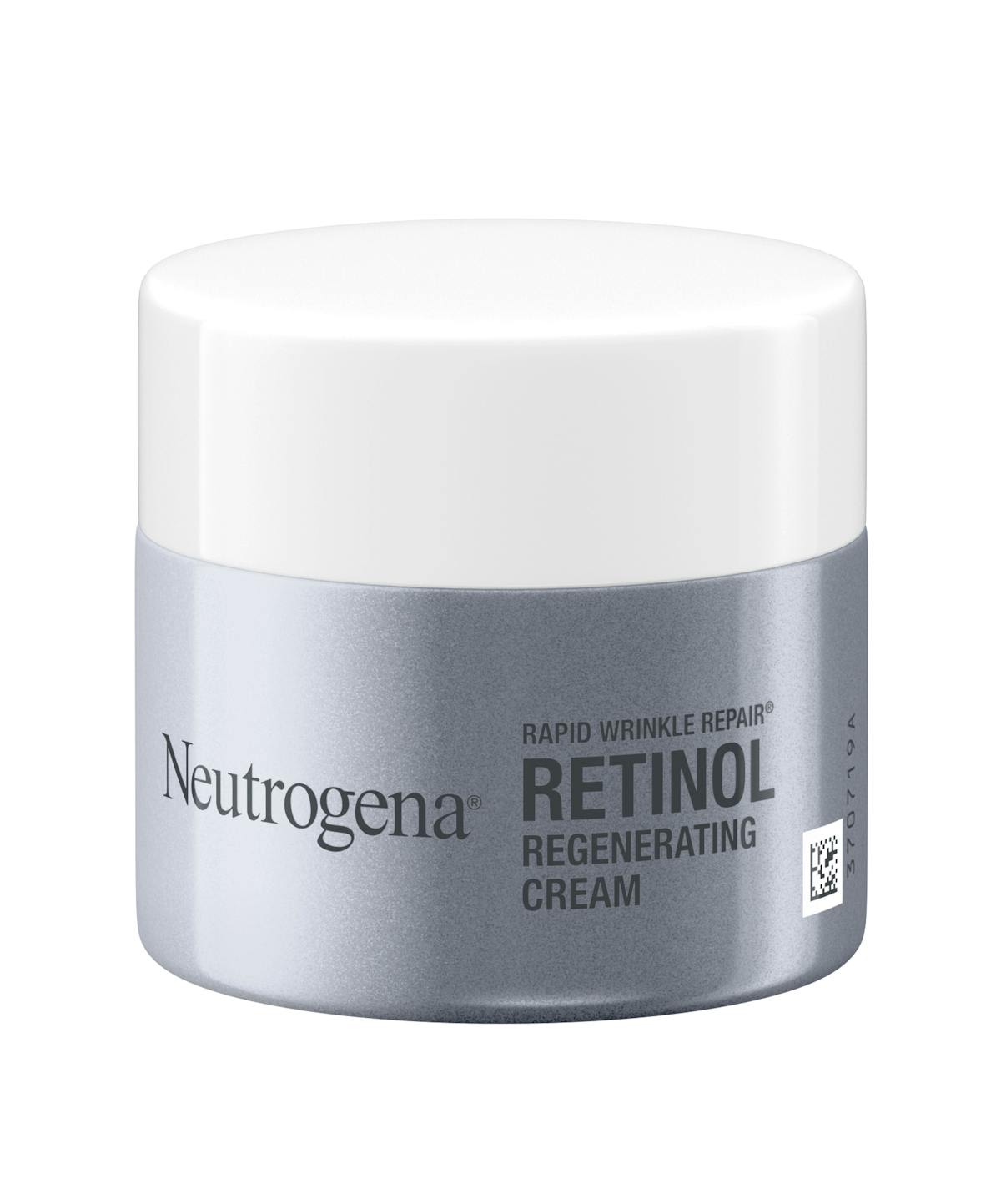
The same Neutrogena page shows 77% who "agree" the cream reduces lines and wrinkles. Two footnotes sit under it, one citing consumer self assessment after four weeks of use and one citing 12 weeks of daily use, and the page doesn't mark which number goes with which. An agree number is a perception survey, and it's worth knowing what a self reported percentage can and can't prove. Position on the list is a rough guide too, and reading where retinol sits only tells you so much when the brand won't print a number.
The one rule that breaks the others
Stop the clock if your skin can't take it. Comfort comes first. Differin's Drug Facts tell you to stop and ask a doctor if irritation becomes severe, and we'd hold any retinol to the same rule. A gentler routine, like buffering retinol between layers of moisturizer, trades some speed for comfort, and if you're still choosing between retinol and a stronger retinoid, Skinventry's guide to the over the counter retinoids lays out the options.
Twelve weeks, a photo every four, then decide.
Photograph any of these four and Skinventry shows its published ingredient list, the company that makes it and the company that owns that one, with a source on every line.
