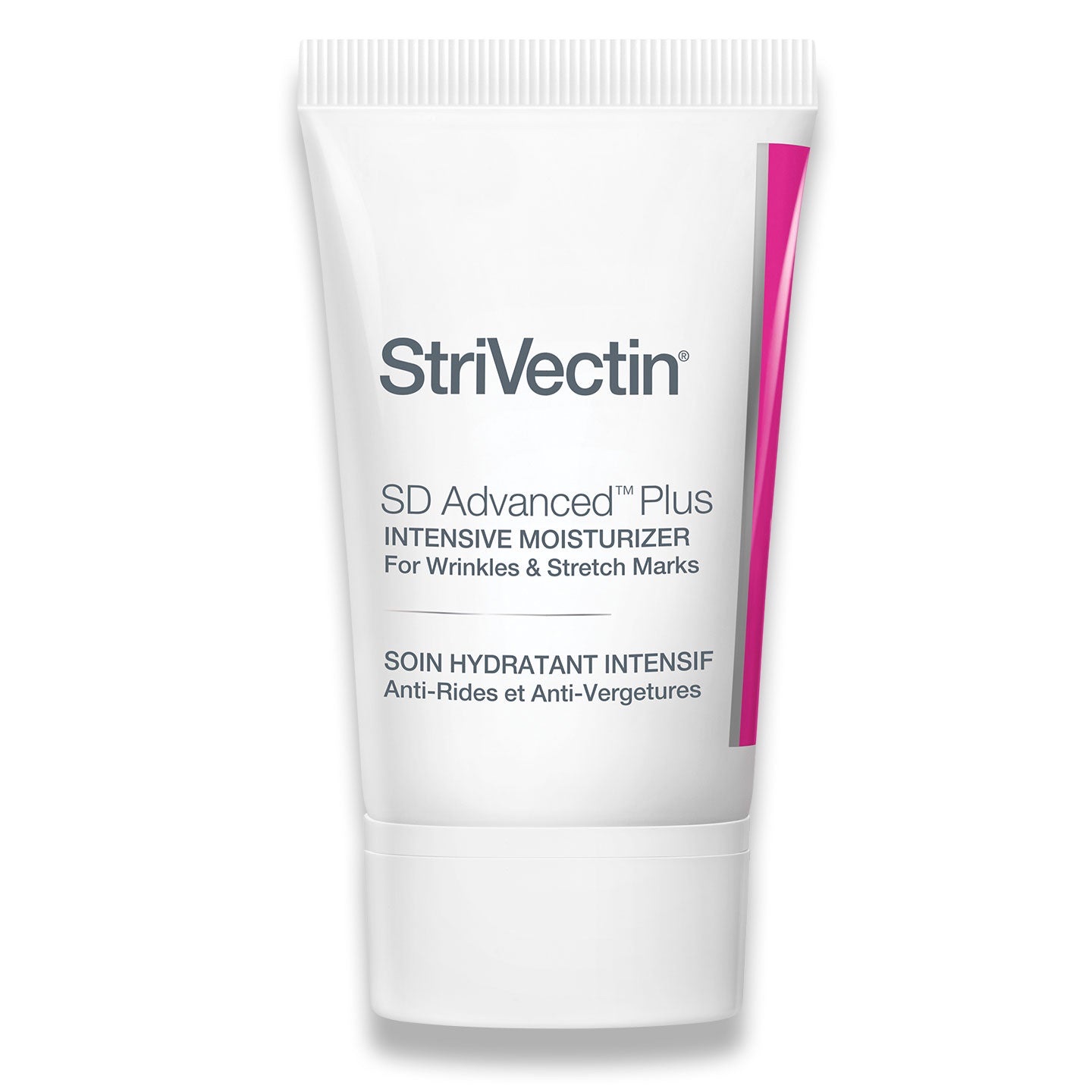
StriVectin's NIA 114, a patented niacin derivative, has no published clinical evidence for keloid or hypertrophic scars. Topical niacinamide shows mild support in broader scar literature. The first line dermatologists actually reach for is silicone gel sheeting, backed by a Cochrane review of 20 trials and 873 patients. Save the 85 dollars (the brand's list price in September 2026) or use it for routine hydration alone.
You'll see it across StriVectin product pages, Sephora reviews, and Reddit threads about cesarean scars. StriVectin faded my scar. The receipt: a 2013 review of 20 trials and 873 patients indexed on PubMed tested silicone gel sheeting and not StriVectin. As of June 2026 the same database indexes zero clinical trials of NIA 114, the molecule the SD line is built around, on keloid or hypertrophic scars. Zero on incision scars. Zero on burn scars. The brand's only published indication is stretch marks, and even there the data is contested.
A scar is not a scar.
Hypertrophic and keloid scars are an overshoot of the same fibroblasts your skin uses to close a cut, and they sit deep in the dermis where most topicals never reach in therapeutic concentration. The keloid prone shoulder of a 32 year old four years after a cesarean is not the same surface as the abdominal striae of a postpartum patient at month three. Treating them as if they are is what gets people to spend 85 dollars and feel let down two months later.
What are people actually saying about StriVectin and scars?
Three claims drift around. First: that NIA 114 is a stronger form of vitamin B3 and stronger means it works on harder problems. Second: that the original University of Arizona research was about skin healing, so it must help scars. Third: that a coworker, a sister, or a Reddit commenter watched their scar fade after eight weeks on the SD Advanced Plus tube. All three are honest reads of the marketing, and all three skip past what the published record will and will not support.
The customer carried the keloid claim onto the brand. The brand never put it there.
StriVectin SD is marketed for stretch marks, wrinkles, and skin firming. The 85 dollar tube on the shelf doesn't say fades hypertrophic scars. Reviews say that. The two run together in a reader's head because the Sephora aisle isn't sorted by indication.
What does the NIA 114 chemistry actually do?
NIA 114 is a real molecule. The Jacobson lab at the University of Arizona spent roughly 30 years adding a fatty acid tail to nicotinic acid so the molecule can cross the stratum corneum, then have skin enzymes cleave the tail and convert it back to nicotinic acid inside the cell, where it becomes NAD and feeds DNA repair. The brand documents this on its NIA 114 explainer.
Useful for photodamage and barrier strength. Not what scars need.
Hypertrophic and keloid scars aren't a DNA damage problem. They're a wound healing overshoot in which fibroblasts deposit too much disorganized collagen for too long. Those active fibroblasts sit well below the epidermis, in the reticular dermis, and even when a molecule crosses the stratum corneum, getting it into those cells at a meaningful concentration is a different question. We wrote a whole piece on whether any topical molecule can actually reach the collagen layer it claims to repair. The short answer there applies here. Topical penetration is a ceiling, and StriVectin doesn't publish dermal penetration data for NIA 114 on scar tissue.
Where's the one study StriVectin defenders cite?
There isn't one for keloid or hypertrophic scars. The closest published evidence is a 2016 review on topical stretch mark management that grouped NIA 114 with retinoids and centella and concluded no published efficacy data for StriVectin SD on striae itself. That's the brand's flagship indication. Even there, the controlled data does not exist.
Defenders sometimes point at the consumer survey on the SD box. A 97 percent of users saw smoother skin figure is not a clinical endpoint. It's a self report from a brand sponsored panel. For why those figures sit somewhere between marketing and evidence, see what a '97 percent saw results' claim actually counts.
Niacinamide, the unconjugated form of vitamin B3 sitting on every drugstore shelf, has slightly more support. A 2024 review in the Journal of Clinical and Aesthetic Dermatology on topical therapy for facial scars in skin of color listed niacinamide alongside silicone, retinoids, vitamin C, and onion extract as supportable scar modulators. Niacinamide can reduce inflammation, lighten pigment, and modestly improve barrier function, all of which help a maturing scar look less angry. None of that adds up to a study showing it flattens a raised hypertrophic ridge.
Why does StriVectin still seem to work for some users?
Two real reasons. First, scars fade on their own across the first 12 to 24 months, and topical hydration plus time will carry most of that improvement no matter what you put on top. The SD Advanced Plus base is an occlusive heavy moisturizer with tucuma, cupuacu, and murumuru butters layered over hyaluronic acid. It stays on the skin for hours. An occlusive on a maturing scar reduces itch and stops people from scratching, which is the single fastest way to make a hypertrophic scar worse. That mechanism is real.
Second, the 85 dollar purchase creates compliance. People who spend that much actually use the tube twice a day for months. Daily massage on a scar is itself a documented intervention, low evidence but real. The active is doing very little of the work. The ritual is doing most of it.
That's the catch. You can get the same compliance from a 12 dollar tub of CeraVe Healing Ointment or from a few dollars of plain petrolatum, both of which have actually been studied as scar bases in the dermatology literature. The 85 dollar StriVectin tube is not wrong as a moisturizer. It's wrong as the centerpiece of a scar plan, and the centerpiece question is what brings people to the search bar.
Does cheaper vitamin B3 do the same job?
Niacinamide, the plain form of vitamin B3, sits in plenty of drugstore moisturizers that cost a fraction of the StriVectin tube. If a vitamin B3 molecule alone fixed scars, those cheaper creams would already have a credible scar track record. They don't. The meaningless 'dermatologist tested' badge on a scar cream box says nothing about scar efficacy either.
What should you do instead?
Start with the boring protocol the literature has actually settled on. Silicone gel sheeting is the noninvasive first line per the American Academy of Dermatology, applied 12 to 24 hours a day for two to six months. A pack costs around 18 dollars. After silicone, the standard escalation is intralesional triamcinolone steroid injections in office, sometimes paired with 5 fluorouracil. Pulsed dye laser, cryotherapy, and adjuvant radiation are reserved for older or recurrent keloids per the 2020 German S2k guidelines.
If you already own a StriVectin tube, keep it on hand for the dry skin around the scar. The base will soften itch and reduce scratching. That part is fine. It is not fragrance free, though: StriVectin's own ingredient list includes fragrance, worth knowing if your skin reacts to it. The active is doing very little. The silicone, and later the steroid, are doing the work. For the broader vocabulary of how niacinamide labels game their own numbers, see how OTC niacinamide percentages get inflated. The same games appear on the SD box. Photograph the tube and Skinventry shows its published ingredient list, checks the box's claims against it, and names the company that owns the brand, each with its source.
Three things I read while writing this
The 2013 Cochrane review of silicone gel sheeting on 873 patients across 20 trials is the clearest single source for what the topical first line actually does. The American Academy of Dermatology keloid treatment page lays out the noninvasive to invasive ladder in plain language. And the 2024 Journal of Clinical and Aesthetic Dermatology review grades the topical evidence one ingredient at a time across skin of color, which is where most keloid prone patients are missed.
None of the three names StriVectin. That is the answer.
One last note from our reading. The dermatology literature is direct about something the brand pages soften. We didn't find a single peer reviewed study where a niacin derivative alone flattened a hypertrophic ridge or shrank a keloid. I keep mentioning this because it matters before an 85 dollar swipe.
The active is not the story.
